

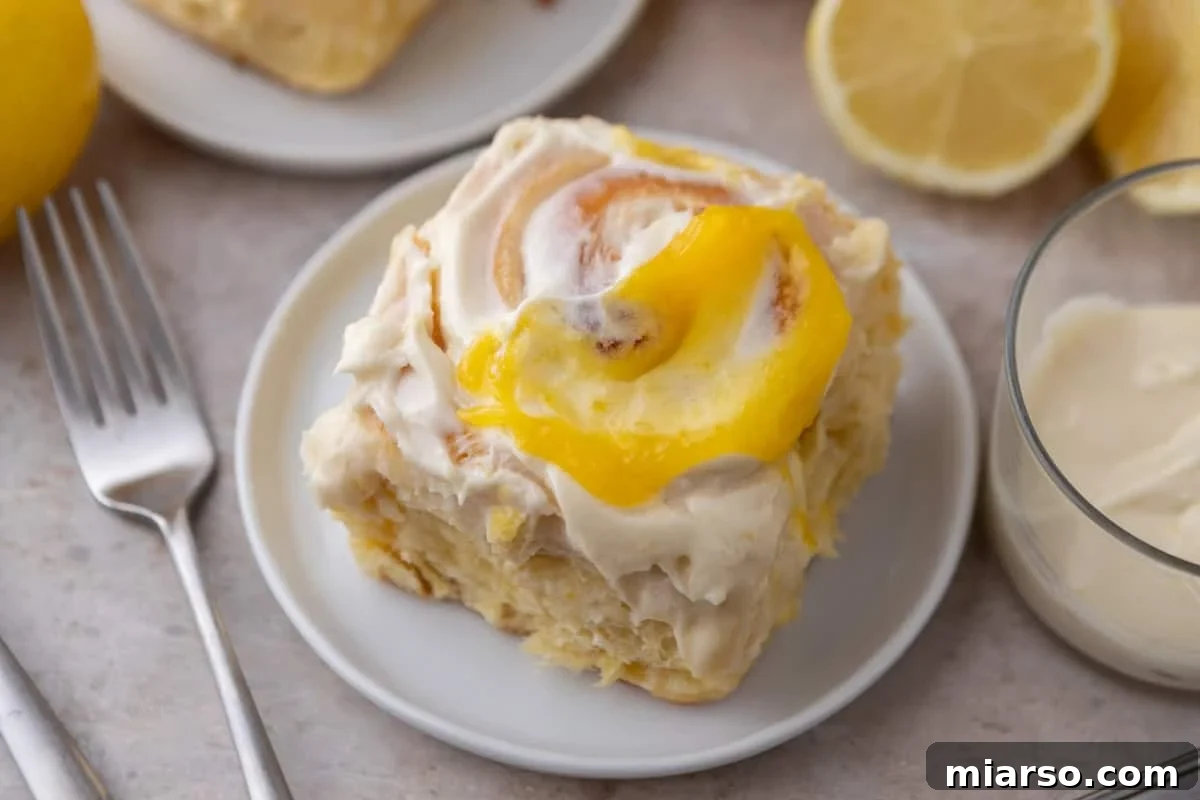
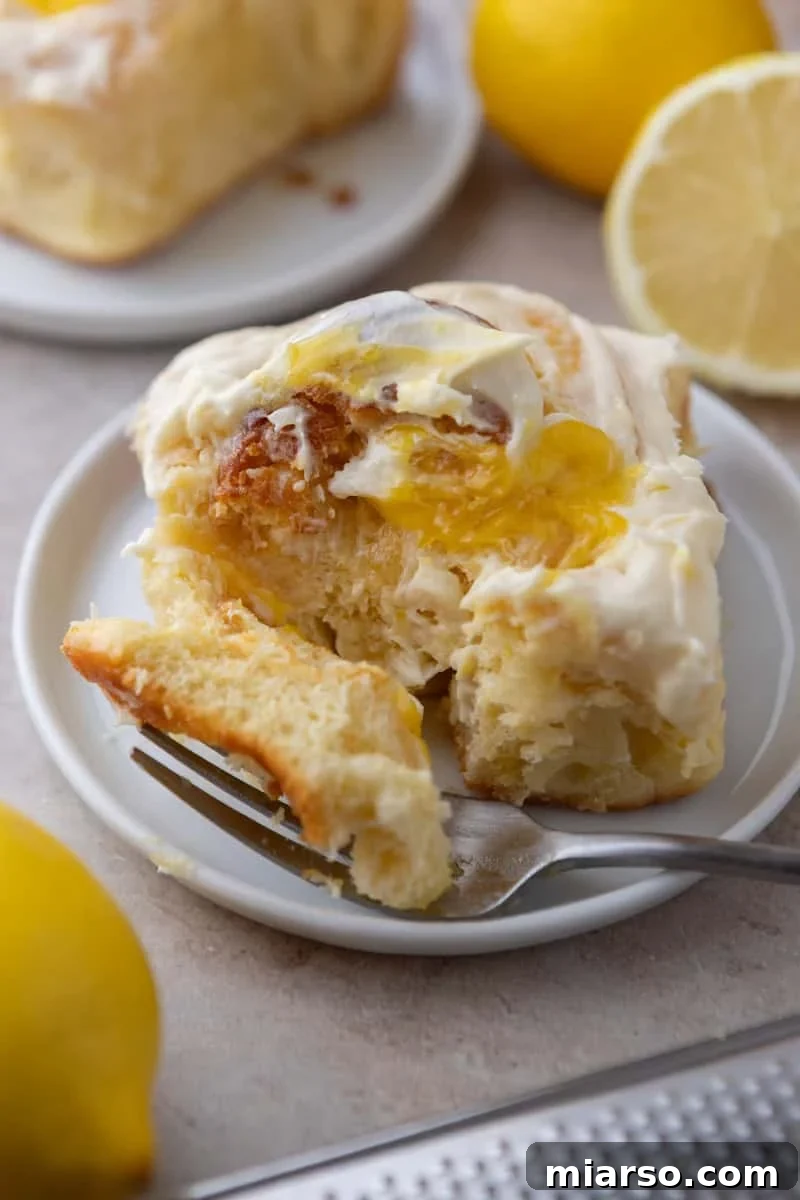
Prepare to be enchanted by these irresistible Lemon Rolls with Lemon Curd – the quintessential treat for any spring celebration, especially Easter brunch. If you’ve ever sought a compelling reason to embark on the journey of baking homemade rolls from scratch, this is your moment. These aren’t just any rolls; they are a symphony of soft, fluffy texture and vibrant, zesty lemon flavor, meticulously crafted from the inside out.
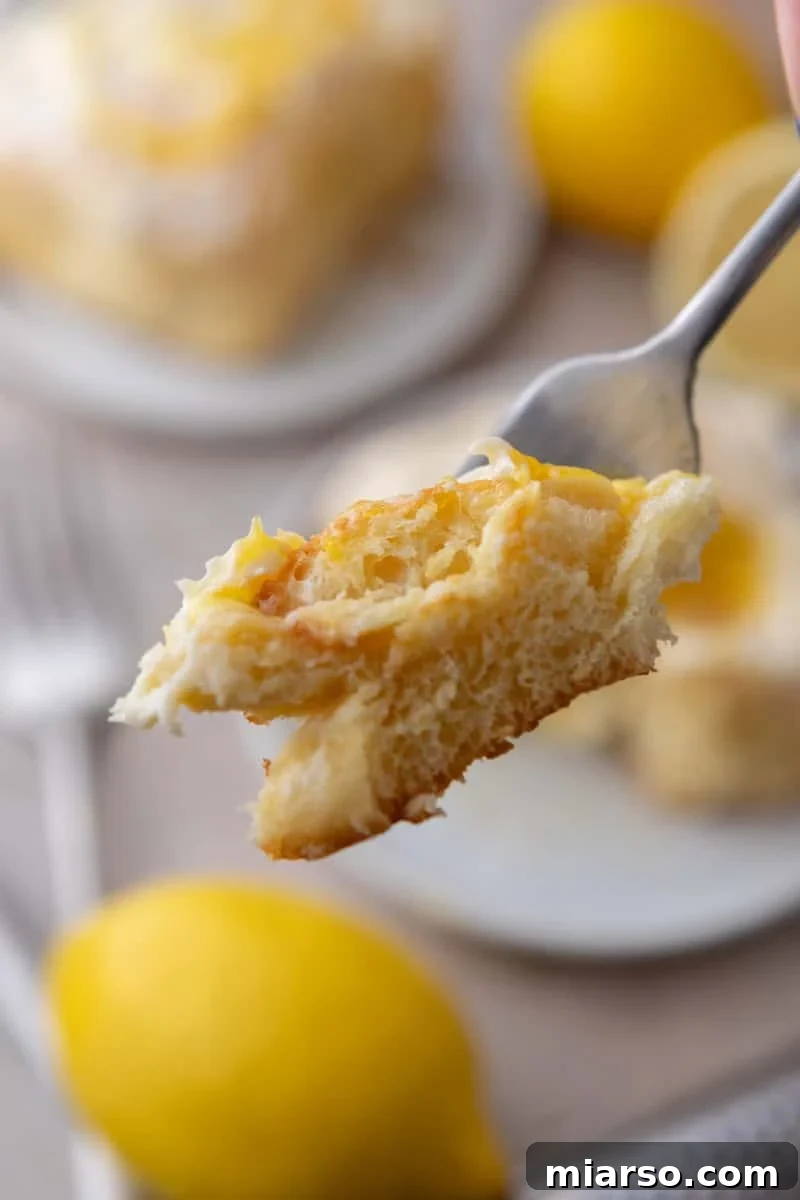
Imagine a delicate, lemon-scented brioche dough, made exceptionally pillowy and tender thanks to the ingenious Tangzhong method – a secret to achieving that coveted bakery-style texture that keeps rolls soft for days. This exquisite dough cradles a luscious filling of buttery lemon sugar, punctuated by delightful pockets of tangy, homemade (or store-bought) lemon curd. Each roll is then crowned with a light yet indulgent lemon cream cheese frosting, brightened with fresh lemon zest and a hint of vanilla. A final, elegant swirl of extra lemon curd on top serves as the perfect flourish, tying together the rich layers of citrusy goodness.
What truly sets these Lemon Curd Rolls apart from typical recipes you might encounter online is their unparalleled depth of lemon flavor. While many rely solely on lemon zest for aroma, our recipe goes a significant step further. The inclusion of real lemon curd introduces a bold, bright, and genuinely tart punch that zest alone simply cannot deliver. The result is a masterful balance – rolls that are neither overly sweet nor excessively tart, but perfectly harmonized in a way that will leave you craving more. Whether they grace your Easter morning table, elevate a leisurely spring brunch, or simply make a slow Sunday feel extraordinary, these Lemon Rolls with Lemon Curd are unequivocally worth every rewarding step of the baking process.
Let’s Chit Chat: The Inspiration Behind the Ultimate Lemon Roll
As a passionate baker, I’ve explored countless roll recipes on this blog, from classic cinnamon rolls to indulgent red velvet and carrot cake variations. Yet, the concept of a truly exceptional lemon roll remained on my culinary bucket list for quite some time. When I finally dedicated myself to developing this recipe, I was resolute: I didn’t want to create just another basic lemon roll – the kind with a simple lemon zest filling and a plain glaze, which, while pleasant, often proves forgettable.
My vision was to craft a lemon roll that stood out, one that delivered an unforgettable experience. The first key differentiator I focused on was the dough. I knew the secret to truly tender, enduringly soft rolls lay in the Tangzhong method. This Japanese technique involves cooking a small portion of flour and milk into a paste before incorporating it into the main dough. The science behind it is fascinating: this pre-cooking process gelatinizes the starches in the flour, allowing them to absorb and retain significantly more moisture. The result? Rolls that boast an incredibly pillowy, cloud-like texture that remains remarkably soft not just for a few hours, but even on the second day. It’s a method I swear by for most of my cinnamon roll recipes, and the difference in freshness and tenderness is genuinely transformative.
The second, equally crucial element was achieving the perfect lemon intensity. While lemon zest is wonderful for imparting floral and aromatic notes, it often lacks the robust tartness and rich depth that truly defines a lemon dessert. To ensure these rolls didn’t just smell like lemon but tasted intensely of it, I opted for a dual approach: infusing both the brioche dough and the sugar filling with bright lemon zest, and, most importantly, spreading generous pockets of tangy lemon curd directly into the rolls before shaping. As the rolls bake, this luscious curd gently melts, forming delightful, gooey pools of vibrant lemon goodness nestled between the tender layers. The combination delivers a multi-faceted lemon experience that is both bright and rich.
The ultimate test came when Kyle tried these rolls the very morning I perfected the recipe. His immediate question? “Are we making these for Easter?” It was the unequivocal seal of approval I needed. So, rest assured, these Lemon Rolls with Lemon Curd have not only passed, but aced the taste test, ready to become a cherished addition to your spring baking repertoire.
Why You’ll Adore These Lemon Curd Rolls
- Unbelievably Soft Tangzhong Brioche Dough: Experience rolls that remain incredibly pillowy and fresh for days, not just a fleeting few hours. The unique Tangzhong method ensures a moist, tender crumb that melts in your mouth with every bite.
- Bursting with Real Lemon Curd: Forget merely lemon-scented rolls! These feature luscious, tangy pockets of genuine lemon curd generously swirled within each pastry, providing an authentic, vibrant citrus explosion that zest alone simply cannot achieve.
- Perfectly Bright and Harmoniously Balanced: Crafted to perfection, these rolls strike a magnificent balance between sweetness and tartness. They offer a refreshing lemon flavor that is assertive without being overwhelming, making them incredibly satisfying and delightful.
- Convenient Make-Ahead Option: Simplify your baking schedule! The versatile dough can be prepared the night before and refrigerated, allowing you to easily bake fresh, warm rolls for a stress-free morning treat, whether for a special occasion or a weekend indulgence.
- Ideal for Spring and Easter Celebrations: With their radiant lemon flavor and elegant presentation, these rolls are visually stunning and taste absolutely divine. They bring a special touch to any spring brunch or Easter breakfast, feeling luxurious and festive without requiring excessive fuss or complexity.
Essential Ingredients for Crafting Your Lemon Rolls
The Heart of the Roll: Lemon Brioche Dough + Tangzhong
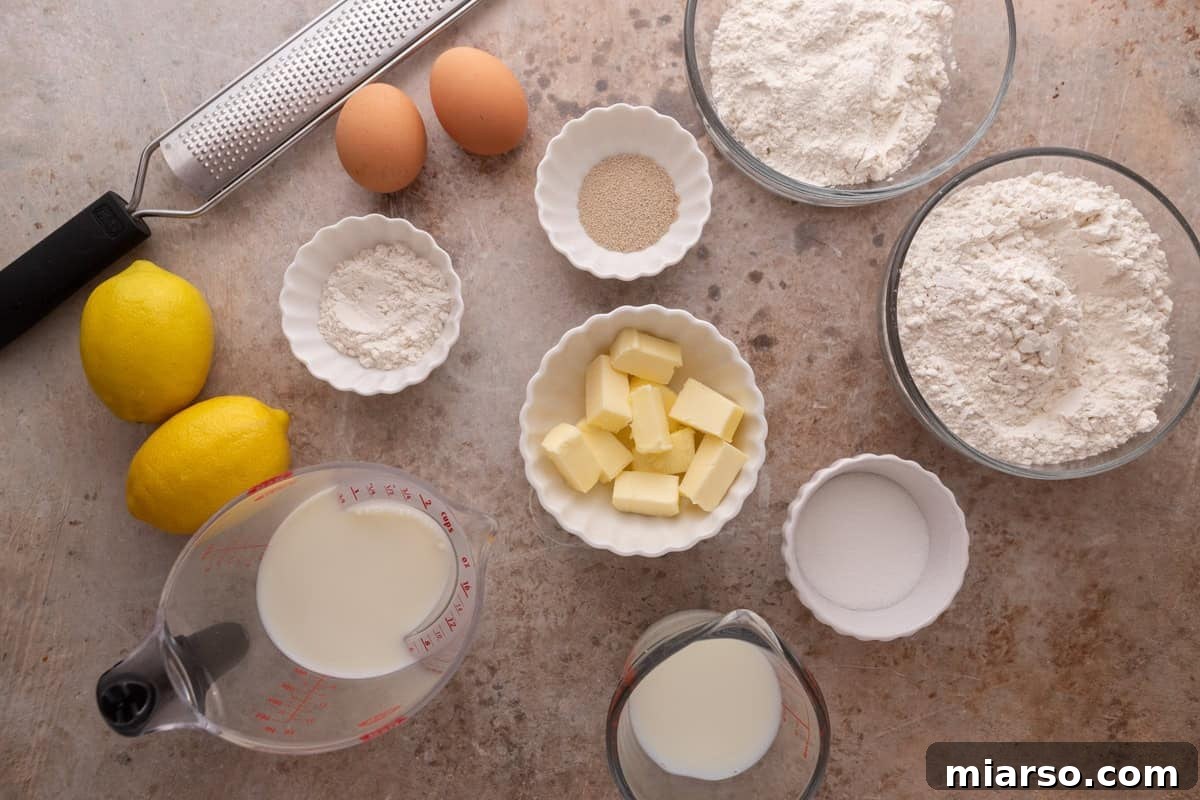
- All-purpose flour + whole milk (for Tangzhong): This dynamic duo is cooked together to form a special paste known as Tangzhong. This crucial step gelatinizes the starches in the flour, allowing the dough to absorb and retain significantly more moisture, which is the secret to achieving rolls that stay incredibly soft and fresh for an extended period.
- Whole milk (for yeast activation): Gently warmed to 100–110°F, this milk provides the perfect environment to activate your yeast, ensuring a proper rise and rich, flavorful dough. Using whole milk delivers the most luxurious and tender result.
- Active dry or instant yeast: Both types of yeast will work effectively. While instant yeast doesn’t strictly require proofing, I always recommend proofing it regardless. This simple step confirms the yeast is active and potent, guaranteeing your rolls will rise beautifully.
- Granulated sugar: This serves a dual purpose: it provides essential food for the yeast, encouraging a robust rise, and subtly sweetens the brioche dough, enhancing its overall flavor profile.
- Unsalted butter (two additions): We incorporate butter in two distinct stages for optimal brioche texture. First, a portion is melted and mixed directly into the dough to add initial richness. Then, softened butter is gradually added during the kneading process, a classic brioche technique that yields a dough that is incredibly rich and tender without becoming dense or heavy.
- Eggs: Ensure your eggs are at room temperature so they blend seamlessly and evenly into the dough mixture. Eggs are vital for adding both structure and a luxurious richness to the brioche, contributing to its signature texture.
- Lemon zest: One generous tablespoon of fresh lemon zest is incorporated directly into the dough. This infuses every single bite with a bright, fragrant, and truly authentic lemon flavor, making the dough itself a star.
- All-purpose flour and bread flour: This carefully chosen combination is key to the perfect brioche texture. Bread flour, with its higher protein content, provides the necessary structure and chewiness, while all-purpose flour contributes to the dough’s tenderness. Do not skip the bread flour; it makes a noticeable difference in the final product.
The Zesty Core: Lemon Sugar Filling and Lemon Curd
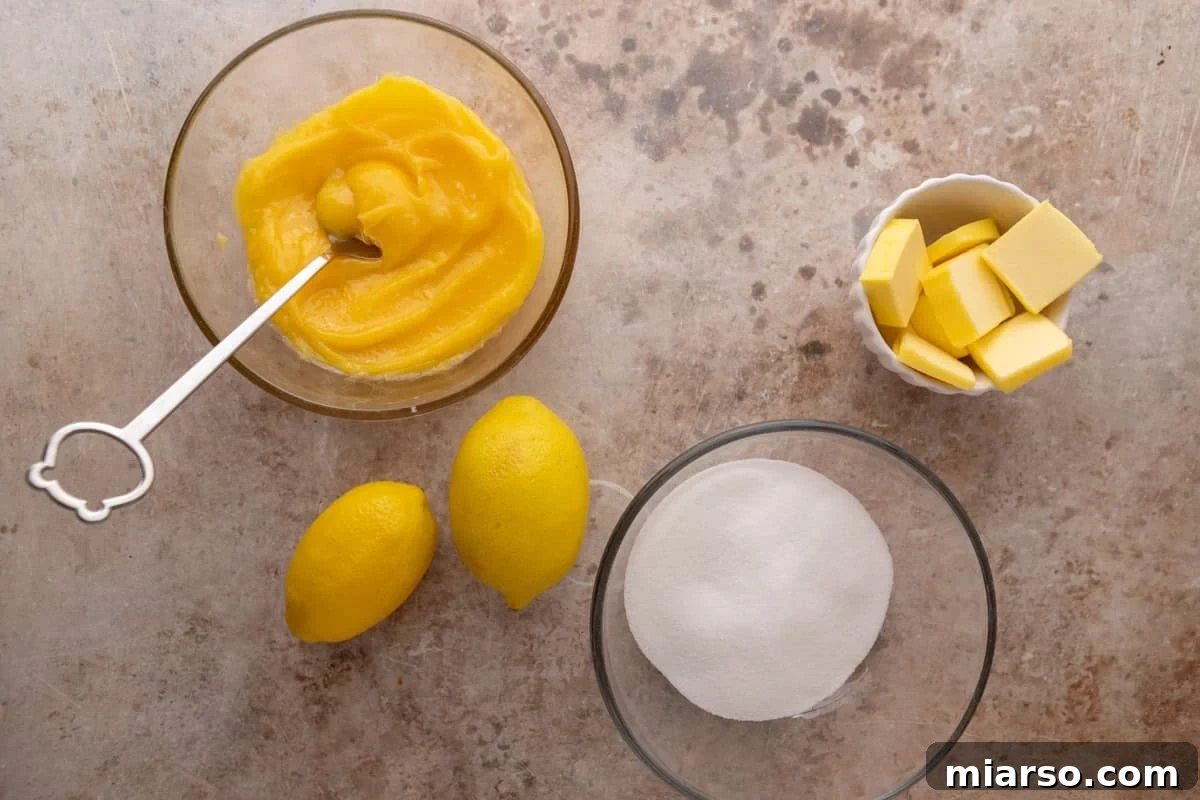
- Granulated sugar, lemon zest and pinch of salt: The magic of this filling comes from rubbing the fresh lemon zest directly into the granulated sugar with your fingertips. This simple, yet powerful technique releases the essential oils from the zest, intensifying its aromatic and flavorful impact significantly more than if you simply stirred them together.
- Unsalted butter: Softened to a spreadable consistency, this butter forms the rich base layer over the rolled-out dough, acting as the delicious adhesive that holds the lemon sugar and curd securely in place.
- Lemon curd: You have the flexibility to use either high-quality store-bought lemon curd, which works wonderfully for convenience, or, for an absolutely unparalleled flavor experience, opt for homemade lemon curd. It’s dolloped and gently smeared over the butter and sugar filling, creating delightful pockets of tangy liquid gold that melt into the rolls as they bake.
The Grand Finale: Lemon Cream Cheese Frosting
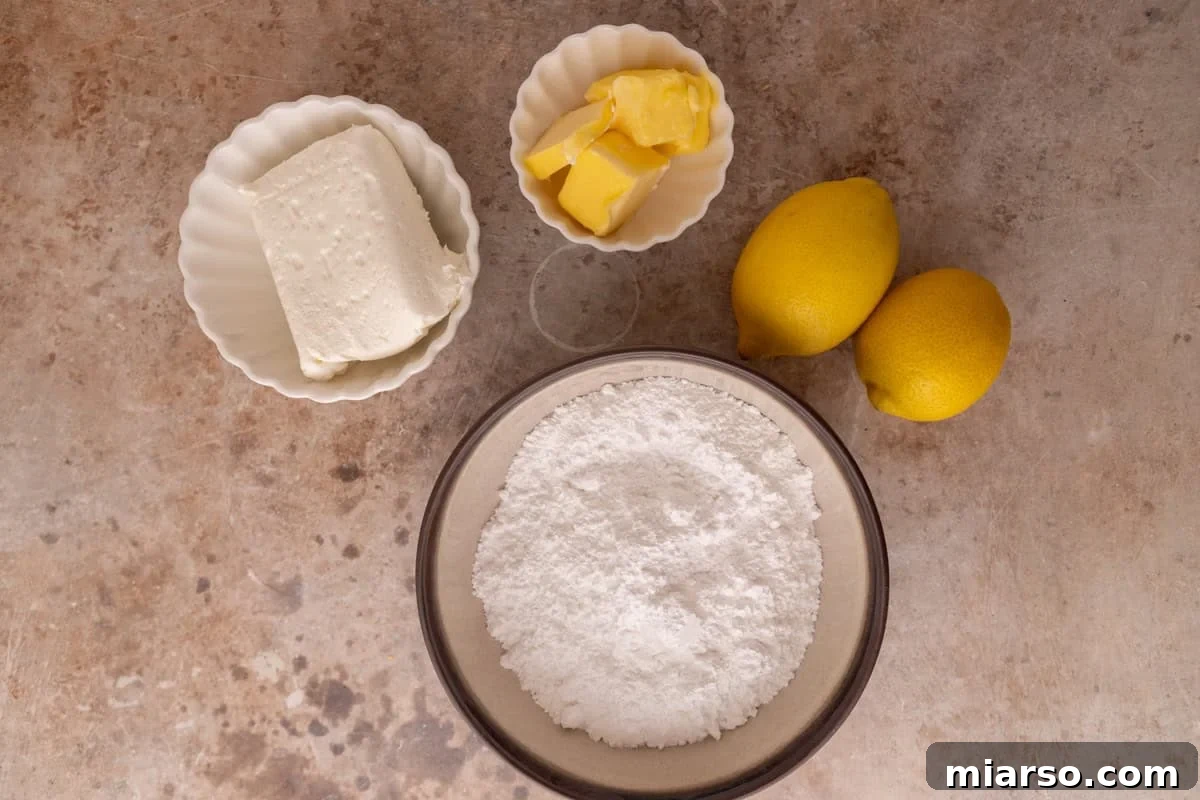
- Cream cheese: Crucially, ensure your cream cheese is fully softened to room temperature before beating. This guarantees a velvety smooth frosting with a lovely, subtle tang that complements the lemon perfectly.
- Unsalted butter: Creamed together with the softened cream cheese, the butter creates a rich, stable, and wonderfully spreadable base for your frosting, ensuring a luxurious mouthfeel.
- Powdered sugar: Begin with 1 1/4 cups of powdered sugar, then adjust to your personal preference. You can always add a little more if you desire a sweeter or thicker frosting consistency.
- Lemon zest and lemon extract: These are the powerhouses for vibrant lemon flavor in the frosting. The fresh lemon zest provides bright, floral notes, while a touch of lemon extract amplifies the citrus intensity, cutting beautifully through the richness of the cream cheese and butter.
- Vanilla extractand pinch of salt: Vanilla extract adds a layer of warmth and complexity. The pinch of salt, often overlooked, is particularly important here, as it plays a vital role in balancing the sweetness of the frosting, preventing it from tasting cloyingly sweet and enhancing all the other flavors.
Step-by-Step Guide: How to Make Lemon Rolls with Lemon Curd
Step 1: Master the Tangzhong Paste
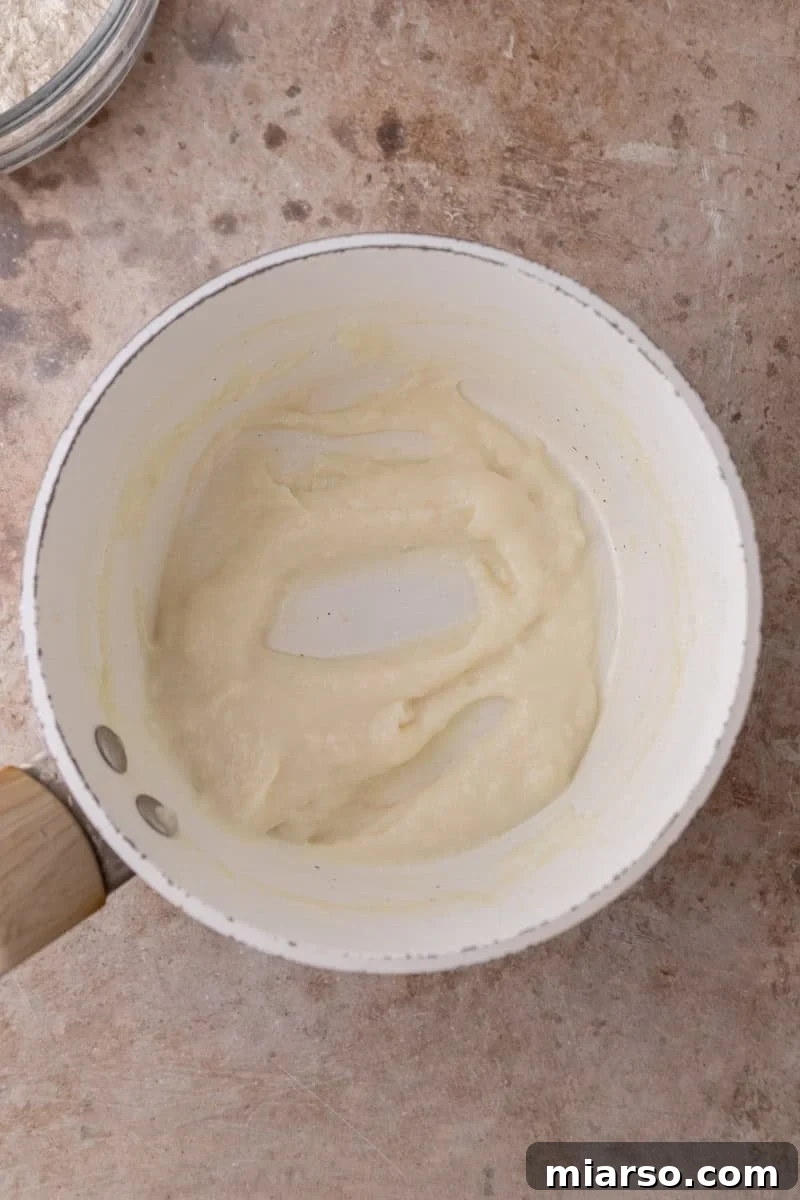
In a small saucepan, combine 2 tablespoons of all-purpose flour and 1/2 cup of whole milk. Whisk these ingredients together thoroughly until you achieve a completely smooth mixture with no lumps. Place the saucepan over medium heat and cook, stirring or whisking constantly, for approximately 2–4 minutes. You’ll know it’s ready when the mixture thickens into a pale, pudding-like paste that leaves clear, visible lines on the bottom of the pan as you drag your whisk through it. Immediately transfer this cooked Tangzhong to a separate bowl and allow it to cool completely to room temperature before proceeding. This cooling step is critical; adding warm Tangzhong to your dough can prematurely cook the eggs, compromising the dough’s texture.
Step 2: Proof Your Yeast for Optimal Rise
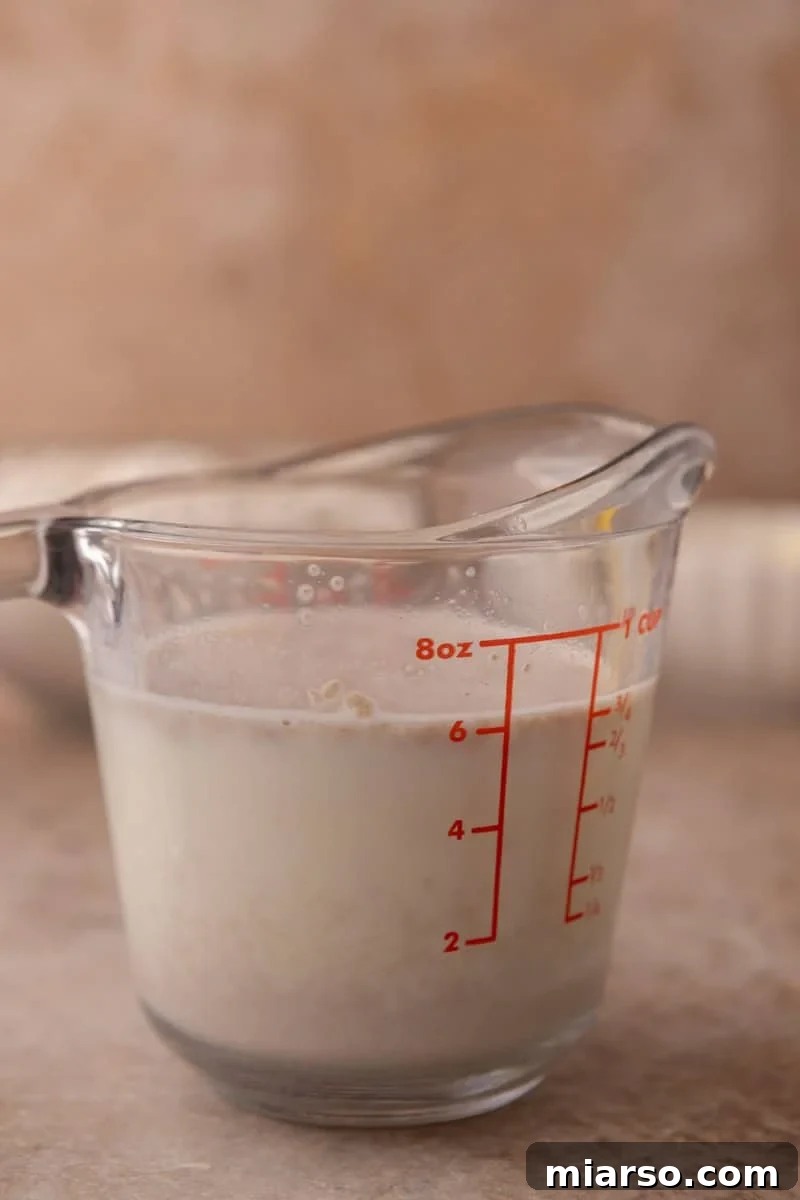
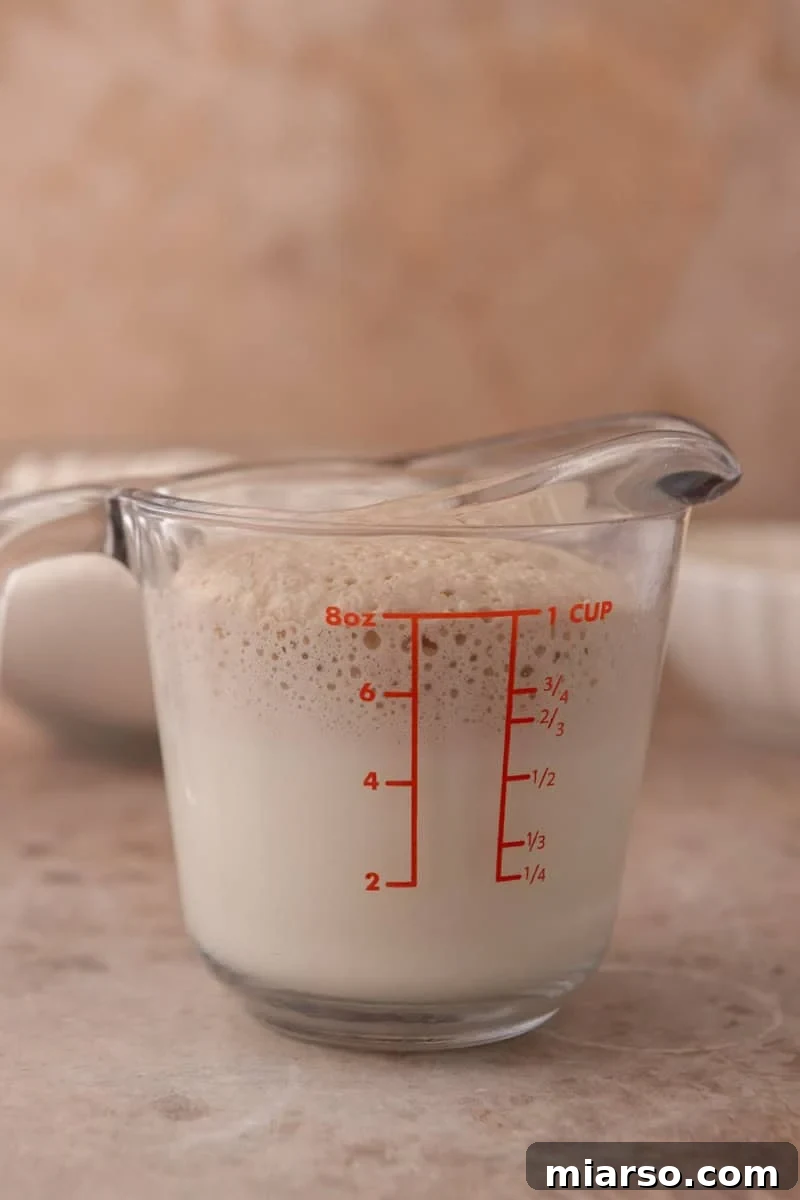
In a small bowl, whisk together the warm whole milk (ensuring it’s between 100–110°F – too hot will kill the yeast, too cold won’t activate it) and the granulated sugar until the sugar has fully dissolved. Sprinkle your active dry or instant yeast evenly over the surface of the milk mixture. Allow it to sit undisturbed for about 5 minutes. During this time, you should observe the surface becoming distinctly foamy and bubbly; this is your clear indicator that the yeast is active and viable, ensuring your rolls will achieve a magnificent rise. If, after 5–7 minutes, no foaming or bubbling occurs, it’s likely your yeast is old and inactive, or your milk was at an incorrect temperature. In such a case, it’s best to discard and start fresh with new yeast and carefully regulated milk temperature.
Step 3: Craft the Tender Lemon Brioche Dough
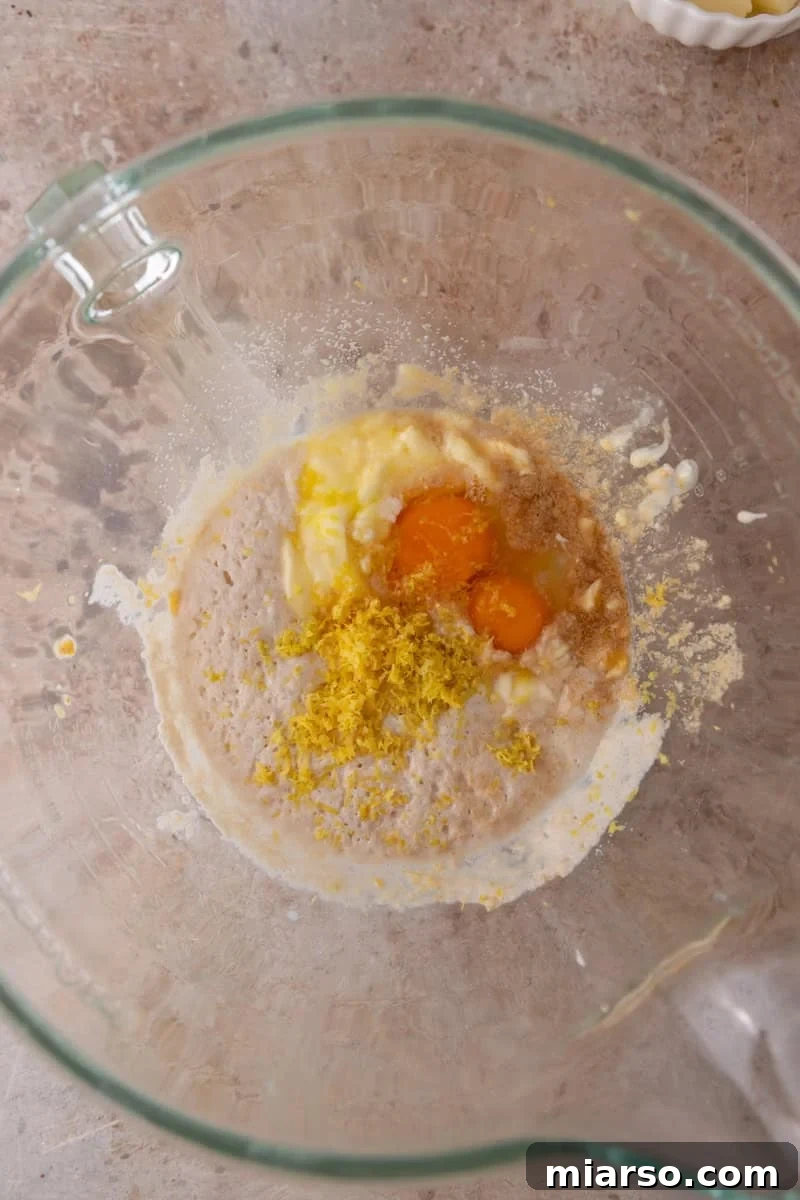
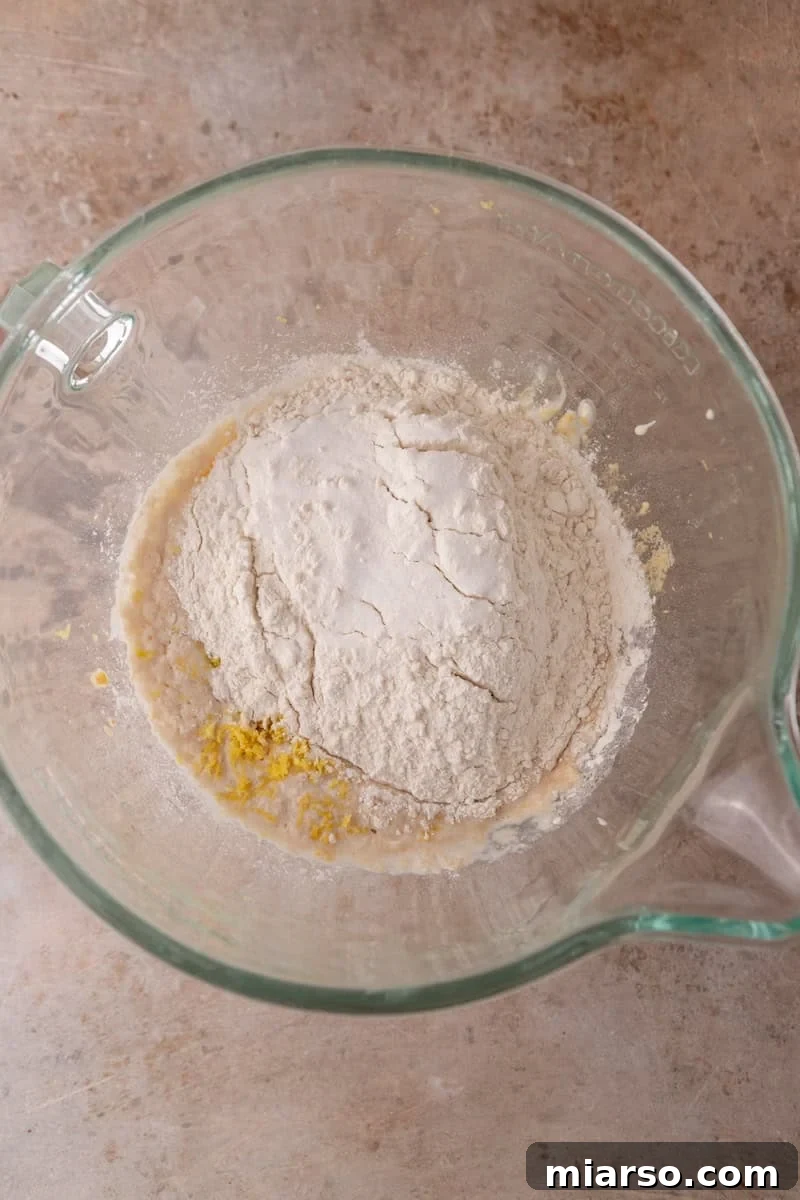
In the bowl of a stand mixer equipped with a dough hook attachment, combine the completely cooled Tangzhong paste, your activated yeast mixture, the initial portion of melted butter, room temperature eggs, fresh lemon zest, vanilla extract, and salt, along with both the all-purpose and bread flours. Begin mixing on low speed until the ingredients just come together to form a shaggy, somewhat crumbly dough. Increase the mixer speed to medium and continue to knead for an additional 5–8 minutes. The goal is to achieve a smooth, elastic dough that is soft to the touch. It will be slightly tacky, but should not be overly sticky.
Now, for the brioche enrichment: with the mixer still running on medium-low, begin adding the softened butter, one tablespoon at a time. This step requires patience. Allow each tablespoon of butter to be fully incorporated into the dough before adding the next. Initially, the dough may appear a bit rough or separated, but it will come back together beautifully as each butter addition is absorbed. Once all the softened butter has been added and fully mixed in, the dough should be wonderfully soft, slightly tacky, and should cleanly pull away from the sides of the mixer bowl, indicating proper development.
Step 4: The Crucial First Rise (and Chill!)
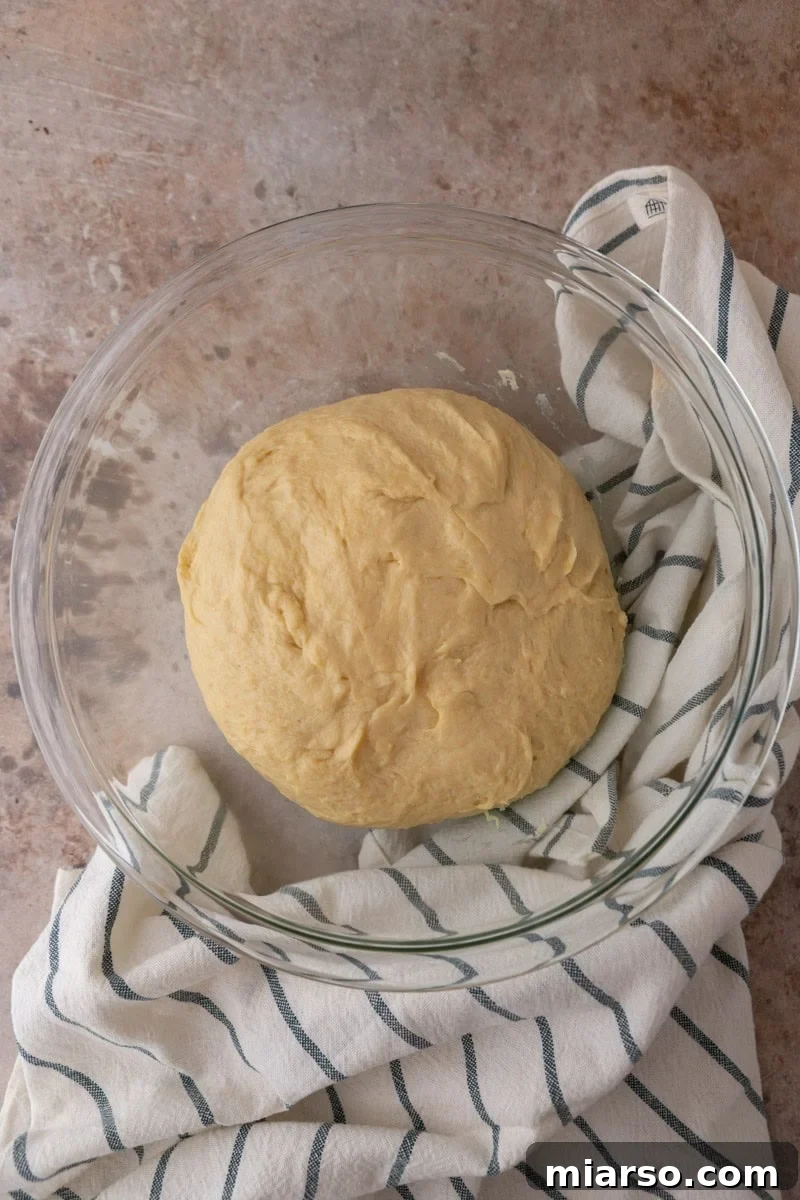
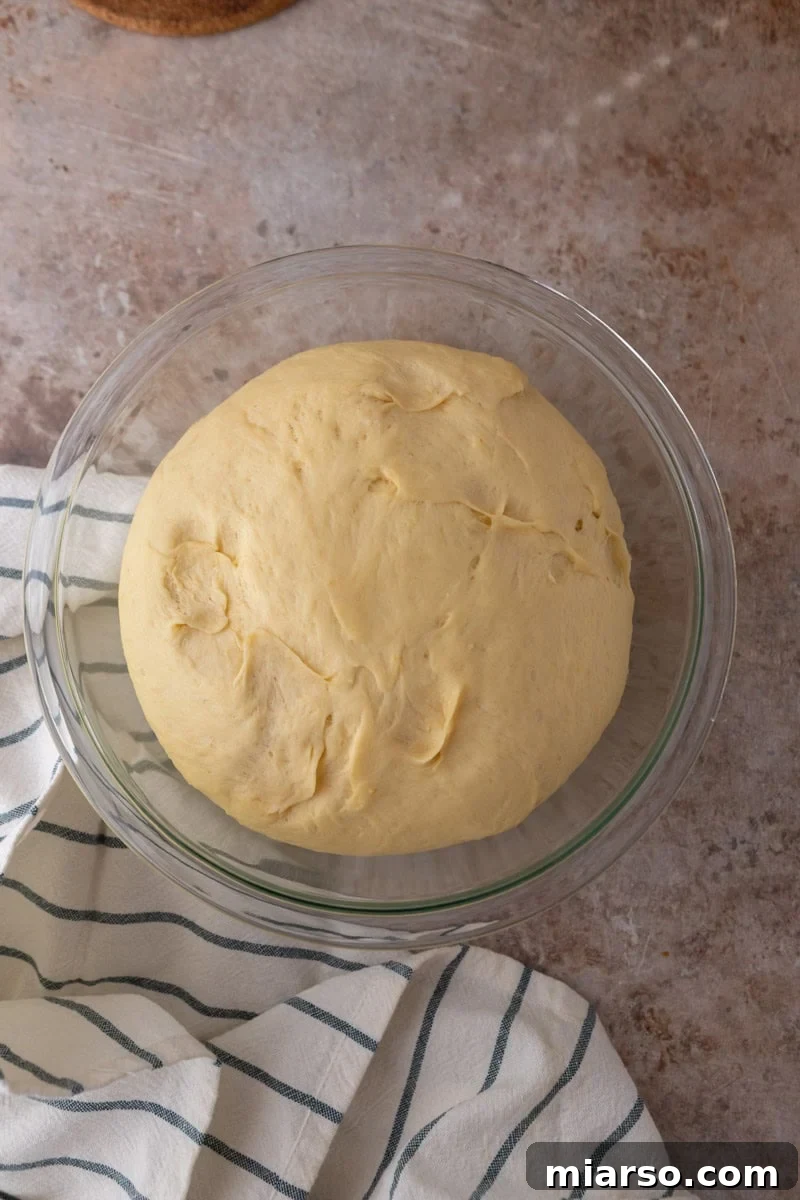
Once your dough is perfectly kneaded, transfer it to a lightly greased bowl, ensuring all surfaces are coated to prevent sticking. Cover the bowl securely with plastic wrap or a clean, damp kitchen towel. Place the dough in a warm, draft-free spot and allow it to rise for 1–2 hours, or until it has visibly doubled in size. This first rise develops flavor and texture. For optimal results, and to make the subsequent shaping process significantly easier and cleaner, I highly recommend transferring the bowl to the refrigerator after the first rise and chilling the dough for at least 2 hours, or ideally, overnight. Cold dough is much firmer and less sticky, making it considerably simpler to roll out into a neat rectangle without tearing or excessive flour.
Step 5: Prepare the Aromatic Lemon Sugar Filling
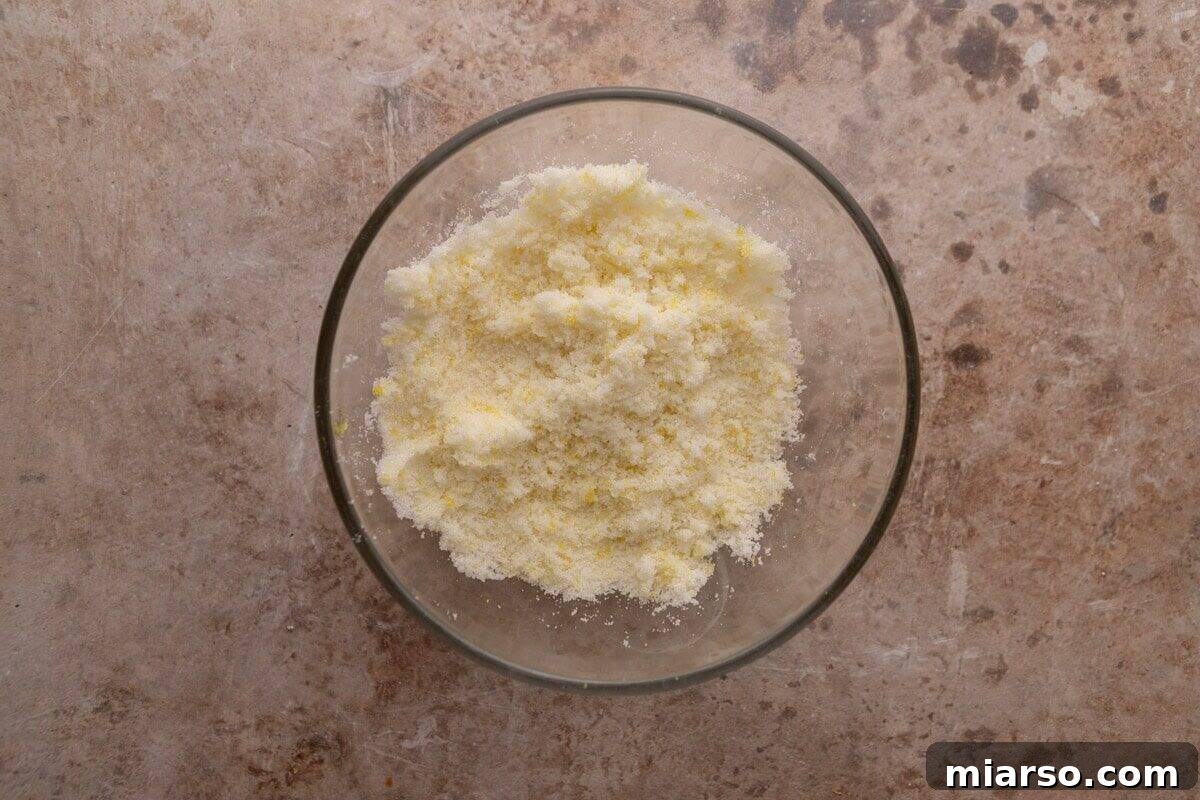
In a small bowl, combine the granulated sugar, fresh lemon zest, and a tiny pinch of salt. Now for the secret to intense lemon flavor: use your fingers to vigorously rub the lemon zest into the sugar for a good 30 seconds. You’ll notice the sugar becoming slightly moistened and exceptionally fragrant, signaling that the essential oils from the zest have been fully released and infused into the sugar. This simple yet crucial technique ensures the filling is noticeably more aromatic and intensely flavored than if you simply stirred the ingredients together, creating a truly vibrant citrus core for your rolls.
Step 6: Expertly Shape Your Lemon Rolls
Lightly grease a 9×13-inch baking pan and set it aside, ready for your beautifully shaped rolls. On a lightly floured work surface, take your chilled dough and roll it out evenly into a large rectangle, approximately 16×12 inches, positioning the long side closest to you. Spread the softened butter uniformly across the entire surface of the dough, making sure to leave a clear 1/2-inch border along the far long edge – this will help seal the roll. Evenly sprinkle your aromatic lemon sugar mixture over the butter layer, ensuring full coverage.
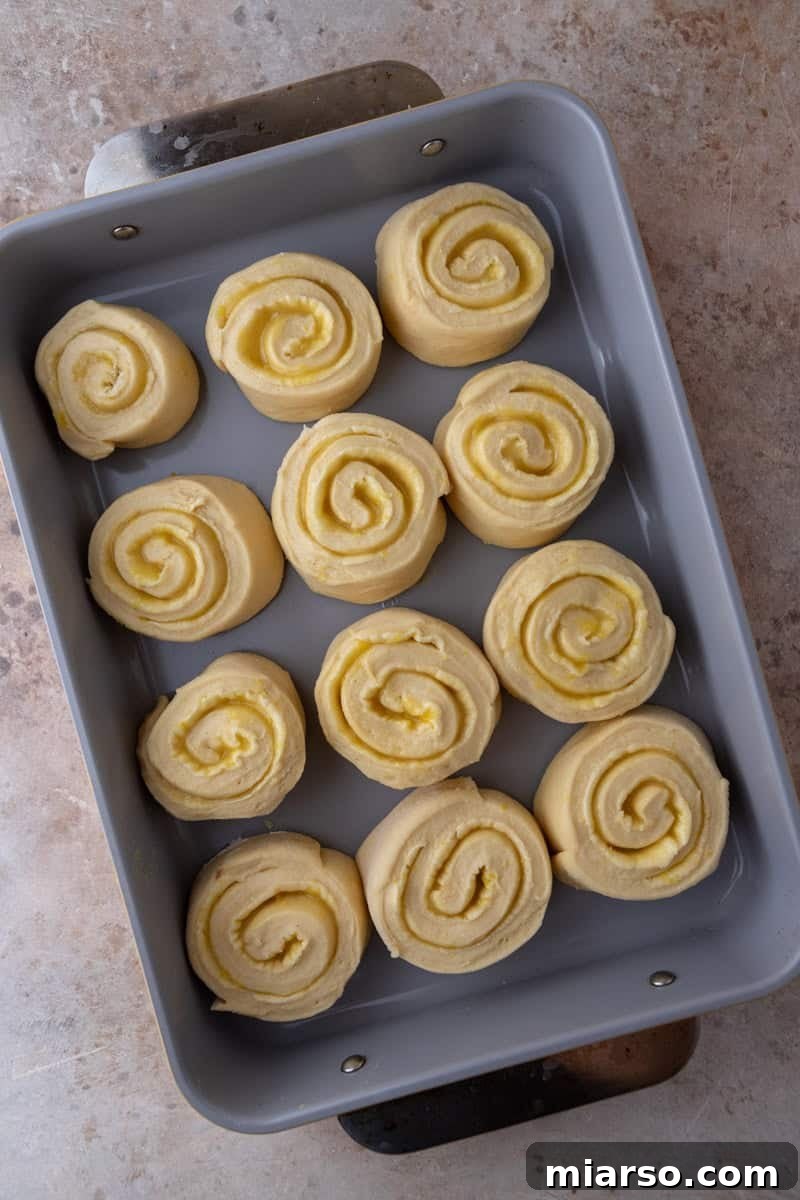
Next, take your lemon curd and dollop it in small, separate spoonfuls across the sugar filling. Resist the urge to spread it into a perfectly even layer; attempting to do so will likely cause the curd to squeeze out when you roll the dough. Instead, use an offset spatula to gently smear each dollop just once or twice. This creates intentional pockets of curd that will melt delightfully during baking. Starting from the long side closest to you, begin rolling the dough up tightly and evenly, maintaining consistent pressure to prevent air gaps. Once rolled, use a sharp, unflavored dental floss or a very sharp knife to slice the log into 12 equal rolls. Arrange these rolls, cut-side up, in your prepared baking pan, leaving a small space between them to allow for expansion during the second rise.
Step 7: The Final Flourish – Second Rise
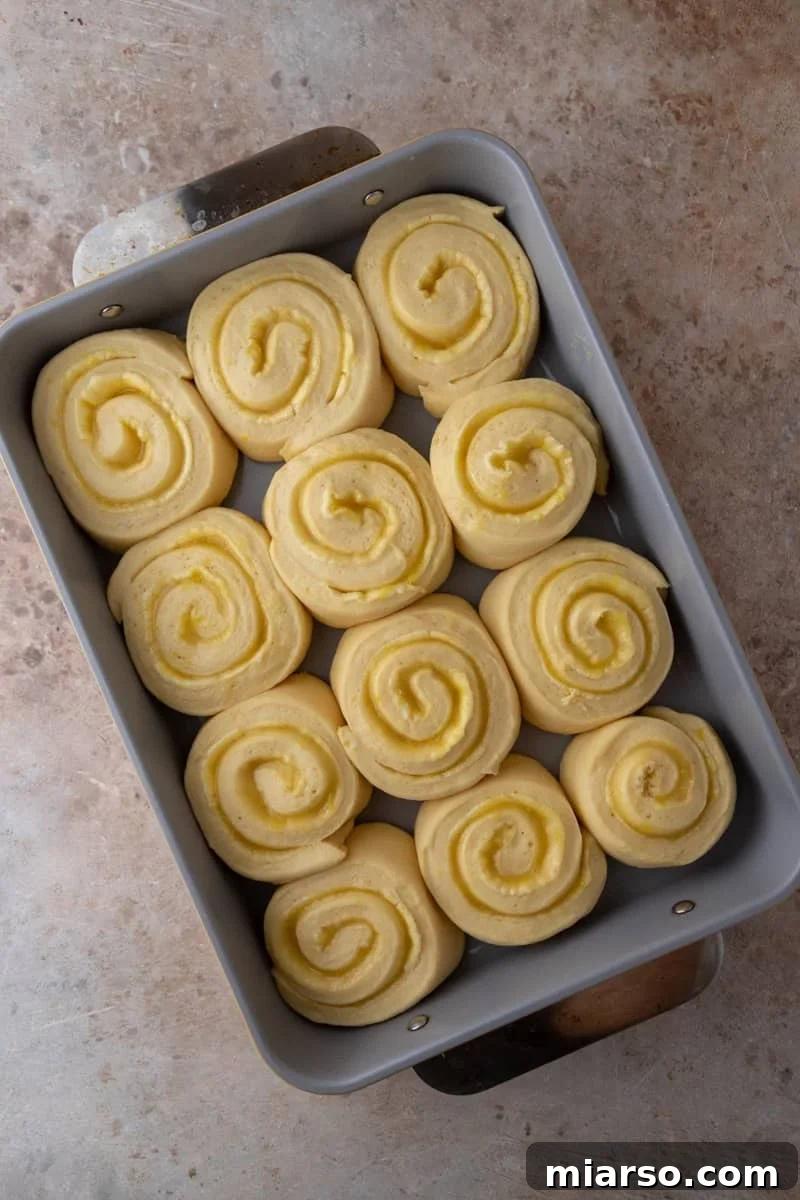
Once your rolls are nestled in the pan, cover them loosely with plastic wrap or a clean kitchen towel. Allow them to rise in a warm, draft-free environment for 45–60 minutes. During this crucial second rise, the rolls should visibly puff up and expand until they are gently touching each other, filling the pan. Do not rush this step; properly proofed rolls are the key to achieving that signature pillowy softness. Under-proofed rolls will result in a denser, less tender texture.
Step 8: Bake to Golden Perfection
Preheat your oven to 325°F (160°C). Carefully place the proofed rolls into the preheated oven and bake for approximately 28–30 minutes. You’re looking for the rolls to be set through and a beautiful light golden brown on top. Remember that this brioche dough, enriched with eggs and butter, tends to brown more quickly than a standard yeast dough. Keep a watchful eye on them. If you notice the tops are becoming too dark before the 28-minute mark, simply tent the pan loosely with aluminum foil and continue baking until they are fully cooked. An internal temperature of around 190°F (88°C) typically indicates doneness. Once baked, remove the pan from the oven and allow the rolls to cool in the pan for about 10 minutes before applying the frosting.
Step 9: Frost and Finish with a Zesty Flourish
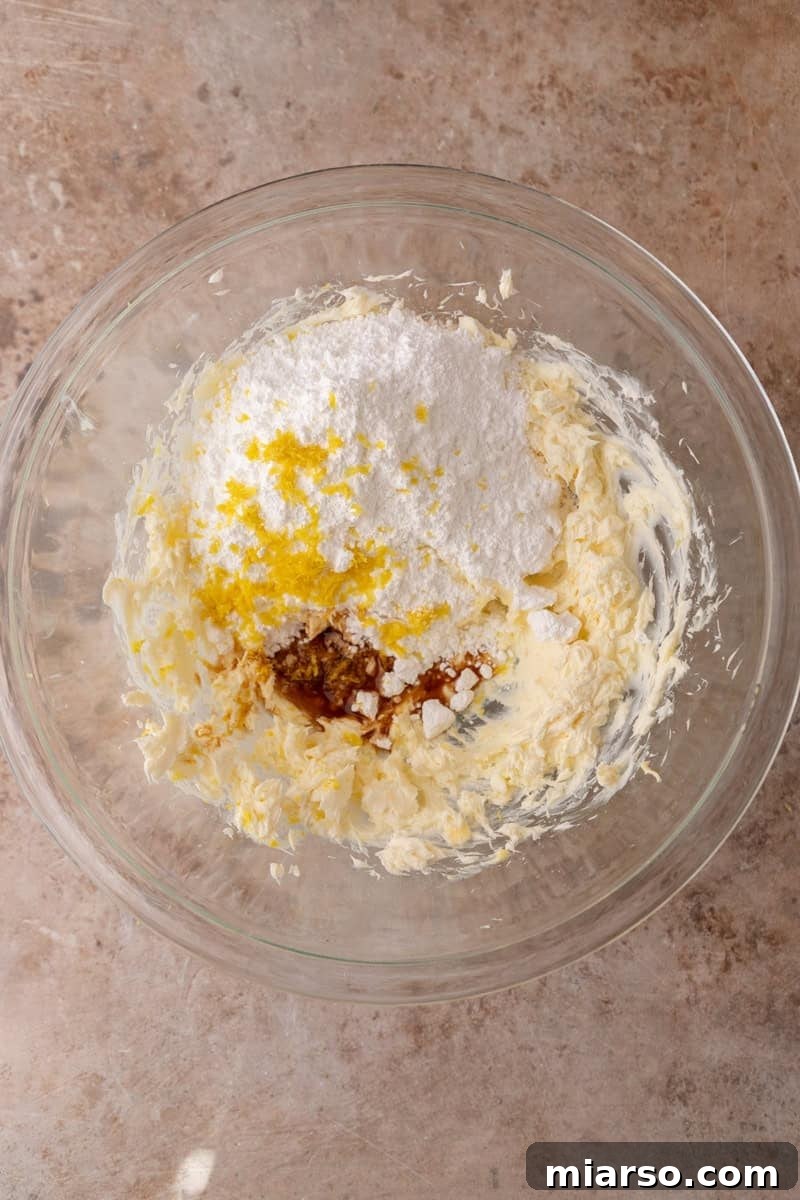
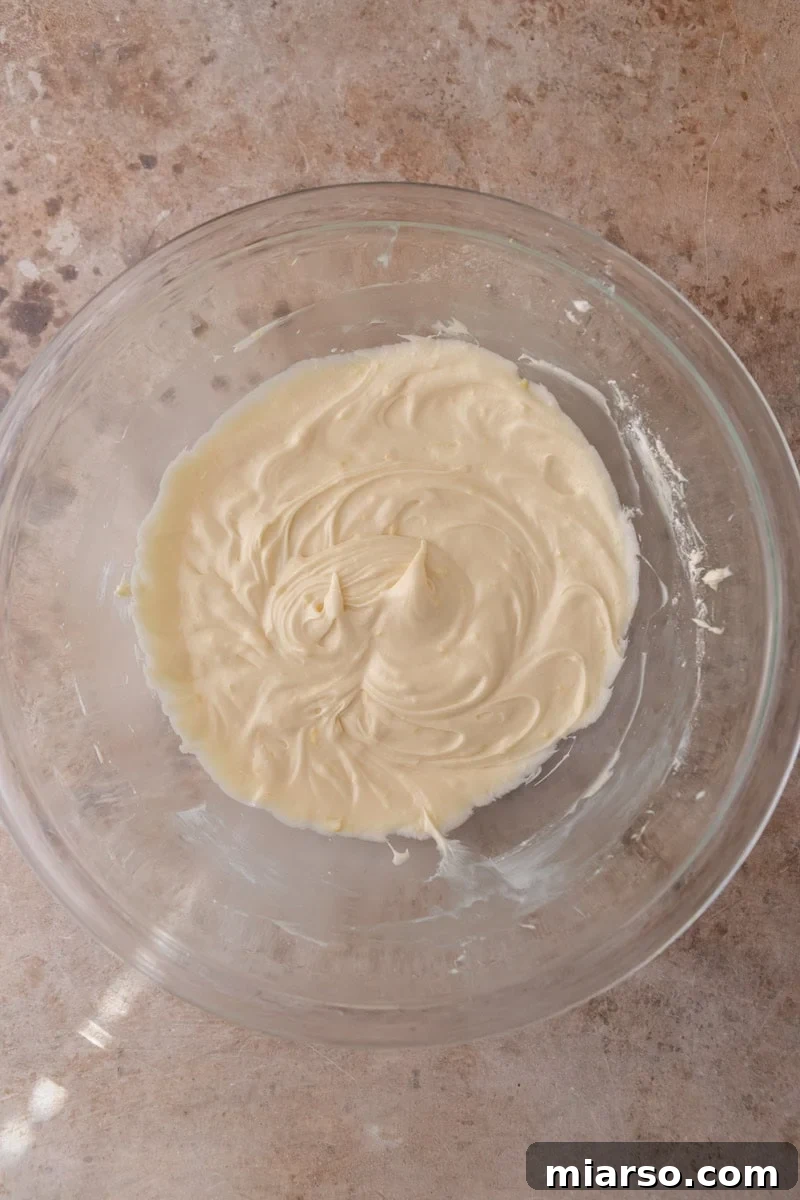
While the rolls are cooling slightly, prepare your decadent lemon cream cheese frosting. In a mixing bowl, beat together the fully softened cream cheese and unsalted butter until the mixture is completely smooth and free of any lumps. Gradually add the powdered sugar, vanilla extract, fresh lemon zest, lemon extract, and that essential pinch of salt. Continue to mix until the frosting is wonderfully creamy, fluffy, and easily spreadable. Once the rolls have cooled for approximately 10 minutes (they should be warm, not hot), spread a generous layer of this luscious frosting evenly over the top of each roll, ensuring every surface is covered in creamy, lemony goodness.
For the ultimate finishing touch, take a spoonful of extra lemon curd and artfully add a light swoop or drizzle over the cream cheese frosting on each roll. This not only enhances their visual appeal but also brilliantly ties all the bright, tangy lemon flavors together, creating a harmonious and utterly delightful experience. Serve immediately and savor every soft, citrus-infused bite!


Frequently Asked Questions About These Lemon Curd Rolls
Yes, absolutely and genuinely worth it! The Tangzhong paste acts as a hydration booster for your dough. By pre-cooking a small portion of flour and milk, you gelatinize the starches, enabling the dough to absorb and retain significantly more moisture than a standard dough. This crucial step results in rolls that are exceptionally soft and pillowy, and, most notably, they stay fresh and tender for days instead of quickly drying out. You’ll truly notice the difference in their texture, even the next day.
While you can substitute all-purpose flour for the bread flour in this recipe, please be aware that your lemon rolls will have a slightly different texture. Bread flour contains a higher protein content, which is what provides the rolls with their characteristic chewiness and structure, helping them achieve a beautiful lift and maintain their shape. If you opt for all-purpose flour only, your rolls will be a little softer and more tender overall, but they might lack some of the desired structural integrity and chewiness.
Yes, chilling the dough is a highly recommended and beneficial step for this specific recipe. This brioche dough is enriched with butter and tends to be quite soft and sticky at room temperature, which can make it challenging and messy to roll out cleanly. Chilling the dough for at least 2 hours (or conveniently, overnight) firms it up considerably. This makes it much easier to handle, roll into a neat rectangle, and slice into perfectly defined, beautiful swirls without sticking or tearing.
Absolutely, using good quality store-bought lemon curd is a fantastic shortcut that works perfectly well for these rolls, saving you time and effort. When selecting, look for a brand that boasts a bright, tangy flavor profile rather than one that is overly sweet. However, if you’re aiming to truly elevate these rolls to another level of gourmet deliciousness, making your own homemade lemon curd is highly encouraged. My small batch lemon curd recipe, linked in the notes, is quick to prepare and adds an unparalleled freshness and depth of flavor.
This is a common characteristic of brioche dough. Because it’s a rich dough, generously loaded with eggs and butter, it naturally browns faster than a leaner, standard yeast dough. If you notice your rolls are getting too dark on top before they are fully cooked through (typically around the 15-minute mark of baking), simply tent the baking pan loosely with aluminum foil. This will protect the tops from over-browning while allowing the rolls to continue baking evenly until their internal temperature reaches approximately 190°F (88°C), indicating they are perfectly done.
Yes, these rolls are wonderfully make-ahead friendly, offering two convenient options for overnight preparation. Option 1: Complete the first rise, chill the dough as directed, then shape the rolls and arrange them in the baking pan. Cover the pan securely and refrigerate overnight. In the morning, simply pull the pan out, let the rolls proof at room temperature for about 1 hour (until visibly puffy), then bake as usual. Option 2: Prepare the dough completely the night before, allow it to undergo its first rise, then refrigerate the entire ball of dough overnight. The next morning, you can then proceed with shaping, a second rise, and baking. Both methods work exceptionally well for fresh-baked morning rolls!
To maintain their freshness and delightful flavor, store any frosted leftover lemon rolls in an airtight container in the refrigerator for up to 4 days. For the best eating experience, allow them to come to room temperature before serving, or warm them gently in the microwave for 15–20 seconds. If you have unfrosted rolls, you can freeze them for longer storage. Wrap each roll individually in plastic wrap, then place them in a freezer-safe bag or container and freeze for up to 2 months. Thaw them overnight in the refrigerator before frosting and serving.

Lemon Rolls with Lemon Curd (Cinnamon Roll Style)
30 minutes
28 minutes
4 hours
58 minutes
12
servings
Print Recipe
Ingredients
Tangzhong
-
2
tablespoons
all-purpose flour -
1/2
cup
whole milk
Lemon Brioche Dough
-
3/4
cup
whole milk
warmed to 100–110°F -
2 1/4
teaspoons
active dry yeast
or instant yeast -
1/4
cup
granulated sugar -
1/4
cup
unsalted butter
melted or very soft -
2
large eggs
room temperature -
1
tablespoon
lemon zest
from about 2 lemons -
1
teaspoon
vanilla extract -
1 1/4
teaspoons
salt -
2 1/2
cups
all-purpose flour -
1
cup
bread flour -
5
tablespoons
unsalted butter
softened (added after kneading)
Lemon Sugar Filling
-
1/3
cup
unsalted butter
softened -
2/3
cup
granulated sugar -
1 & 1/2
tablespoon
lemon zest -
Pinch
of salt
Lemon Curd Layer
-
1/3
cup
lemon curd
store-bought or homemade, I used my homemade small batch one linked in the notes
Lemon Cream Cheese Frosting
-
6
oz
cream cheese
softened -
1/4
cup
unsalted butter
softened -
1 1/4
cups
powdered sugar -
1/2
teaspoon
vanilla extract -
1/4
teaspoon
lemon extract -
2
teaspoon
lemon zest -
Pinch
of salt
Instructions
Make the Tangzhong
-
In a small saucepan, whisk together the flour and milk until smooth. Cook over medium heat, whisking constantly, until thickened into a paste that leaves visible lines when stirred, about 2–4 minutes. Transfer to a bowl and let cool to room temperature.2 tablespoons all-purpose flour,
1/2 cup whole milk
Make the Dough
-
In a small bowl, whisk the warm milk and sugar until dissolved. Sprinkle the yeast over the top and let sit for 5 minutes until foamy.3/4 cup whole milk,
2 1/4 teaspoons active dry yeast,
1/4 cup granulated sugar -
In the bowl of a stand mixer fitted with the dough hook, combine the cooled Tangzhong, yeast mixture, melted butter, eggs, lemon zest, vanilla, lemon extract (if using), salt, and both flours. Mix on low speed until a soft dough forms.1/4 cup unsalted butter,
2 large eggs,
1 tablespoon lemon zest,
1 teaspoon vanilla extract,
1 1/4 teaspoons salt,
2 1/2 cups all-purpose flour,
1 cup bread flour -
Knead on medium speed for 5–8 minutes until smooth and elastic. Add the softened butter one tablespoon at a time until fully incorporated. The dough will be soft and slightly sticky.5 tablespoons unsalted butter
-
Transfer to a greased bowl, cover, and let rise in a warm place for 1–2 hours, until doubled.
-
For easier shaping, refrigerate the dough for 2–8 hours or overnight after the first rise.
Make the Filling
-
In a small bowl, mix together the sugar, lemon zest, and salt with your fingers to release all of the lemon zest oils.2/3 cup granulated sugar,
1 & 1/2 tablespoon lemon zest,
Pinch of salt
Shape the Rolls
-
Grease a 9×13-inch baking pan.
-
Roll the chilled dough into a 16×12-inch rectangle with the long side facing you. Spread softened butter on there, sprinkle with the lemon sugar evenly over the dough, leaving a 1/2-inch border along the far long edge.1/3 cup unsalted butter
-
Dollop the lemon curd evenly over the filling in small spoonfuls. Gently smear once or twice with an offset spatula to create pockets of curd.1/3 cup lemon curd
-
Roll the dough tightly from the long side and slice into 12 rolls using a sharp knife or dental floss. Arrange in the prepared pan.
-
Cover loosely and let rise for 45–60 minutes, until puffy.
Bake
-
Preheat the oven to 325°F and bake for 28–32 minutes, until set and lightly golden on top. Tent loosely with foil if browning too quickly.
-
Let the rolls cool for about 10 minutes before frosting.
Make the Frosting
-
Beat the cream cheese and butter together until smooth. Add powdered sugar, vanilla, lemon zest, lemon extract, and salt, and mix until creamy and spreadable.6 oz cream cheese,
1/4 cup unsalted butter,
1 1/4 cups powdered sugar,
1/2 teaspoon vanilla extract,
2 teaspoon lemon zest,
Pinch of salt,
1/4 teaspoon lemon extract -
Spread over warm (not hot) rolls. Decorate with a light swoop of lemon curd if you’d like, I love doing that because it brings the flavors together so much better!
Video
Notes
Nutrition
Calories:
500
Calories
|
Carbohydrates:
62
g
|
Protein:
7
g
|
Fat:
25
g
|
Saturated Fat:
15
g
|
Polyunsaturated Fat:
1
g
|
Monounsaturated Fat:
6
g
|
Trans Fat:
1
g
|
Cholesterol:
91
mg
|
Sodium:
330
mg
|
Potassium:
121
mg
|
Fiber:
1
g
|
Sugar:
33
g
|
Vitamin A:
812
IU
|
Vitamin C:
2
mg
|
Calcium:
63
mg
|
Iron:
2
mg
Nutrition information is automatically calculated, so should only be used as an approximation.
Like this? Leave a comment below!