
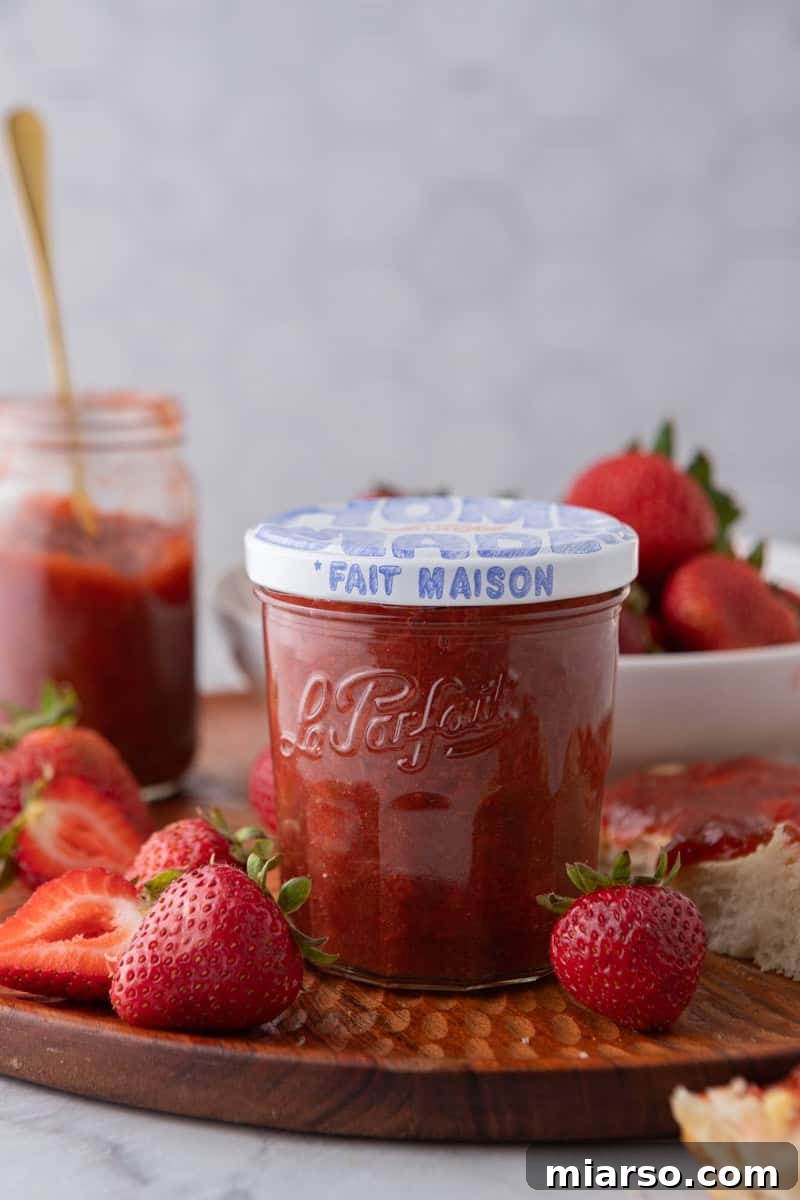
Easy Homemade Strawberry Rhubarb Jam: A Pectin-Free Recipe
Discover the pure delight of homemade jam with this incredibly easy Strawberry Rhubarb Jam recipe. Perfectly capturing the essence of spring, it balances the luscious sweetness of ripe strawberries with the invigorating tang of fresh rhubarb. What makes this recipe truly special is its simplicity: there’s no need for added pectin, as the natural gelling properties of the fruits, enhanced by a touch of lemon juice, create a beautifully set jam. This means less fuss and more authentic fruit flavor in every spoonful.
Whether you’re a seasoned canner looking to preserve the season’s bounty or a beginner eager to try your hand at jam-making, this recipe is designed for success. It’s perfect for canning, allowing you to stock your pantry with deliciousness, or simply storing in the refrigerator or freezer for immediate enjoyment. Imagine spreading this vibrant, sweet-tart jam on fresh bread, warm biscuits, or flaky croissants for breakfast, brunch, or a delightful afternoon tea. It’s not just food; it’s a jar full of comfort and seasonal joy.
The memory of warm, freshly baked bread, slathered with creamy butter and a spoonful of homemade strawberry jam, is deeply etched in my heart. Growing up, this was a daily ritual—a cherished moment I eagerly anticipated after school, heading to my grandmother’s house. Her culinary creations were legendary, and her jam, spread generously on her incredible homemade bread, was the highlight of my day. That simple pleasure provided a constant source of comfort and warmth, a taste of home that I carry with me still.
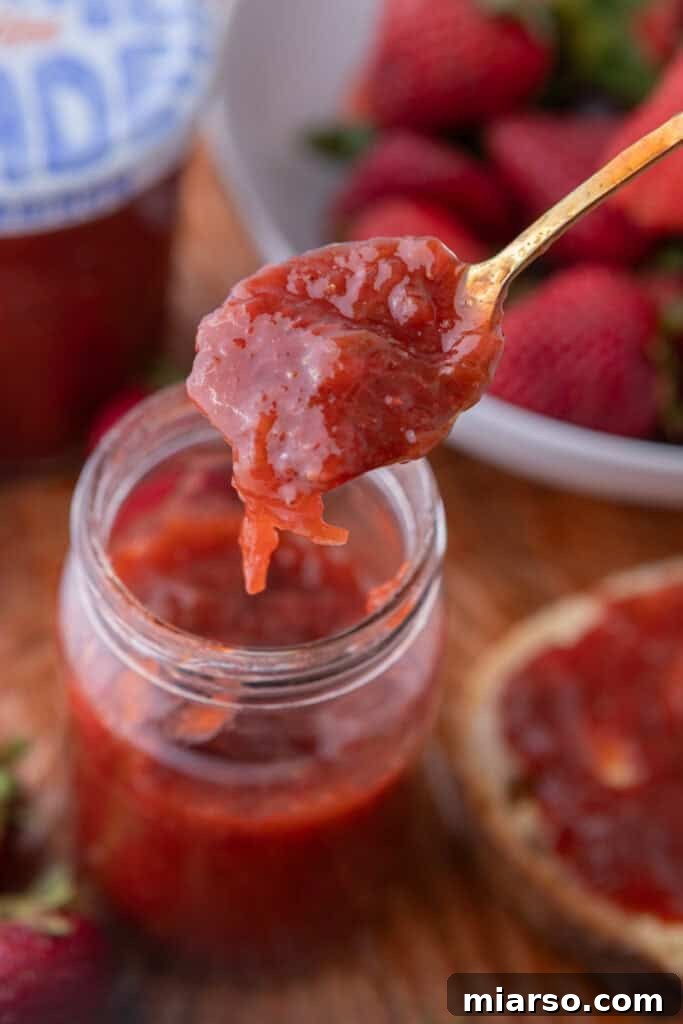
Today, I’m excited to share my own spin on her timeless recipe, introducing a twist with rhubarb. Rhubarb wasn’t an ingredient I encountered much during my childhood in Algeria, but since discovering its remarkable tartness and how it beautifully complements the sweetness of strawberries, this version has become a beloved tradition in my kitchen. It’s a recipe that perfectly marries nostalgia with a touch of fresh innovation, creating something both familiar and exciting. I truly hope you and your loved ones enjoy this delightful jam as much as we do in my home, creating new memories with every bite.
Explore More Delicious Recipes
If you’re a fan of delicious, thoughtfully crafted recipes, especially those featuring fresh fruit or comforting baked goods, you’ll love these other selections:
- Healthy Homemade Strawberry Chia Jam (No Sugar Added): A guilt-free and equally delicious jam option.
- Chilled Crumbl Chocolate Strawberry Cheesecake Cookies: Indulgent cookies that pair wonderfully with fresh berries.
- Crumbl Strawberry Pop Tart Cookies: A fun, nostalgic treat.
- Almond Thumbprint Cookies with Jam: Perfect for showcasing your homemade jam.
- Chocolate Dipped Strawberries Recipe: A classic dessert for any occasion.
Essential Ingredients for Your Pectin-Free Strawberry Rhubarb Jam
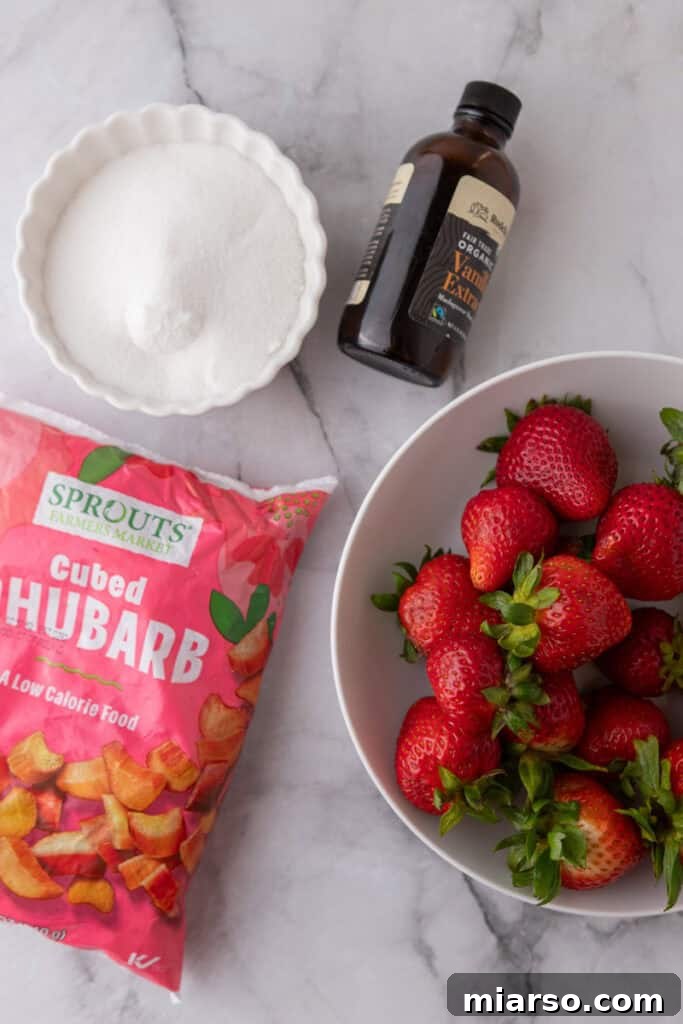
Crafting this flavorful strawberry rhubarb jam requires a surprisingly short list of ingredients, each playing a crucial role in developing its signature sweet-tart profile and perfect texture. The magic happens when these simple components come together in harmony. For the precise measurements, please refer to the comprehensive recipe card located at the very end of this article.
- Strawberries: The foundational sweetness and vibrant color come from fresh or frozen strawberries. If using fresh, ensure they are hulled and chopped. Frozen strawberries are an excellent, convenient alternative and work just as beautifully, especially when fresh berries are out of season.
- Rhubarb: Providing the essential tartness and a delightful fibrous texture, rhubarb is the perfect counterpoint to the strawberries. Like strawberries, it can be used fresh or frozen. Simply wash the stalks, trim the tough ends, and chop them into uniform pieces. There’s no need to peel rhubarb, as its skin contributes to the jam’s gorgeous pink hue and robust flavor.
- Granulated Sugar: Far more than just a sweetener, sugar is indispensable for jam making. It plays a critical role in preserving the fruit, intensifying its flavor and color, and, most importantly, working with the fruit’s natural pectin to achieve that perfectly thick, spreadable consistency. Any standard white granulated sugar will work wonderfully here.
- Fresh Lemon Juice: This ingredient is a true MVP. Freshly squeezed lemon juice brightens the overall flavor profile, making both the strawberries and rhubarb sing. Crucially, its acidity is vital for activating the fruit’s natural pectin, which is essential for the jam to set without the addition of commercial pectin.
- Salt: A tiny pinch of salt in a sweet recipe might seem counterintuitive, but it’s a secret weapon for flavor balance. It subtly enhances and rounds out all the other ingredients, preventing the jam from tasting overly sweet or one-dimensional.
- Vanilla Extract (Optional): While not strictly necessary, a good quality vanilla extract (or even vanilla bean paste for a more intense flavor) adds a wonderful depth and warmth to the jam. It introduces a sophisticated aromatic note that truly elevates the final product, creating a more complex and inviting flavor experience.
The Vital Role of Sugar in Crafting Perfect Jam
Sugar is often seen simply as a sweetener, but in the world of jam-making, its function is multifaceted and absolutely critical. Without the right amount of sugar, your homemade jam would be an entirely different product – likely a runny, quick-spoiling fruit sauce.
Firstly, sugar is the primary agent responsible for the jam’s characteristic texture. It interacts with the fruit’s natural pectin (and the acidity from lemon juice) to form a gel. During the cooking process, sugar helps draw out moisture from the fruit through osmosis, concentrating the fruit solids and allowing the pectin chains to link together, resulting in that perfectly thick, spoonable consistency. This is why reducing sugar significantly in a pectin-free recipe can lead to a jam that simply won’t set properly.
Secondly, sugar acts as a powerful natural preservative. By binding with the water molecules in the fruit, sugar lowers the “water activity” of the jam. This creates an inhospitable environment for bacteria, yeasts, and molds, which require higher water activity to thrive. This preservation mechanism is what allows homemade jam to be stored safely for weeks in the refrigerator, or even longer when properly canned using methods like the hot water bath technique. Altering the sugar content in this recipe would not only affect the set but also compromise its ability to preserve itself naturally, potentially requiring additional steps like adding commercial pectin or reducing the shelf life considerably.
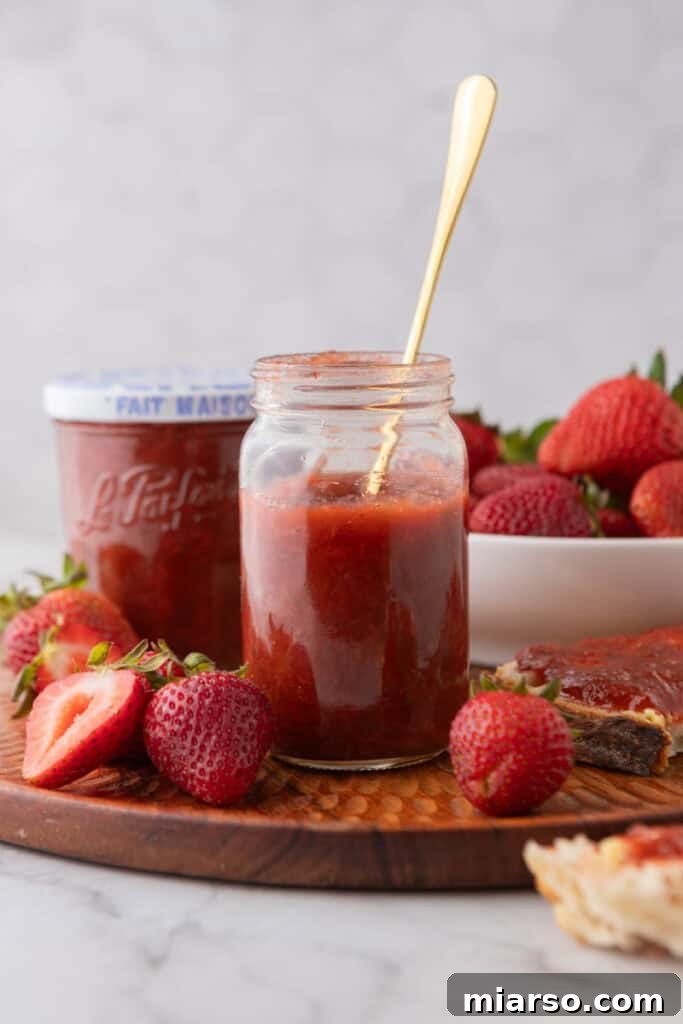
How to Make Homemade Strawberry Rhubarb Jam: A Simple Guide
Creating your own batch of delicious strawberry rhubarb jam is a rewarding and surprisingly easy process. Even if you’re new to jam-making, these straightforward steps will guide you to a perfect result. For a complete list of ingredients and precise measurements, along with detailed prep and cooking times, please consult the full recipe card at the end of this post.
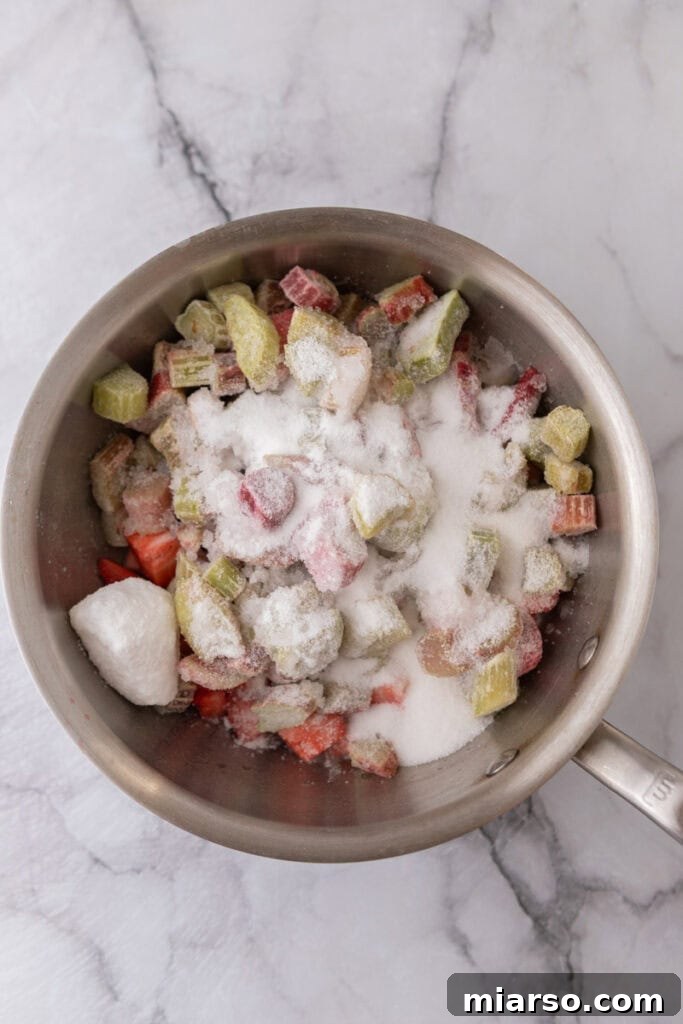
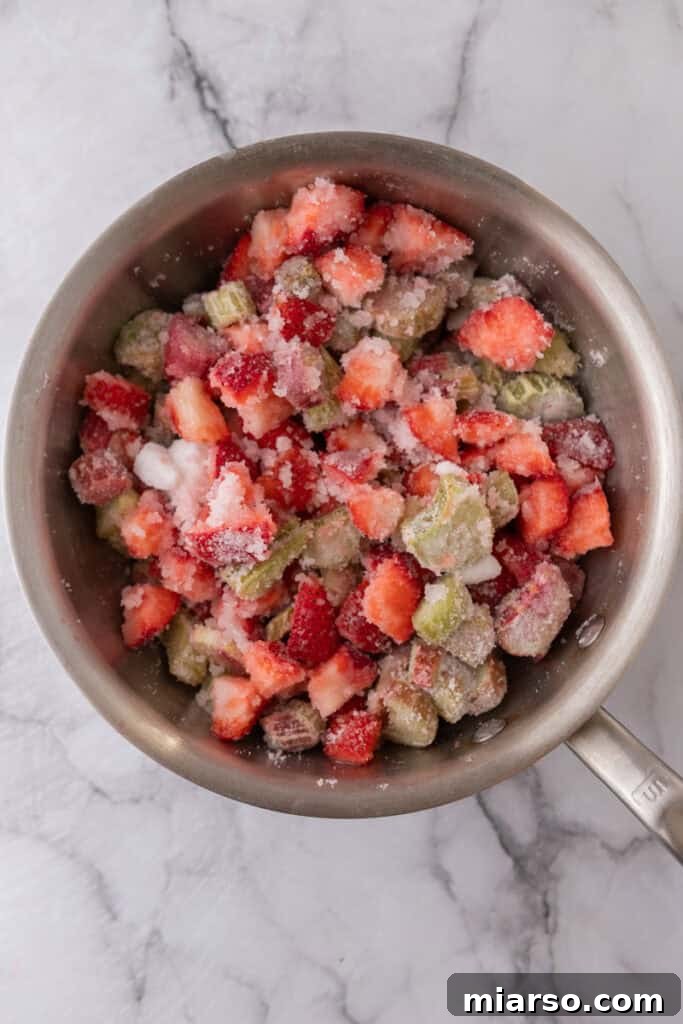
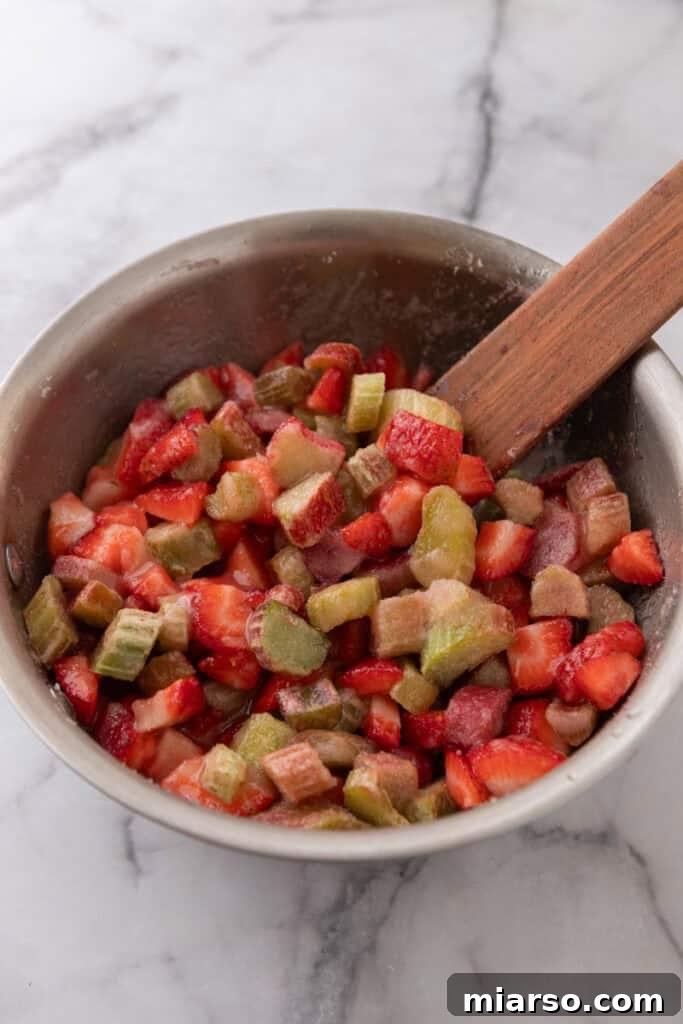
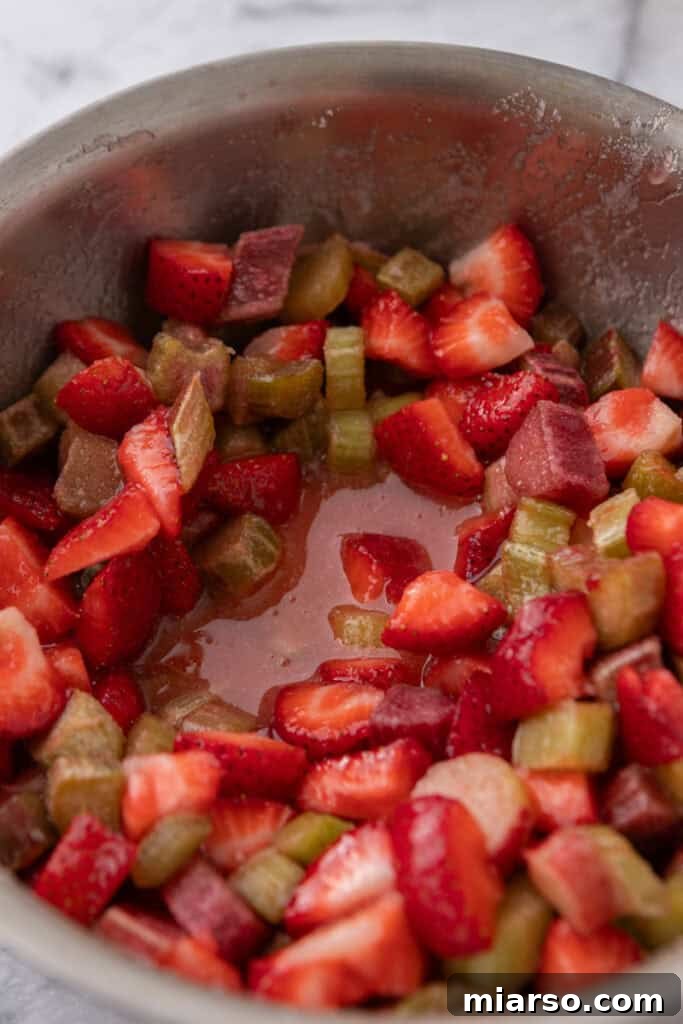
- Combine and Macerate the Fruit: In a medium-sized, heavy-bottomed saucepan, combine the hulled and chopped strawberries, diced rhubarb stalks, granulated sugar, salt, and fresh lemon juice. Stir all the ingredients together until well combined. Allow the mixture to sit undisturbed at room temperature for at least 20 minutes. This essential “maceration” step draws out the natural juices from the fruit, creating a beautiful syrup before you even begin cooking. This helps prevent scorching and leads to a more flavorful and evenly cooked jam.
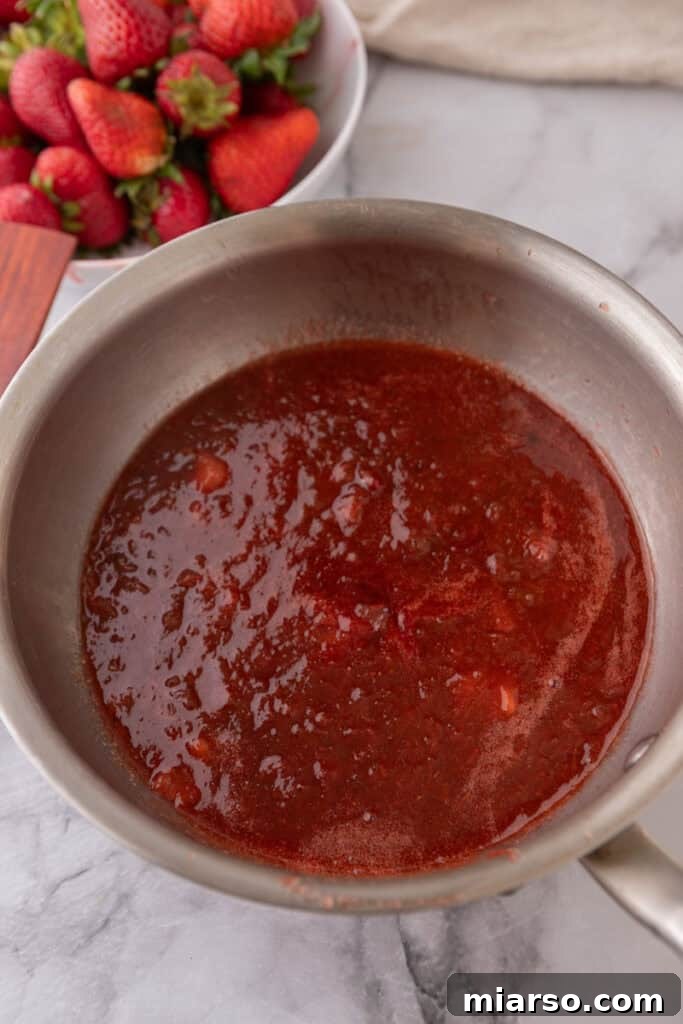
- Bring to a Gentle Simmer: Place the saucepan over medium heat. Gradually bring the fruit mixture to a gentle boil, stirring occasionally to ensure the sugar dissolves and the fruit heats evenly. Once the mixture is gently boiling, reduce the heat to a steady simmer. Continue to cook, stirring frequently (especially as it thickens), for approximately 20-30 minutes, or until the jam reaches your desired consistency. The beauty of macerating the fruit beforehand is that it often reduces the amount of foam that typically forms on the surface during cooking, meaning you usually won’t need to skim it off.
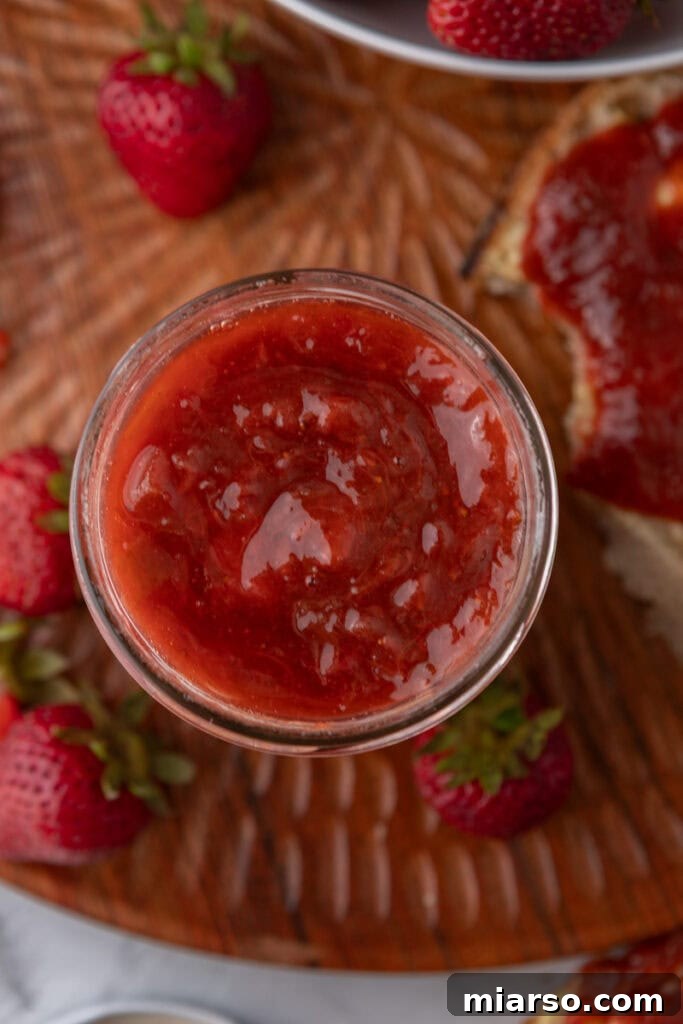
- Achieve Your Preferred Texture: Once the jam has thickened to your liking, remove the saucepan from the heat. Now it’s time to customize the texture. If you prefer a wonderfully rustic and chunky jam, use a potato masher to break down any remaining larger pieces of fruit. For a silky-smooth, more spreadable consistency, carefully use an immersion blender to pulse the jam a few times until it reaches your desired smoothness. Always exercise caution when working with hot jam.
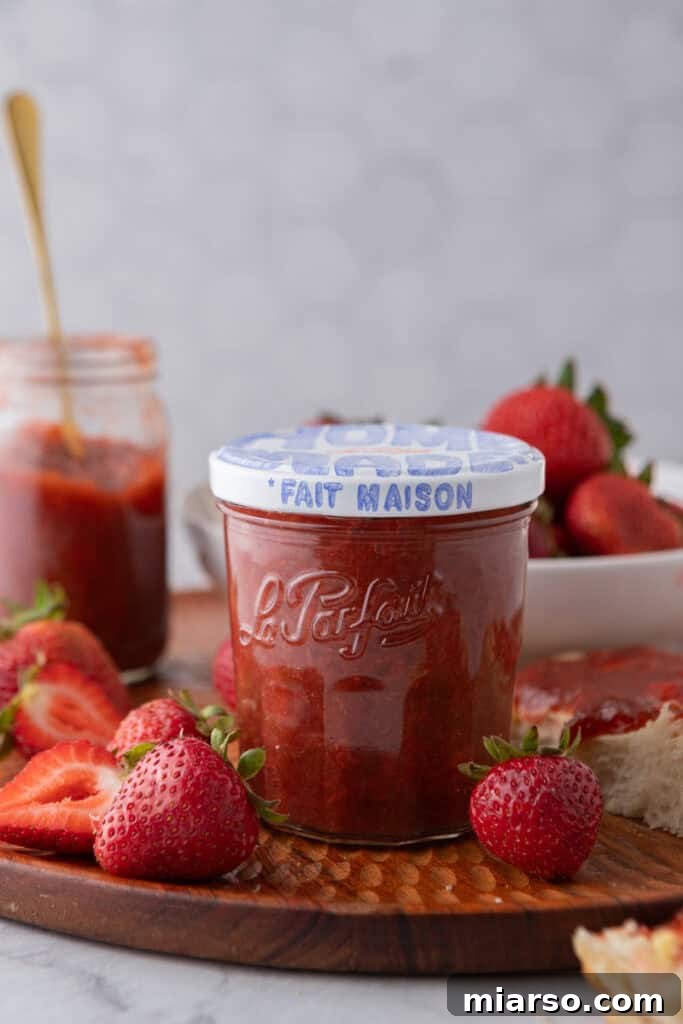
- Cool and Store: After achieving the desired texture, stir in the optional vanilla extract, if you are using it. Allow the hot jam to cool slightly in the saucepan. It will continue to thicken considerably as it cools. Once it’s warm but no longer boiling hot, carefully transfer the jam into clean, sterilized jars. Seal the jars tightly. This fresh jam can be stored in the refrigerator for up to 3 weeks. For extended storage options, including detailed canning instructions, please refer to the dedicated section further down in this article.
Homemade Strawberry Rhubarb Jam: Expert Tips for a Perfect Batch
Master the art of jam-making with these essential tips, ensuring your strawberry rhubarb jam turns out perfect every time, whether you’re a seasoned pro or a first-timer:
- Maceration is Key for Flavor and Texture: Never underestimate the power of macerating your fruit. Allowing the chopped strawberries and rhubarb to rest with sugar and lemon juice before cooking isn’t just about drawing out moisture; it fundamentally deepens and melds the fruit’s natural flavors. This process results in a richer, more complex jam and also helps the fruit break down more uniformly during cooking, contributing to a smoother final texture.
- Select the Right Cookware: The choice of saucepan matters significantly. A wide, heavy-bottomed pot is ideal. The wider surface area promotes faster evaporation of moisture, which is crucial for achieving a thick jam quickly and efficiently. A heavy bottom ensures even heat distribution, preventing hot spots that can cause scorching and sticking, which is especially important for sugar-rich mixtures.
- The “Wrinkle Test” is Your Best Friend: This traditional method is the most reliable way to check for the jam’s setting point. Before you start cooking, place a small ceramic plate in the freezer. When your jam appears to be thickening, spoon a small amount onto the chilled plate, return it to the freezer for one minute, then gently push the edge of the jam with your fingertip. If the surface wrinkles and doesn’t run, your jam is ready! If not, continue simmering and repeat the test every few minutes until it passes.
- Get Creative with Fruit Combinations: While strawberry rhubarb is a classic, this recipe provides a fantastic base for experimentation. Feel free to mix in other spring or summer fruits like raspberries, blueberries, or even a hint of orange or lime zest for added brightness. Just remember to maintain similar fruit-to-sugar ratios to ensure proper gelling and preservation.
- Sterilize Jars for Safety and Longevity: If your goal is to store your jam for more than a few weeks or to give it as gifts, proper jar sterilization is non-negotiable. Boiling clean jars for at least 10 minutes effectively eliminates harmful bacteria and yeasts, which are major causes of spoilage. This crucial step ensures your delicious jam remains safe, fresh, and shelf-stable for an extended period.
How to Can Strawberry Rhubarb Jam Using the Hot Water Bath Method
Canning your homemade strawberry rhubarb jam is an excellent way to extend its freshness and flavor, allowing you to enjoy the taste of spring for up to a year. The hot water bath method is a widely accepted, safe, and effective technique for creating shelf-stable jars of jam. Here’s a detailed, step-by-step guide to help you through the canning process:
Essential Canning Equipment:
Before you begin, gather these necessary tools to ensure a smooth and safe canning experience:
- Jars, Lids, and Bands: You will need sterilized half-pint jars (8 oz) or pint jars (16 oz), along with brand new lids and screw bands (rings). New lids are essential for a reliable seal.
- Canner: A large stockpot with a rack at the bottom, deep enough to fully submerge your jars in boiling water by at least 1 inch.
- Jar Lifter: A specialized tool or sturdy tongs designed for safely lifting hot jars in and out of boiling water.
- Clean Towel or Cooling Rack: For placing the hot jars on after processing.
- Canning Funnel (Optional but Recommended): This wide-mouthed funnel helps fill jars cleanly, preventing jam from spilling on the rims.
Step-by-Step Strawberry Rhubarb Jam Canning Process:
- Prepare Jars and Lids for Sterilization: Thoroughly wash your empty jars, lids, and bands in hot, soapy water, then rinse them well. To sterilize the jars, place them upright on the rack in your canner. Fill the canner with water until the jars are covered by at least one inch. Bring the water to a rolling boil and boil for 10 minutes. Keep the jars submerged in the hot water until you are ready to fill them to maintain their sterility and keep them hot. Place the new lids in a separate small saucepan with hot (not boiling) water; keeping them warm helps ensure a good seal.
- Fill Hot Jars with Hot Jam: Carefully remove one hot, sterilized jar from the canner using your jar lifter, tilting it to pour the hot water back into the pot. Place the empty hot jar on a clean, protected surface. Using a canning funnel, ladle the freshly made, hot strawberry rhubarb jam into the jar, leaving a crucial 1/4-inch of “headspace” – this is the empty space between the surface of the jam and the rim of the jar. Proper headspace is vital for a strong vacuum seal.
- Clean Rims and Secure Lids: After filling, use a clean, damp cloth or paper towel to meticulously wipe the rim of the filled jar. Any speck of jam or debris on the rim can prevent the lid from sealing properly. Center a warm, new lid on top of the jar, then screw a band onto the jar until it is “fingertip-tight.” This means it’s snug but not overly tightened, allowing air to escape during the processing stage.
- Process Jars in Water Bath: Gently place the filled and lidded jars back into the canner using your jar lifter, ensuring they sit on the rack and are not touching each other or the sides of the pot. Verify that all jars are covered by at least 1 inch of boiling water. Bring the water in the canner back to a full, rolling boil. Once boiling, process the jars for 10 minutes. Remember to adjust your processing time if you live at a higher altitude: add 5 minutes for elevations between 1,001-6,000 feet, and 10 minutes for elevations above 6,000 feet.
- Cool and Check Seals: After the processing time, turn off the heat and carefully remove the jars from the canner with your jar lifter. Place them upright on a clean kitchen towel or cooling rack, ensuring there’s ample space between each jar for air circulation. Let them cool undisturbed for 12-24 hours. As they cool, you should hear a “ping” sound as the lids seal. Once completely cool, press the center of each lid. If the lid is concave and doesn’t flex or pop when pressed, the jar is successfully sealed. Any jars that did not seal properly should be refrigerated immediately and used within 3 weeks.
- Store and Enjoy: Label your sealed jars with the jam’s name and the date it was canned. Store them in a cool, dark, and dry place, such as a pantry or cellar, for up to 1 year. Once a jar is opened, always refrigerate the remaining jam and consume it within 2-3 weeks for the best quality and safety.
Frequently Asked Questions (FAQ) About Strawberry Rhubarb Jam
Here are answers to some of the most common questions about making and enjoying this delightful homemade jam:
Can I make strawberry rhubarb jam without pectin?
Absolutely, yes! This recipe is specifically formulated to be pectin-free. Both strawberries and rhubarb naturally contain sufficient pectin, especially when combined with the crucial acidity of lemon juice and the correct amount of sugar. This combination ensures your jam will achieve a beautiful, firm set without the need for any commercial pectin additives.
How do you know when homemade jam is ready?
The most reliable method to determine if your jam has reached its setting point is the “wrinkle test” (or cold plate test), as detailed in our expert tips section. Alternatively, you can observe if the jam thickly coats the back of a spoon and holds its shape, or if it reaches a temperature of 220°F (104°C) on a candy thermometer. However, the wrinkle test is often preferred for its practical accuracy in home kitchens.
Can I freeze strawberry rhubarb jam?
Yes, freezing is an excellent alternative for long-term storage if you prefer not to can. Once your jam has cooled completely, simply transfer it into freezer-safe containers or jars, leaving about 1/2 inch of headspace to allow for expansion. It can be stored in the freezer for up to 6 months. Thaw it in the refrigerator before use.
Do I need to peel rhubarb before making jam?
No, there is no need to peel the rhubarb for this jam. The skin of the rhubarb contributes significantly to the jam’s gorgeous pinkish-red color and also adds to its overall earthy and tangy flavor profile. Just make sure to thoroughly wash the stalks and trim off any tough or woody ends before chopping.
How long does homemade jam last in the fridge?
Uncanned homemade strawberry rhubarb jam, when stored in a clean, airtight container, will keep beautifully in the refrigerator for up to 3 weeks. Always inspect for any signs of spoilage, such as mold or off-odors, before consuming.
Can I use frozen strawberries or rhubarb?
Absolutely! Frozen fruit works exceptionally well in this recipe and is a convenient option, especially when fresh produce is not in season. I frequently use frozen rhubarb myself. The main difference you might observe is that frozen fruit typically releases more liquid initially, so you might need to allow the fruit mixture to macerate for a slightly longer period to draw out those juices effectively and ensure a good starting consistency.
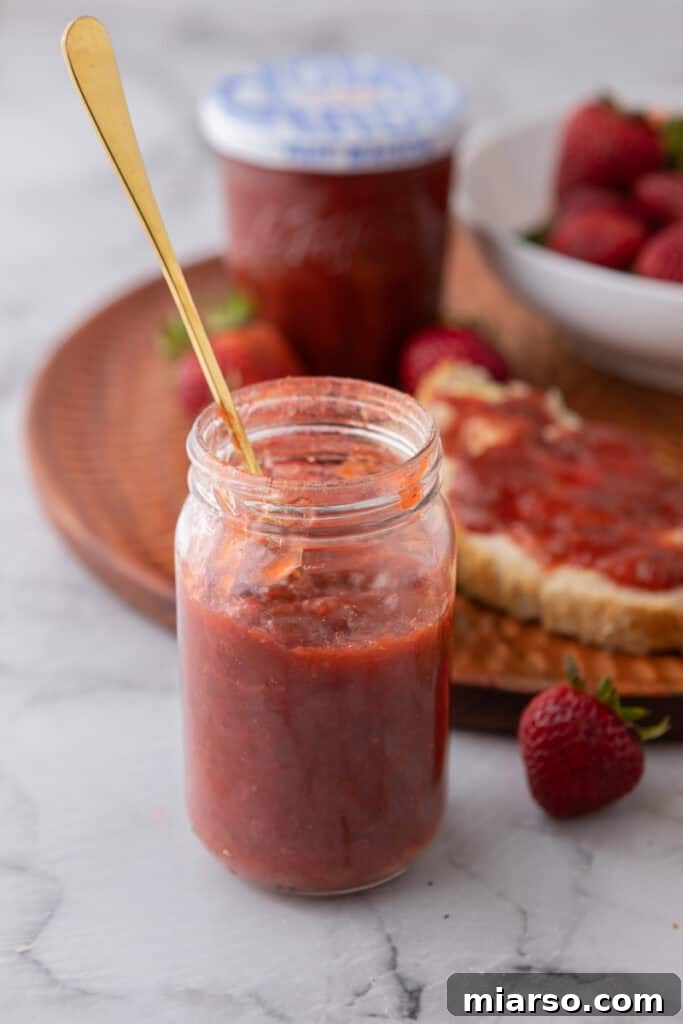
What’s the best way to thicken jam naturally without pectin?
The secret to naturally thickening jam without any added pectin lies in a synergistic combination of factors: selecting fruits rich in natural pectin (like strawberries and rhubarb), ensuring a sufficient amount of acidity (from lemon juice), a balanced sugar ratio, and patient, controlled simmering. Cooking the jam slowly over low heat allows the fruit to break down gradually and the excess liquid to evaporate, thereby concentrating the fruit’s natural pectin and sugars. This process forms a beautiful, thick gel. Resist the urge to rush the simmering process!
Can I make a small batch of jam with this recipe?
Yes, this recipe is incredibly adaptable and scales down easily. If you wish to make a smaller quantity, simply halve all the ingredients proportionately and follow the cooking instructions as written. Keep in mind that the cooking time for a smaller batch might be slightly shorter, so rely primarily on the wrinkle test to check for the jam’s readiness.
What delicious ways can I enjoy this homemade jam?
This versatile strawberry rhubarb jam is delightful in countless ways! While it’s perfectly acceptable (and often irresistible) to enjoy it straight from the spoon, here are some of my favorite serving suggestions:
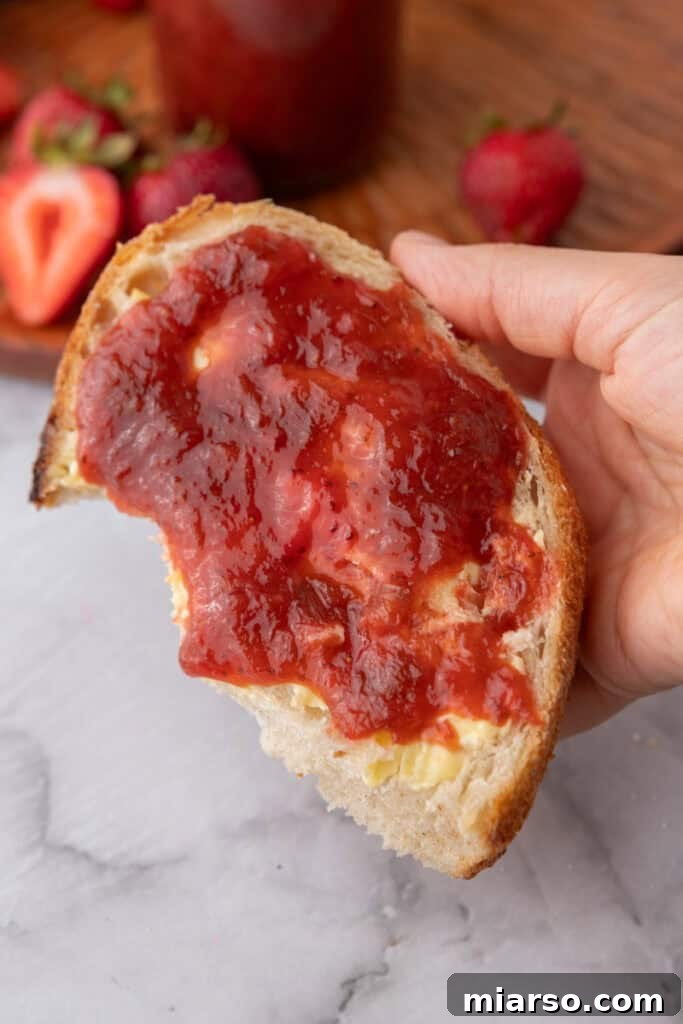
- Breakfast & Brunch Staples: Spread it generously on warm sourdough croissant bread, classic toasted slices, fluffy homemade biscuits, or crispy English muffins. It’s truly divine with a dollop of salted butter.
- Sandwich Upgrade: Elevate your traditional peanut butter and jam sandwich into a gourmet experience.
- Dessert Enhancements: Layer it into a homemade strawberry shortcake, trifle, or even a pavlova for a burst of seasonal flavor.
- Yogurt & Oatmeal Mix-in: Swirl it into plain Greek yogurt or your morning oatmeal for a naturally sweet and flavorful breakfast or snack.
- Ice Cream Pairing: For an unforgettable dessert, gently swirl a spoonful into homemade vanilla bean ice cream to create a beautiful ripple effect.
- Baked Goods Filling: Use it as a vibrant filling for tarts, pastries, turnovers, or as the star in classic thumbprint cookies.
Strawberry Rhubarb Jam Recipe
Homemade strawberry rhubarb jam made without pectin. Sweet, tart, and simple to prepare, this jam is perfect for breakfast, snacks, or gifting.
Ingredients
- 3 cups fresh or frozen strawberries, hulled and chopped
- 3 cups fresh or frozen rhubarb, chopped
- 1 & 1/2 cup granulated sugar
- a pinch of salt
- 2 tablespoons fresh lemon juice
- Optional: 1 teaspoon vanilla extract
Instructions
- Toss the chopped strawberries, diced rhubarb stalks, granulated sugar, salt, and fresh lemon juice into a medium saucepan. Stir gently to combine. Let the mixture sit at room temperature for 10–15 minutes (or up to an hour) to allow the fruit to macerate and release its natural juices.
- Place the saucepan over medium heat and bring the mixture to a gentle boil, stirring occasionally. Reduce the heat to a steady simmer and cook for 20–25 minutes, stirring frequently as the jam thickens.
- To check for doneness, perform the “wrinkle test”: place a small spoonful of jam on a cold plate from the freezer, wait a minute, then gently push it with your finger. If the surface wrinkles, the jam is ready. If not, continue simmering for a few more minutes and retest.
- Remove the jam from the heat and stir in the optional vanilla extract, if using.
- For a chunky jam, use a potato masher to break down the fruit to your desired consistency. For a smoother jam, carefully use an immersion blender for a quick pulse or two.
- Allow the jam to cool slightly before transferring it to clean, sterilized jars. The jam will thicken further as it cools. Store in the refrigerator for up to 3 weeks, or follow canning instructions for longer storage.
Notes
Storage Ideas Based on Yield:
- Fills approximately 3–4 small 8 oz jars (half-pint mason jars).
- Alternatively, stores in 1 large 16 oz jar + 1 smaller jar.
*Nutrition information is an approximation based on 2 tablespoon servings.
Nutrition Facts (Approximate per 2 tbsp serving)
Calories: 55 | Carbohydrates: 14g | Protein: 0.3g | Fat: 0.1g | Saturated Fat: 0.01g | Polyunsaturated Fat: 0.04g | Monounsaturated Fat: 0.01g | Sodium: 1mg | Potassium: 70mg | Fiber: 1g | Sugar: 13g | Vitamin A: 17IU | Vitamin C: 12mg | Calcium: 16mg | Iron: 0.1mg
Enjoyed this recipe? Leave a comment below!