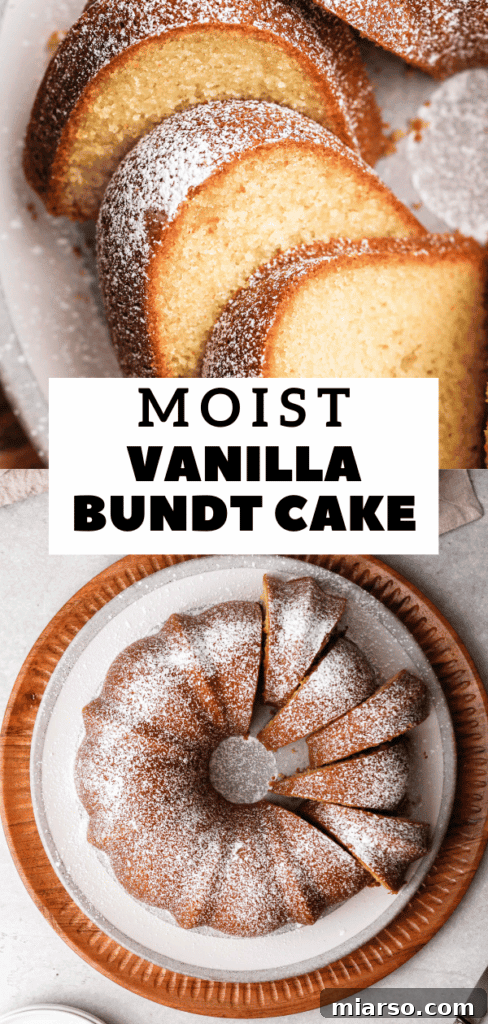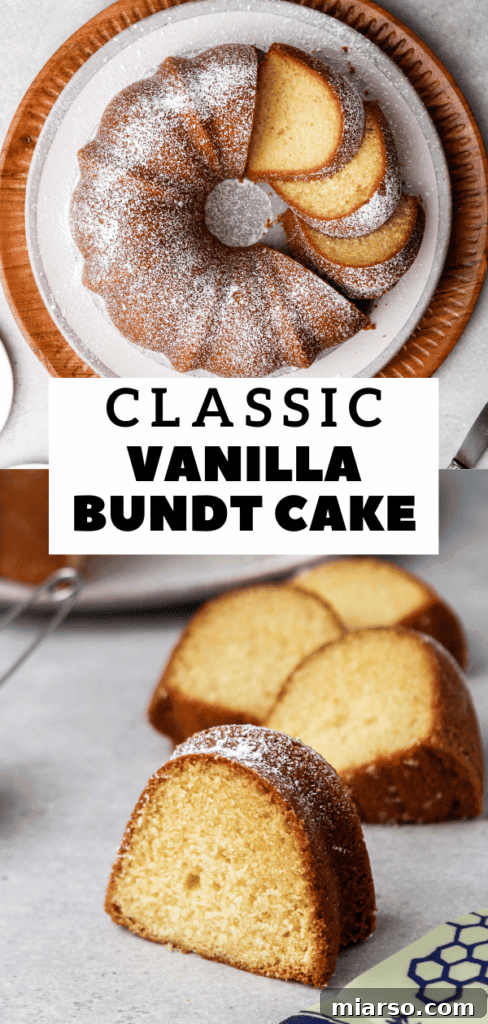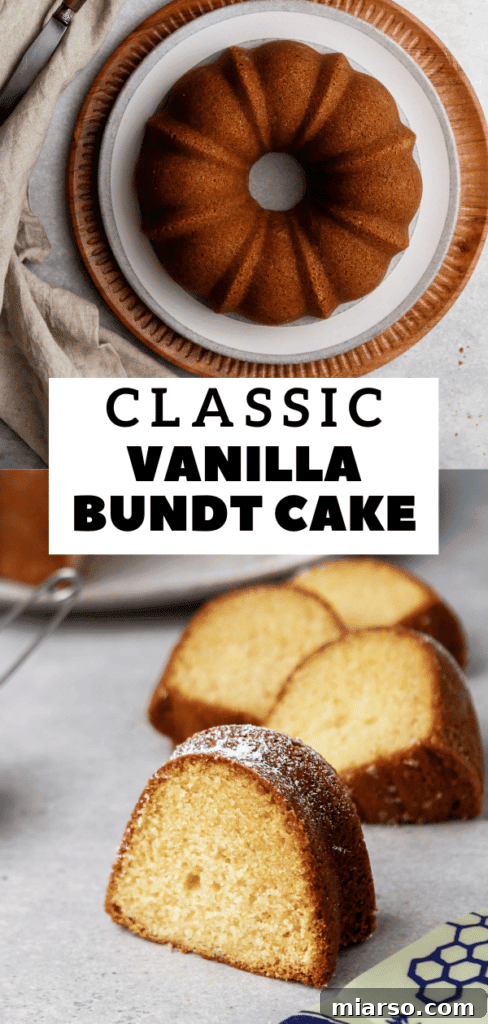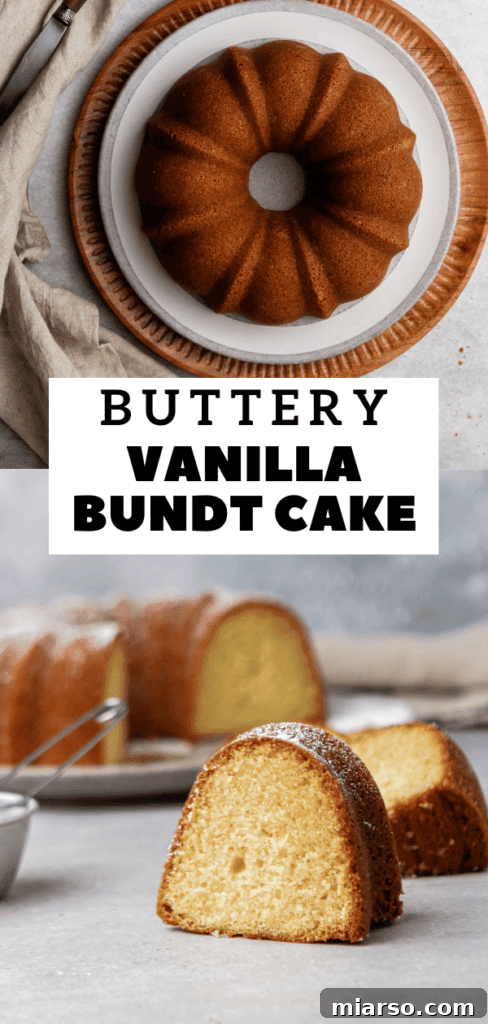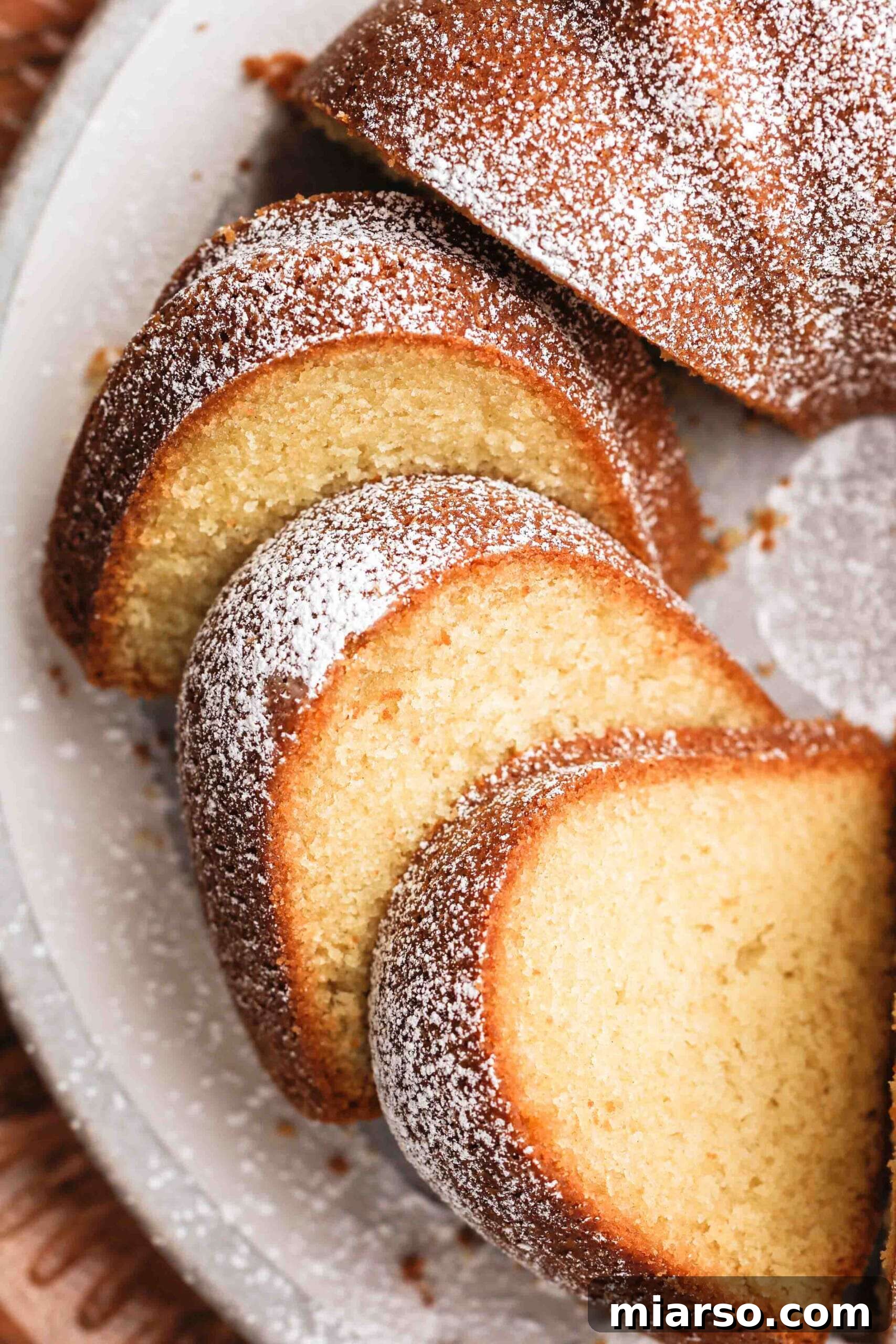
The Ultimate Moist Vanilla Bundt Cake Recipe
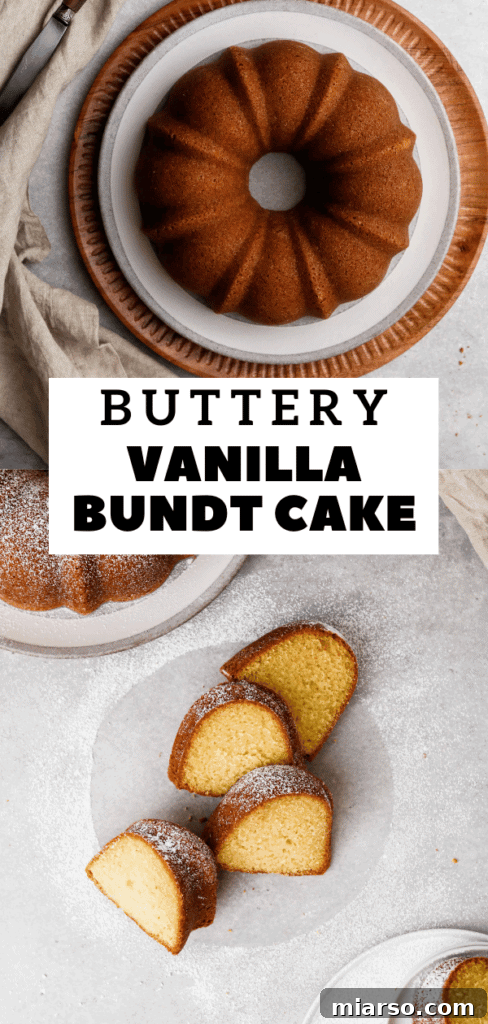
Indulge in the timeless charm of a truly exceptional vanilla bundt cake. This recipe delivers a wonderfully moist, rich, and buttery cake, subtly infused with classic vanilla flavor. It’s an indispensable staple for any baker, perfect for adding a touch of elegance to entertaining, celebrating birthdays, or simply enjoying a delightful afternoon treat with your favorite cup of coffee or tea! Prepare to fall in love with its irresistible taste and texture, reminiscent of the best homemade cakes you’ve ever savored.
If you appreciate a beautifully baked cake, you’ll also enjoy exploring other delightful recipes like The Best Moist Blueberry Lemon Loaf Cake, Moist Honey Tea Cake Loaf Just Like Grandma’s, Easy Vanilla Pancake Mix Cake, and even a sophisticated Tea Time Chocolate Loaf Cake With A Coffee Frosting.
Why a Classic Vanilla Bundt Cake is a Must-Have Recipe
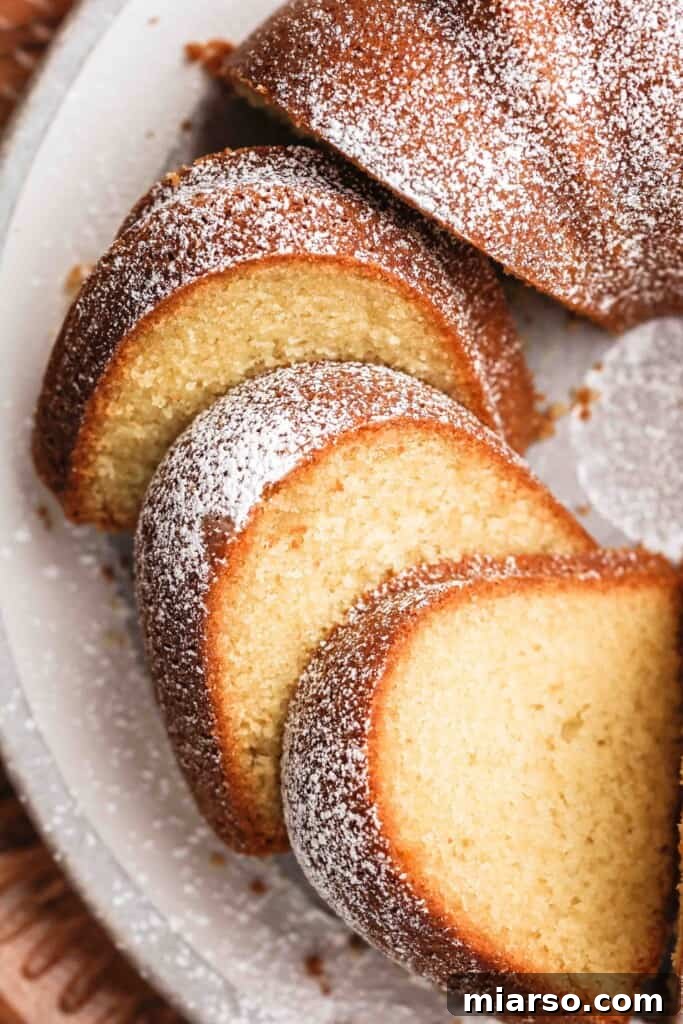
A perfectly baked vanilla bundt cake holds a special place in the baking world. Its elegant shape, created by the unique bundt pan, transforms a simple vanilla cake into a stunning centerpiece with minimal effort. This versatile dessert is a true chameleon, adapting effortlessly to any occasion or craving. Whether you need a show-stopping birthday cake, a comforting treat to round off a summer BBQ, or just a simple indulgence for an afternoon pick-me-up, this moist bundt cake is your answer.
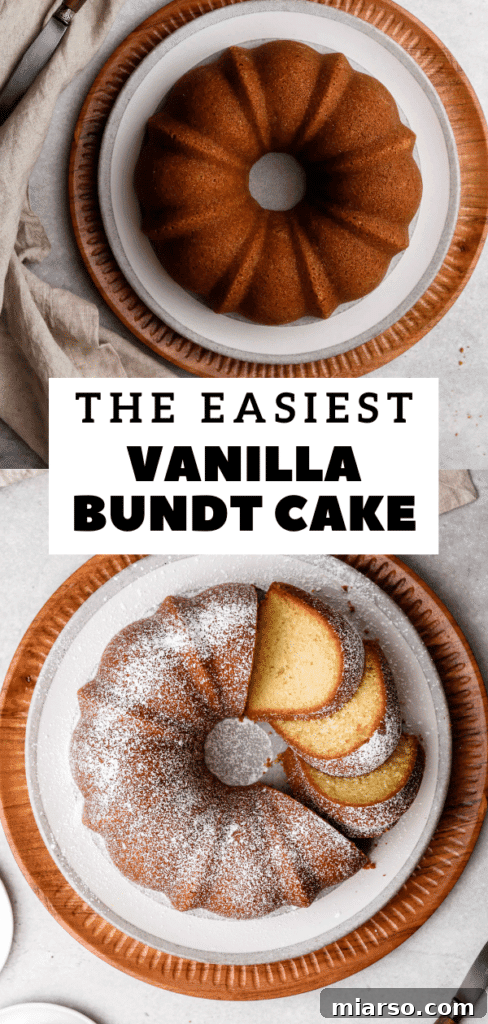
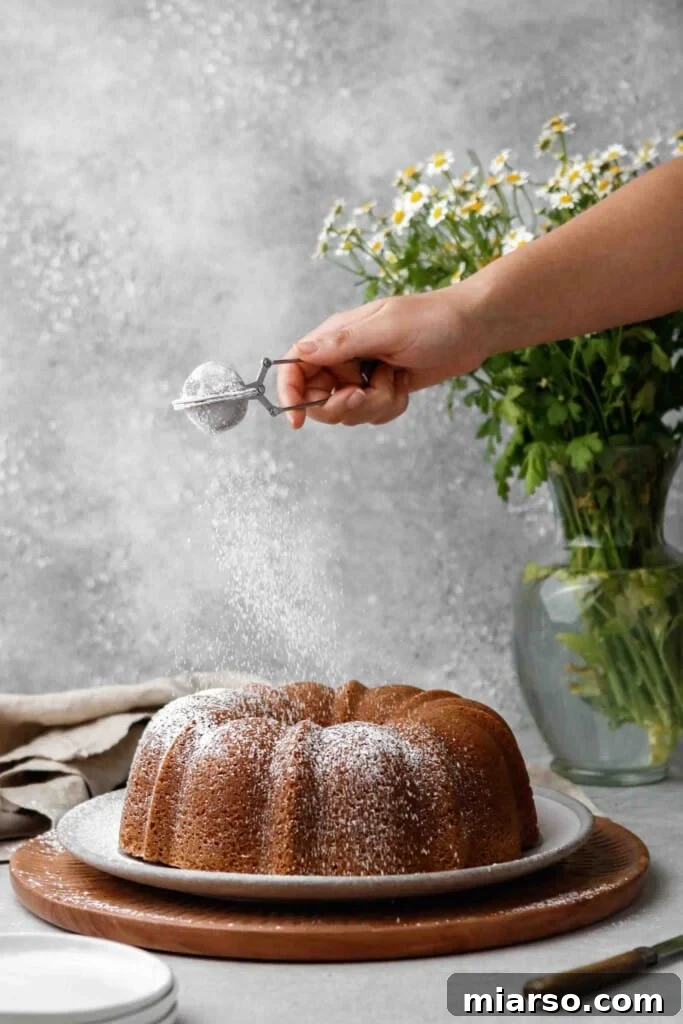
Imagine serving a slice of this golden-baked goodness, perhaps adorned with a simple dusting of powdered sugar, alongside a generous scoop of fresh berries and a cloud of whipped cream. Or, for a special celebration, decorate it with a rich vanilla glaze or even a delicate chocolate drizzle. Its understated elegance means it never feels out of place, making it the ideal canvas for your culinary creativity. Even enjoyed “as is,” fresh from the oven, its rich, buttery aroma and melt-in-your-mouth texture are pure bliss.
This recipe is more than just instructions; it’s a guide to creating a truly memorable baking experience. It’s designed to be approachable for bakers of all skill levels, ensuring that every time you bake this homemade bundt cake, you achieve consistently delicious results. Forget dry, crumbly cakes; this recipe prioritizes moisture and a tender crumb, making it an instant classic in your kitchen.
What Makes This The Best Vanilla Bundt Cake Recipe Ever?
Among countless vanilla cake recipes, this one truly stands out. It’s a symphony of flavor and texture, meticulously crafted to ensure perfection in every bite. Here’s why this vanilla bundt cake will become your go-to:
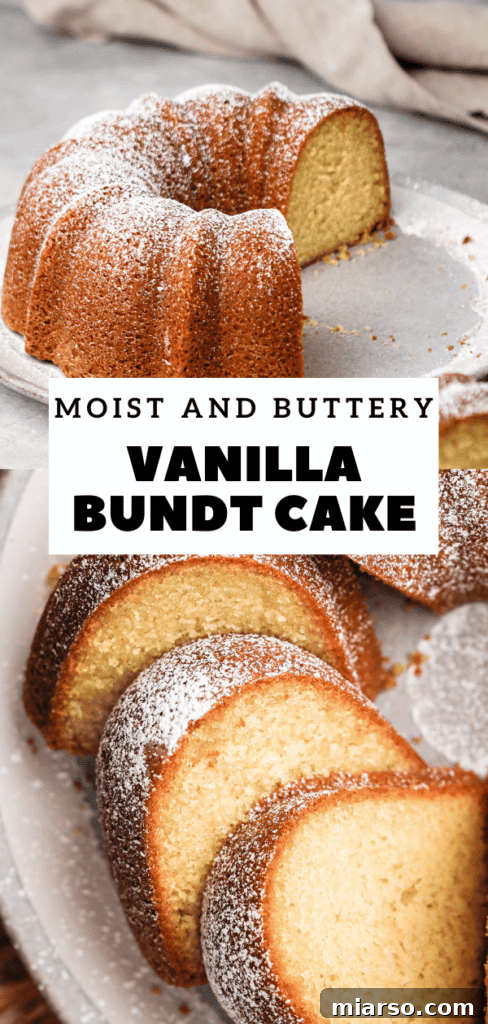
- Unrivaled Moisture: We believe a dry cake is a culinary crime. This recipe is specifically formulated to yield an incredibly moist crumb that stays tender for days, thanks to a thoughtful combination of liquid ingredients.
- Rich & Buttery Flavor: High-quality butter is the star, imparting a luxurious, deep flavor that perfectly complements the subtle notes of vanilla.
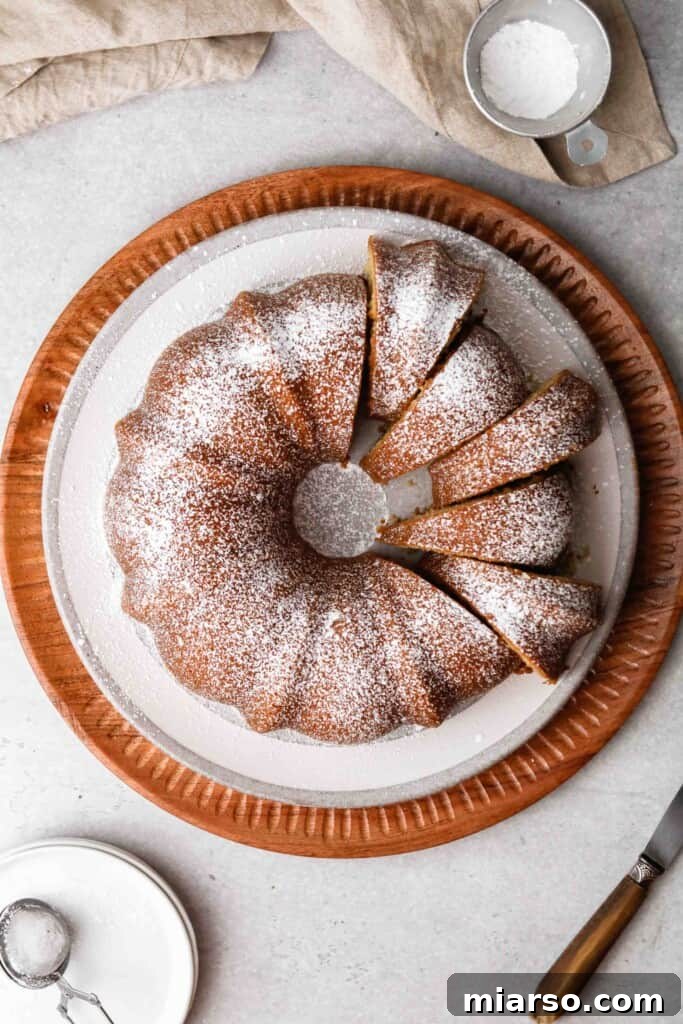
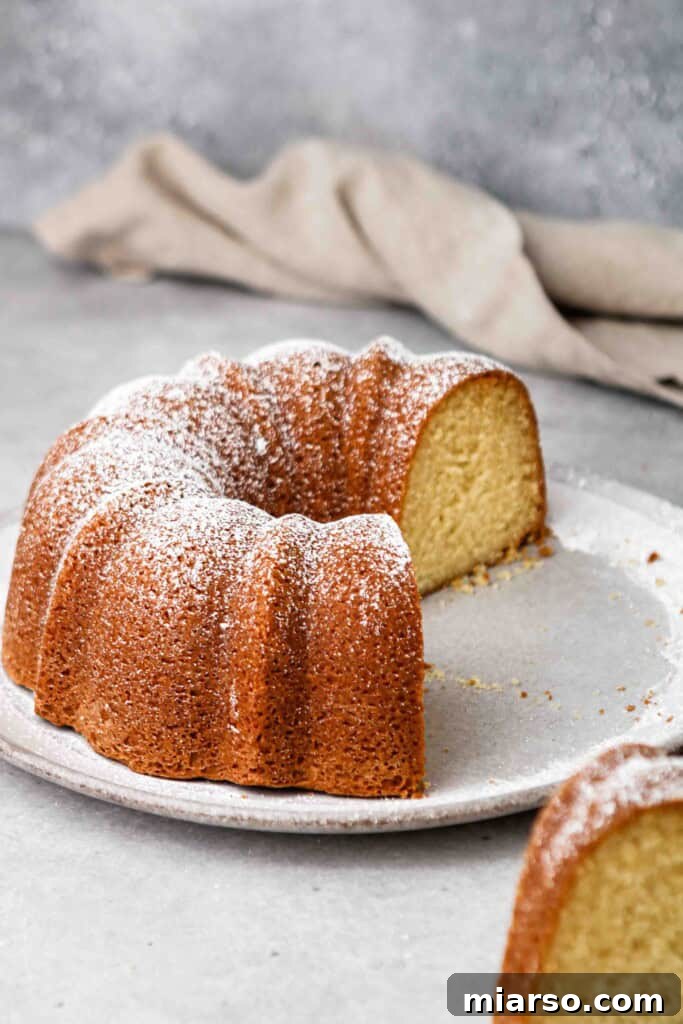
- Beautiful Golden Crust: The unique shape of the bundt pan, combined with the right baking temperature, creates a gorgeous golden-brown exterior that is both visually appealing and adds a delicate caramelized hint.
- Impressive Presentation, Effortless Elegance: Even without elaborate frosting, a bundt cake makes a statement. Its intricate design elevates any dessert table, making you look like a pastry pro with minimal fuss.
- Nostalgic Comfort, Just Like Grandma’s: There’s a certain warmth and familiarity to this cake. It tastes like tradition, like cherished family recipes, and like pure, unadulterated comfort.
- Perfect Density: It strikes the ideal balance between being substantial and light, dense enough to hold its beautiful shape but airy enough to melt in your mouth.
- Easy to Make: Despite its impressive results, the steps are straightforward and accessible for home bakers.
Essential Ingredients for Your Moist Vanilla Bundt Cake
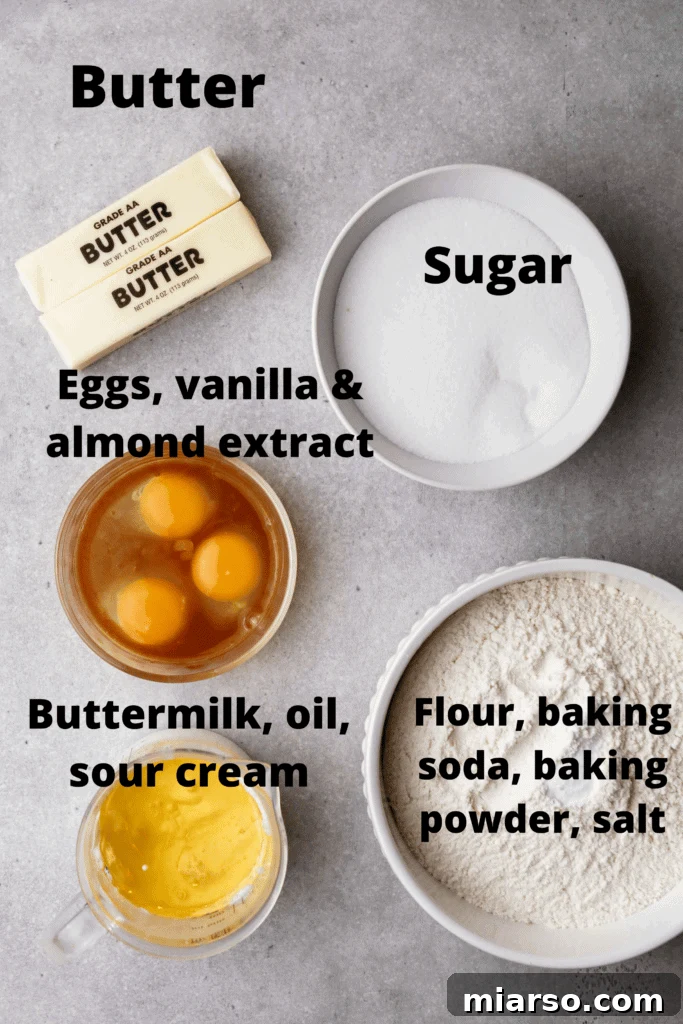
Crafting the perfect vanilla bundt cake begins with understanding the role each ingredient plays. You’ll find the full, detailed measurements in the recipe card below, but here’s a closer look at the simple components that come together to create magic:
- All-Purpose Flour: The foundation of our cake, providing structure. Ensure you measure it correctly – spoon into a measuring cup and level off, rather than scooping directly from the bag, to avoid a dense cake.
- Baking Powder & Baking Soda: Our dynamic duo of leavening agents. They work in conjunction with the acidic buttermilk and sour cream to create a light, airy rise. Always check their expiration dates for optimal lift!
- Salt: A pinch of salt is crucial in baking. It balances the sweetness, enhances the vanilla flavor, and brings all the ingredients into harmony.
- Unsalted Butter (Room Temperature): Butter is key for rich flavor and a tender crumb. Using room temperature butter allows it to cream properly with sugar, incorporating air for a lighter texture. If using salted butter, reduce the added salt in the recipe.
- Granulated Sugar: Provides sweetness, aids in tenderizing the cake, and helps retain moisture.
- Large Eggs (Room Temperature): Eggs bind the ingredients, add richness, and contribute to the cake’s structure. Room temperature eggs emulsify better with the butter, leading to a smoother batter.
- Buttermilk (Room Temperature): A secret weapon for moisture and tenderness. Its acidity activates the baking soda, while its fats contribute to a soft crumb. If you don’t have buttermilk, you can make your own by adding a tablespoon of lemon juice or white vinegar to regular milk and letting it sit for 5-10 minutes.
- Sour Cream (Room Temperature): Adds an extra layer of moisture, richness, and a subtle tang that complements the vanilla beautifully. It also contributes to the cake’s velvety texture and helps with leavening.
- Flavorless Oil (e.g., Canola or Vegetable Oil): Unlike butter, oil remains liquid at room temperature, which helps keep the cake incredibly moist and tender for longer, preventing it from drying out prematurely.
- Vanilla Extract: This is where our primary flavor comes from. Use a good quality pure vanilla extract for the best, most authentic vanilla taste.
- Almond Extract (Optional): A tiny splash of almond extract works wonders to enhance and deepen the vanilla flavor without making the cake taste overtly almondy. It’s a professional baker’s trick for making vanilla shine!
Mastering the Bundt Pan: Tips for a Flawless Release
The beauty of a bundt cake lies in its intricate shape, and ensuring a clean release from the pan is paramount to preserving that elegance. No one wants a beautiful cake stuck to the pan! Here’s how to guarantee your bundt cake slides out perfectly every time:
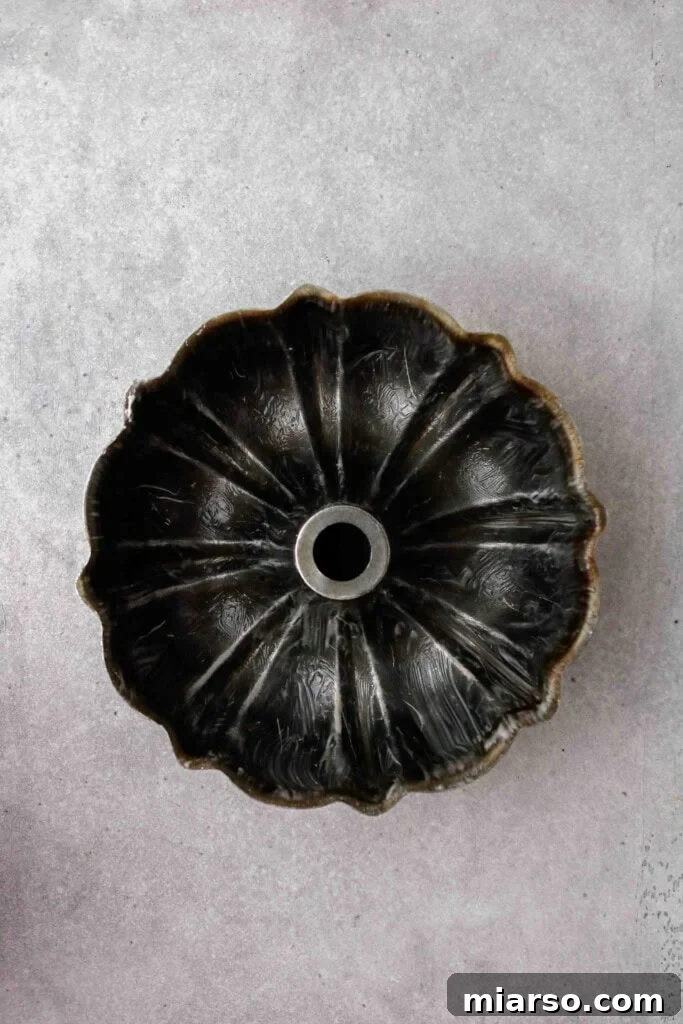
- Generous Greasing is Key: Before anything else, thoroughly grease every nook and cranny of your bundt pan. You can use softened butter, shortening, or a good quality non-stick cooking spray that contains flour (like Baker’s Joy). If using butter or shortening, ensure it covers all the ridges and crevices – don’t miss a spot!
- Dust with Flour (or Cocoa Powder): After greasing, lightly dust the entire interior of the pan with all-purpose flour. Rotate the pan, gently tapping it to ensure the flour adheres to all surfaces. Once coated, invert the pan and tap out any excess flour. For chocolate bundt cakes, use cocoa powder instead of flour to prevent white streaks.
- The “Cake Goop” Method: For ultimate insurance, many bakers swear by a homemade “cake goop” or cake release mixture. This usually consists of equal parts flour, shortening, and vegetable oil, mixed into a paste. Brush this mixture liberally into every part of your bundt pan. It works like an absolute charm, creating a non-stick barrier that rarely fails. You can often find recipes for homemade goop online from reputable baking sites like Sugar Geek Show’s Cake Goop recipe.
- Even Batter Distribution: Once your pan is perfectly prepared, carefully pour the cake batter in. Distribute it evenly, gently spreading it into all sections of the pan to ensure an even bake and uniform rise.
- Cooling Time is Crucial: Patience is a virtue when it comes to bundt cakes. After baking, let the cake cool in the pan on a wire rack for exactly 15-20 minutes. This cooling period allows the cake to firm up slightly and detach from the pan walls as it contracts. Cooling too long in the pan can cause it to stick, while flipping it too soon might lead to it breaking.
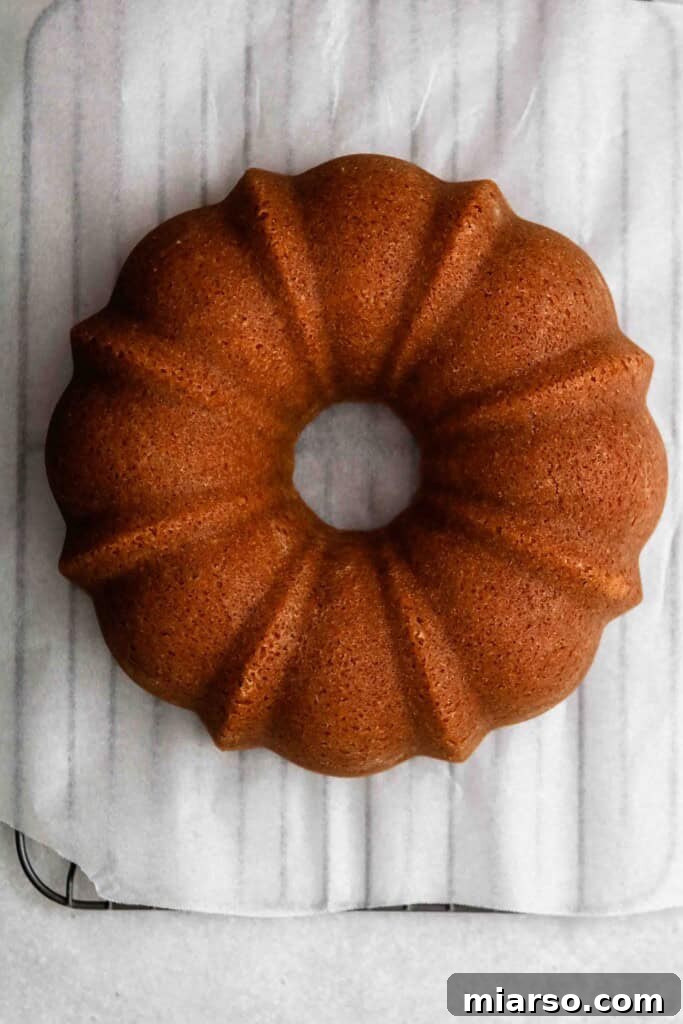
- The Flip: After the designated cooling time, place your cooling rack on top of the bundt pan. With confidence, carefully but firmly flip the pan over. Give it a gentle shake if needed, and the cake should slide right out onto the rack. Allow it to cool completely before dusting or glazing.
By following these steps, you’ll consistently achieve a beautifully intact classic vanilla bundt cake that is ready for decorating and enjoyment.
How to Make a Classic Moist Vanilla Bundt Cake: Step-by-Step
Creating this delicious easy bundt cake recipe is a rewarding process. Follow these detailed steps to ensure a perfect bake. Remember, precise measurements and room temperature ingredients are your best friends!
- Prepare Your Pan and Oven: Begin by preheating your oven to 350°F (175°C). Next, meticulously grease a 12-cup bundt cake pan using butter, shortening, or a reliable baking spray. Dust the entire interior with all-purpose flour, tapping out any excess. Set the prepared pan aside.
- Combine Dry Ingredients: In a medium bowl, whisk together the all-purpose flour, baking soda, baking powder, and salt until thoroughly combined. This ensures the leavening agents are evenly distributed throughout the batter. Set this bowl aside.
- Mix Wet Ingredients: In a separate bowl or a large measuring cup, whisk together the buttermilk, sour cream, and vegetable oil. This mixture will be added alternately with the dry ingredients. Set aside.
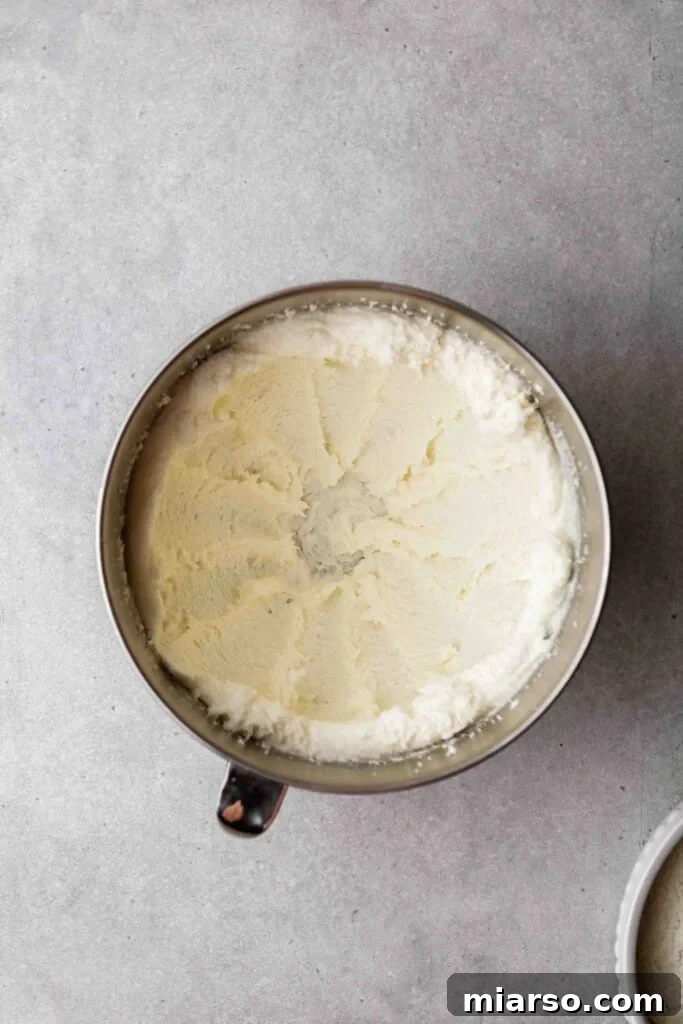
- Cream Butter and Sugar: In a large mixing bowl, using the paddle attachment of your stand mixer (or a hand mixer), cream the softened butter and granulated sugar on medium speed. Beat for 3-5 minutes until the mixture is light, pale, and fluffy, almost like whipped frosting. This step incorporates essential air into the batter, contributing to the cake’s tender texture.
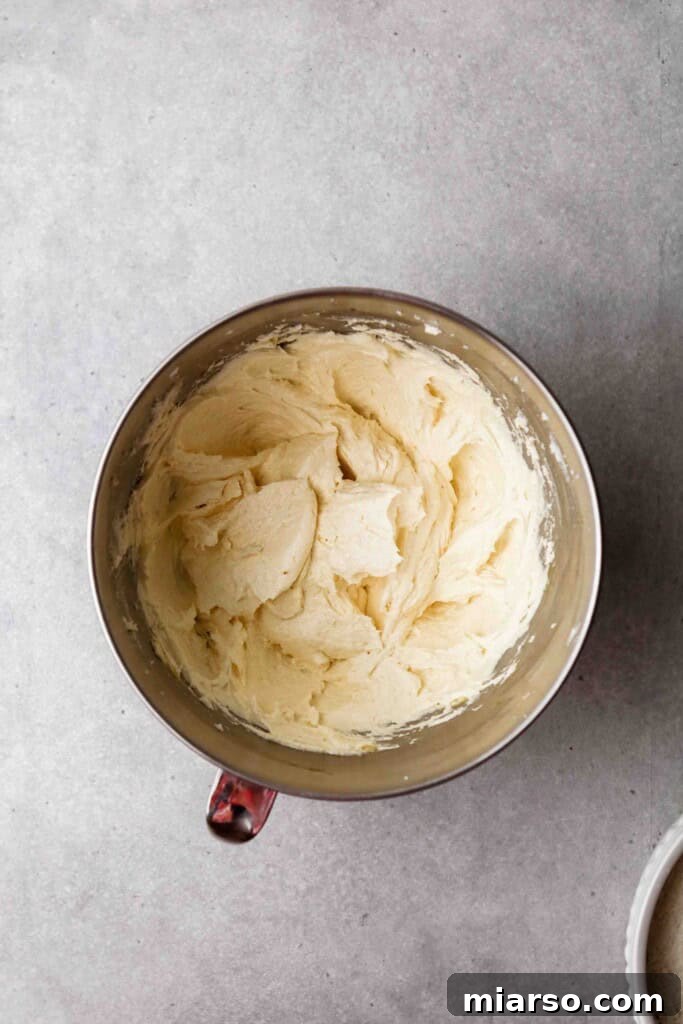
- Incorporate Eggs and Extracts: Reduce the mixer speed to low. Add the vanilla extract and almond extract (if using). Then, add the large eggs one at a time, mixing well after each addition until just combined. Scrape down the sides and bottom of the bowl periodically to ensure everything is thoroughly incorporated. Overmixing at this stage can lead to a tough cake.
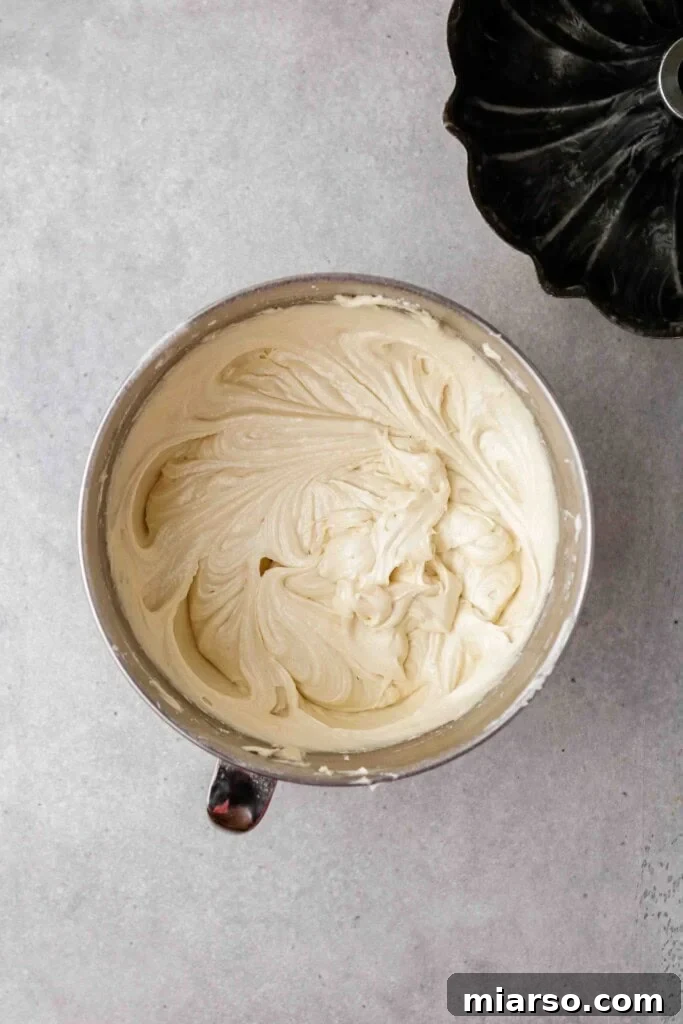
- Alternate Dry and Wet Mixtures: With the mixer on low speed, begin adding the dry ingredient mixture and the buttermilk mixture to the butter-egg mixture in alternating additions. Start and end with the flour mixture. For example, add 1/3 of the flour mixture, mix until just combined, then add 1/3 of the buttermilk mixture, mix until just combined. Repeat this process two more times. After the final addition of flour, mix only until the flour streaks disappear. Do not overmix the batter, as this develops gluten and can result in a dry, dense cake. Always scrape down the bowl as you go to ensure everything is well incorporated.
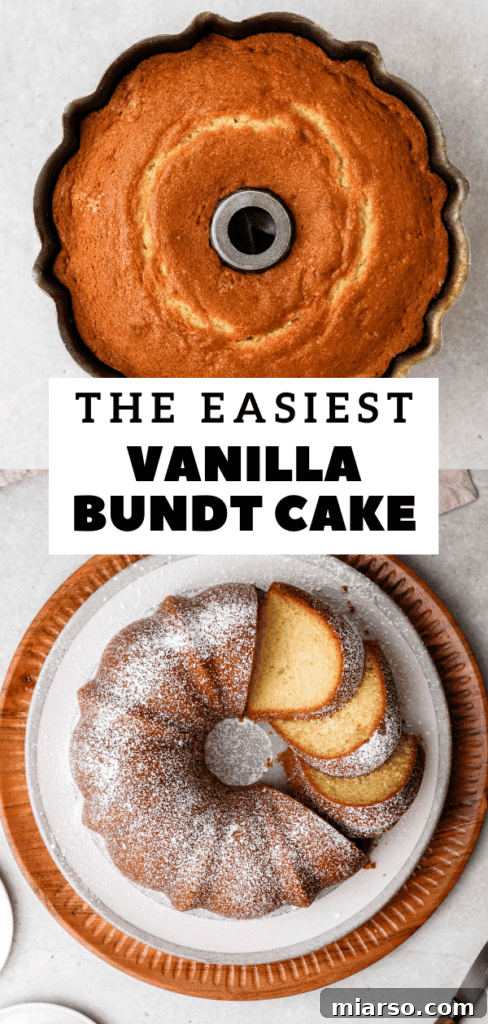
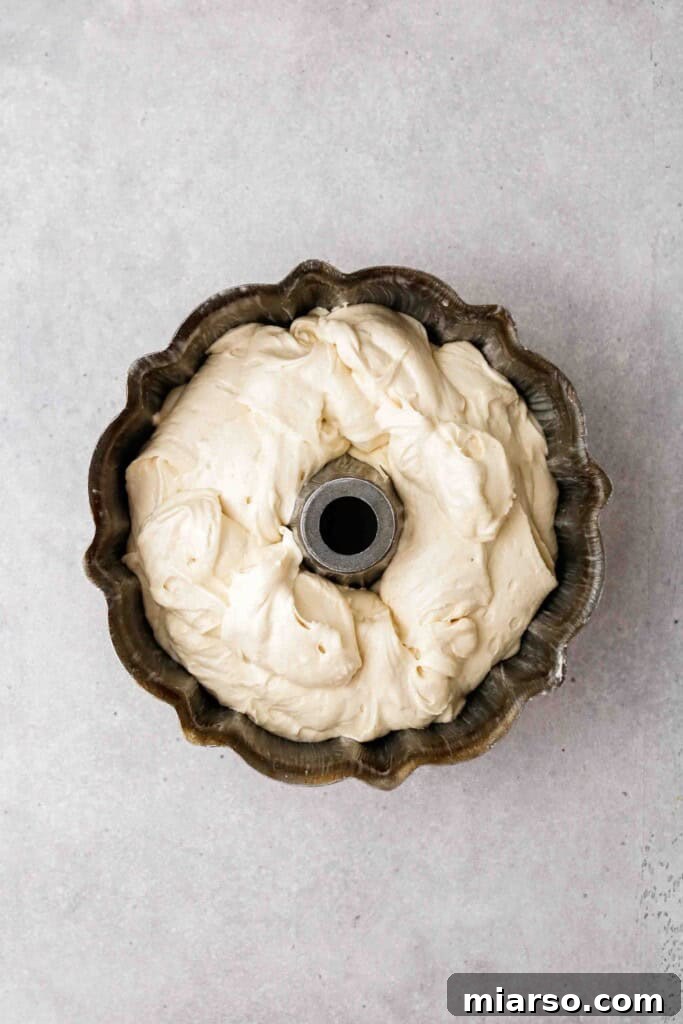
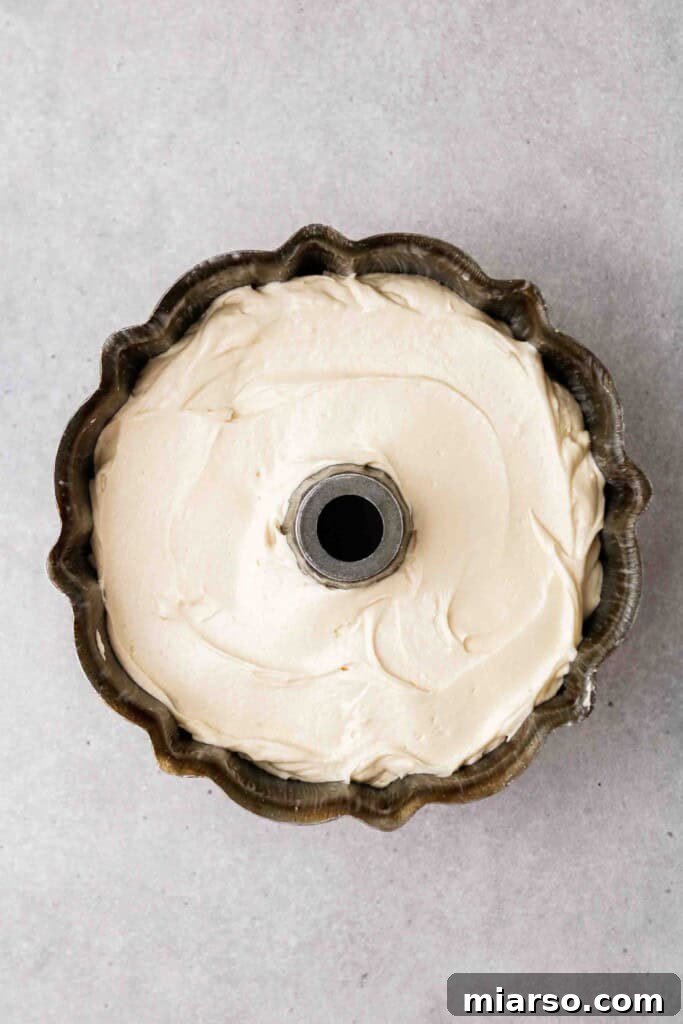
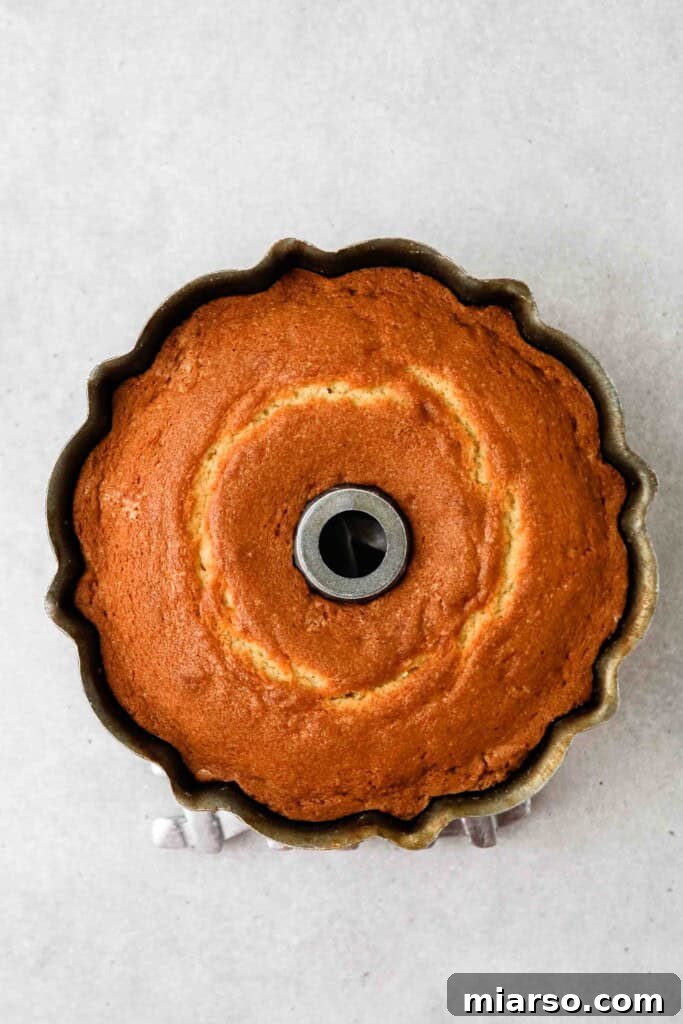
- Fill the Pan and Bake: Pour the velvety cake batter evenly into your meticulously prepared bundt pan. Gently spread the batter to ensure it fills all the crevices and is level on top. Place the pan on the middle rack of your preheated oven. Bake for 45-55 minutes, or until a wooden skewer or toothpick inserted into the thickest part of the cake comes out clean.
- Cool and Invert: Once baked, remove the cake from the oven and let it cool in the bundt pan on a wire rack for 15-20 minutes. This crucial cooling time allows the cake to set and shrink slightly, making it easier to release. After 20 minutes, carefully place your cooling rack on top of the bundt pan and, holding both firmly, flip the cake over onto the rack. Let the cake cool completely on the wire rack before dusting with powdered sugar, glazing, or slicing.
Your beautiful buttery vanilla bundt cake is now ready to be enjoyed! Serve it simply dusted with powdered sugar, or explore various delightful toppings.
Serving Suggestions & Delicious Variations
This moist vanilla bundt cake is wonderfully versatile when it comes to serving. While it’s utterly delicious on its own, here are a few ideas to elevate your dessert:
- Classic Powdered Sugar: A simple dusting of confectioners’ sugar is often all you need to highlight the cake’s elegant shape.
- Simple Glazes: Drizzle with a classic vanilla glaze (powdered sugar, milk, vanilla extract) or a tangy lemon glaze (powdered sugar, lemon juice) for an extra layer of flavor and moisture.
- Fresh Fruit & Whipped Cream: Serve slices with a side of seasonal fresh fruit, especially berries, and a dollop of freshly whipped cream for a light and refreshing option.
- Ice Cream Pairing: A warm slice of bundt cake pairs beautifully with a scoop of vanilla bean, strawberry, or even coffee-flavored ice cream.
- Fruit Compote or Coulis: A homemade berry compote or a vibrant fruit coulis can add a burst of color and a lovely tart contrast to the sweet cake.
- Chocolate Drizzle: For chocolate lovers, a simple chocolate ganache or melted chocolate drizzle can transform the vanilla bundt cake into a decadent treat.
Frequently Asked Questions & Troubleshooting Tips
Even seasoned bakers encounter questions or minor hiccups. Here are some common queries and troubleshooting advice for your homemade bundt cake:
What’s the difference between a pound cake and a bundt cake?
This is a fun and frequently asked question! Simply put, a bundt cake refers to any cake baked in a distinctive fluted or ring-shaped bundt pan. A pound cake, on the other hand, is a specific type of cake known for its traditional ingredients: typically a pound each of butter, sugar, eggs, and flour. While many pound cake recipes are baked in bundt pans (making them a “pound bundt cake”), you can bake various types of batters, including this vanilla cake, in a bundt pan. So, a bundt cake is about the shape, while a pound cake is about the recipe’s composition.
What to do if your cake is darkening too quickly?
If you notice the top of your moist vanilla bundt cake browning too rapidly before the inside is fully cooked, don’t fret! You can easily remedy this by gently covering the top of the bundt pan with aluminum foil. This creates a shield that reflects heat, preventing further browning while allowing the cake to continue baking through to doneness.
How to check a bundt cake for doneness?
To accurately determine if your cake is fully baked, insert a long wooden skewer or a thin, sharp knife into the deepest part of the cake (usually the center ridge or thickest section). If the skewer comes out clean, with no wet batter attached, your cake is done. If it still has wet crumbs or batter clinging to it, return the cake to the oven for another 5-10 minutes and re-test.
Why did my bundt cake sink in the middle?
A sunken cake can be disappointing. Common reasons include opening the oven door too early (which causes a sudden temperature drop), using old or expired leavening agents (baking powder/soda), overmixing the batter (developing too much gluten), or incorrect oven temperature (too low). Ensure your oven temperature is accurate and resist the urge to peek during the first 3/4 of the baking time.
My vanilla bundt cake turned out dry, what happened?
A dry cake is often the result of overbaking. Keep a close eye on the baking time and rely on the skewer test for doneness rather than just the timer. Other factors could be inaccurate measurement of ingredients (too much flour, not enough liquid/fat) or using ingredients that weren’t at room temperature, which can affect emulsification and moisture retention.
How to Store Your Perfect Vanilla Bundt Cake
Proper storage ensures your vanilla bundt cake remains moist and delicious for as long as possible. Here’s how to keep it fresh:
At Room Temperature:
If you plan to enjoy the cake within a day or two, you can store it at room temperature. Wrap the cooled cake tightly in plastic wrap to prevent air exposure, then place it in an airtight container or under a cake dome. It will stay fresh for up to 2 days.
In the Refrigerator:
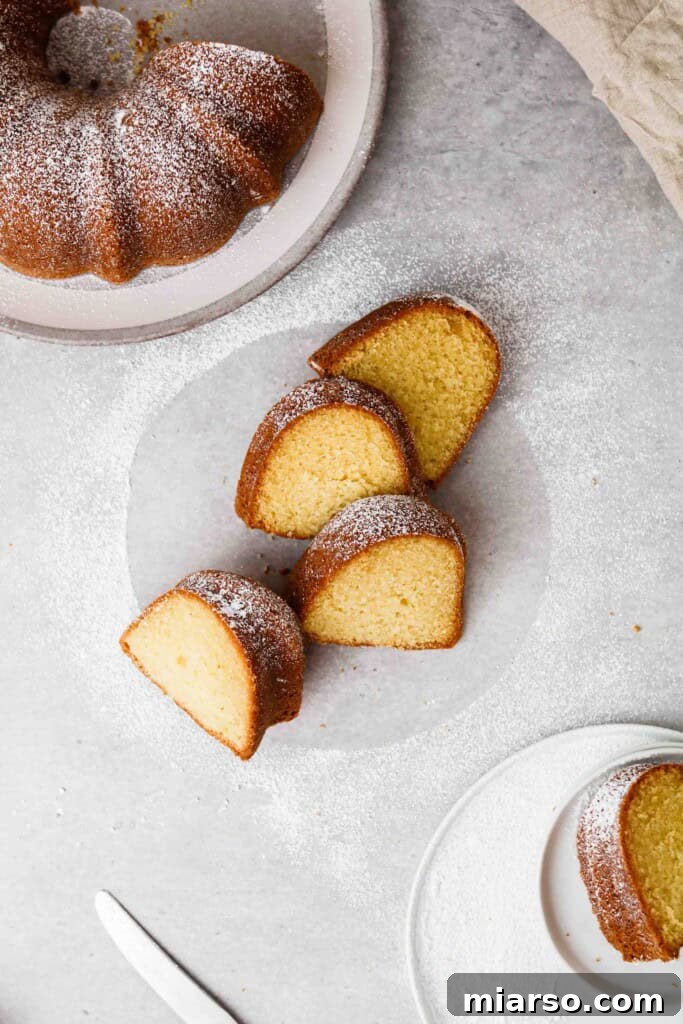
For longer storage, the refrigerator is best. Once completely cooled, wrap the cake in plastic wrap, then place it in an airtight container. It will keep well in the fridge for up to a week. Remember to take the cake out of the refrigerator and allow it to come back to room temperature for about 30-60 minutes before serving, as this greatly enhances its flavor and texture.
How to Freeze Bundt Cakes for Future Enjoyment
Bundt cakes freeze beautifully, making them an excellent make-ahead dessert. This is perfect for holiday baking or ensuring you always have a delicious treat on hand:
- Cool Completely: Ensure your cake is entirely cool before freezing. Any residual warmth can lead to ice crystals and a soggy cake.
- Wrap Tightly: Wrap the cooled cake first in several layers of plastic wrap, making sure it’s completely sealed.
- Add a Second Layer: For extra protection against freezer burn, wrap the plastic-wrapped cake in a layer of aluminum foil.
- Freeze: Place the double-wrapped cake in the freezer for up to 3 months.
- Thaw: When ready to serve, transfer the frozen cake to the refrigerator to thaw overnight. Once thawed, bring it to room temperature before unwrapping and enjoying for the best flavor and texture.
Expert Tips for the Best Vanilla Bundt Cake Recipe!
Achieving a bakery-quality vanilla bundt cake is easier than you think with these professional tips:
- Use Room Temperature Ingredients: This is a golden rule in baking, especially for cakes. Room temperature butter, eggs, buttermilk, and sour cream emulsify much better, creating a smooth, uniform batter that traps air more effectively. This leads to a finer crumb and a more consistent bake. Cold ingredients can cause the batter to curdle and result in a dense cake.
- Add Eggs One at a Time: When incorporating eggs into the creamed butter and sugar, add them individually, mixing well after each addition. This allows each egg to fully emulsify with the fat, creating a stable, rich base for your cake and preventing a separated batter.
- Scrape Down the Bowl Religiously: As you mix, batter can cling to the sides and bottom of your mixing bowl. Stop your mixer frequently and use a rubber spatula to scrape down the bowl, ensuring all ingredients are thoroughly combined and no pockets of unmixed flour or butter remain. This guarantees a uniform texture throughout the cake.
- Do Not Overmix the Batter: Once you add the flour mixture, mix only until the dry ingredients are just incorporated and no streaks of flour are visible. Overmixing develops gluten, which can lead to a tough, dry, and chewy cake rather than a tender, moist one. The goal is just combined, not vigorously beaten.
- Open the Oven Door Gently and Slowly: Avoid sudden temperature changes that can cause your delicate cake to collapse. When checking for doneness, open the oven door slowly and gently. It’s best to wait until at least 45 minutes into the baking process before you start checking, as the cake’s structure is more stable then.
- Don’t Rush the Cooling Process: Resist the temptation to unmold the cake immediately after removing it from the oven. The 15-20 minute cooling period in the pan is critical. It allows the cake to firm up, contract slightly from the edges of the pan, and prevents it from tearing or breaking when inverted.
- Invest in a Good Bundt Pan: A heavy, light-colored aluminum bundt pan conducts heat evenly and helps prevent over-browning. Darker pans can sometimes lead to a darker crust. A good quality pan with a non-stick coating also aids in easy release.
Buttery Vanilla Bundt Cake Recipe
Moist Vanilla Bundt Cake
This Vanilla bundt cake recipe yields a deliciously moist, buttery, and sweet cake. It is a classic cake that you need up your recipe book… like now!
20 mins
50 mins
1 hr 10 mins
12 slices
Print Recipe
Ingredients
- 3 & 2/3 cup all purpose flour
- 1 tsp baking soda
- 1 tsp baking powder
- 1/2 tsp salt
- 2 sticks butter at room temperature
- 1 & 2/3 cup granulated sugar
- 3 large eggs at room temperature
- 2 tsp vanilla extract
- 1/4 tsp almond extract
- 1/2 cup buttermilk at room temperature
- 1/2 cup sour cream at room temperature
- 1/2 cup + 2 tbsp vegetable oil at room temperature
Instructions
- Preheat the oven to 350°F (175°C) then grease a 12-cup bundt cake pan using shortening, butter, or nonstick spray. Flour the pan, making sure to tap out excess flour then set aside.
- In a medium bowl, mix the flour, baking soda, baking powder, and salt together and set aside.
- In another bowl or large measuring cup, mix the buttermilk, sour cream, and oil together and set aside.
- In a mixing bowl, using the paddle attachment, cream the softened butter and granulated sugar on medium speed until light and fluffy. Add in the vanilla extract, almond extract, and one egg at a time, making sure that it’s fully incorporated before adding the next one. Scrape the bowl as you go.
- Lower the mixer speed to low, add in 1/3 of the flour mixture and 1/3 of the buttermilk mixture and mix until combined. Repeat this process 2 more times, making sure to scrape the bowl as you go. Mix just until the flour mixture disappears to avoid overmixing the batter.
- Pour the batter into the prepared bundt cake pan, spread the batter evenly, and bake in the preheated oven for 45-55 minutes. My cake took 50 minutes. You can check for doneness by inserting a wooden skewer in the center; if it comes out clean, the cake is ready; if not, bake it for a little longer.
- Let the cake cool down in the pan for 15-20 minutes before flipping it onto a cooling rack to cool down completely before slicing into it.
Notes
What to do if your cake is darkening too quickly?
If the top of the bundt cake is darkening too quickly, you can cover the top of the bundt pan with aluminum foil. This will keep the cake from browning too much while it’s still baking in the oven.
How to check a bundt cake for doneness?
To check your cake for doneness, insert a knife or a wooden skewer in the highest part of the cake, then pull it out. If the knife or wooden skewer comes out clean then you will know the cake is done. If it’s still covered in batter, then the cake needs a little longer in the oven.
How to store a bundt cake?
You can wrap the cake in plastic wrap and place it in an airtight container and leave it at room temperature for up to 2 days. I usually like to wrap the cake in plastic wrap and then place it in an airtight container in the fridge for up to a week. Make sure to pull the vanilla bundt cake out of the fridge and bring it back to room temperature before enjoying it.
Nutrition
|
Carbohydrates: 58g
|
Protein: 6g
|
Fat: 27g
|
Saturated Fat: 18g
|
Trans Fat: 1g
|
Cholesterol: 91mg
|
Sodium: 394mg
|
Potassium: 98mg
|
Fiber: 1g
|
Sugar: 28g
|
Vitamin A: 586IU
|
Vitamin C: 1mg
|
Calcium: 62mg
|
Iron: 2mg
Nutrition information is automatically calculated, so should only be used as an approximation.

Shop Ingredients & Tools for This Recipe
This post may contain affiliate links, meaning that at no additional cost to you, I will earn a small percentage from eligible purchases you make. Your support helps keep this blog running!
If You Enjoyed This Vanilla Bundt Cake Recipe, Make Sure to Pin It for Later!
We hope you adore this recipe as much as we do! Don’t forget to save this classic vanilla bundt cake recipe for your next baking adventure by pinning it to your favorite Pinterest board. Share the joy of this incredibly moist and flavorful cake with friends and family!