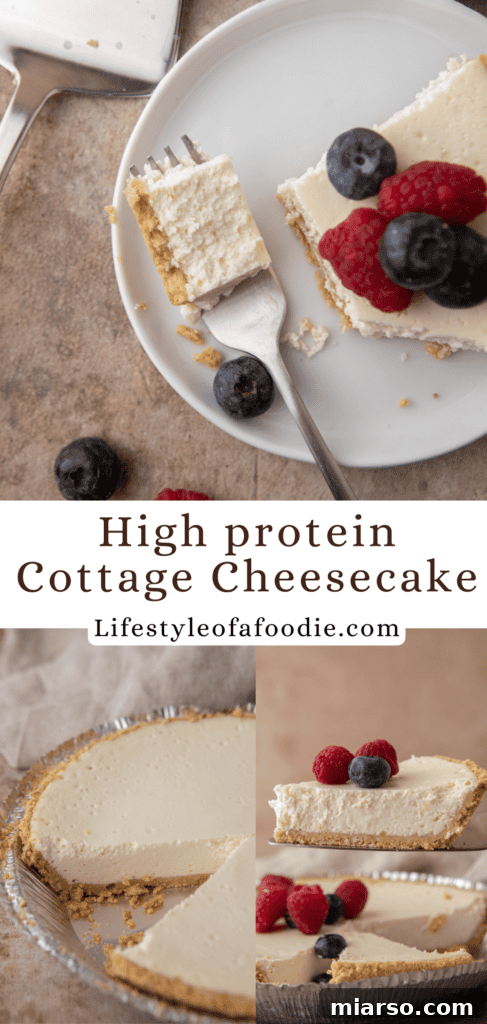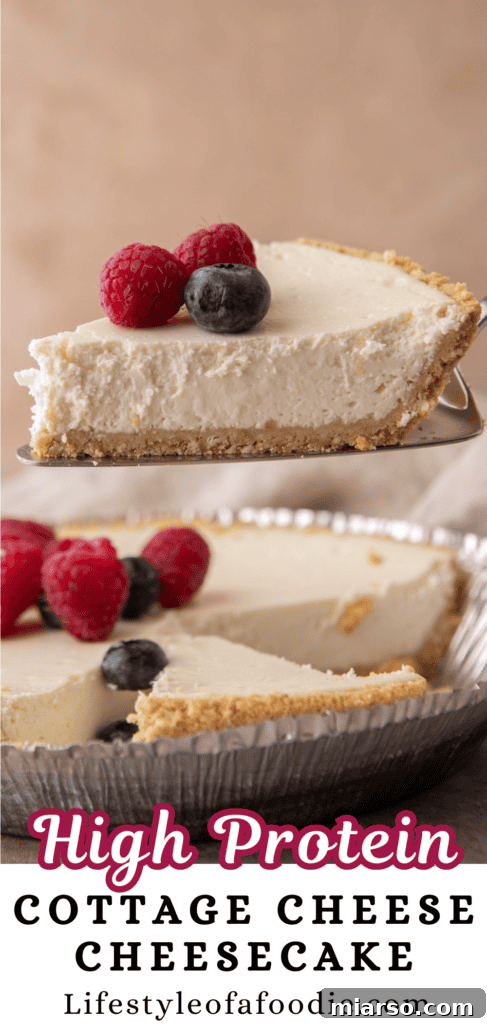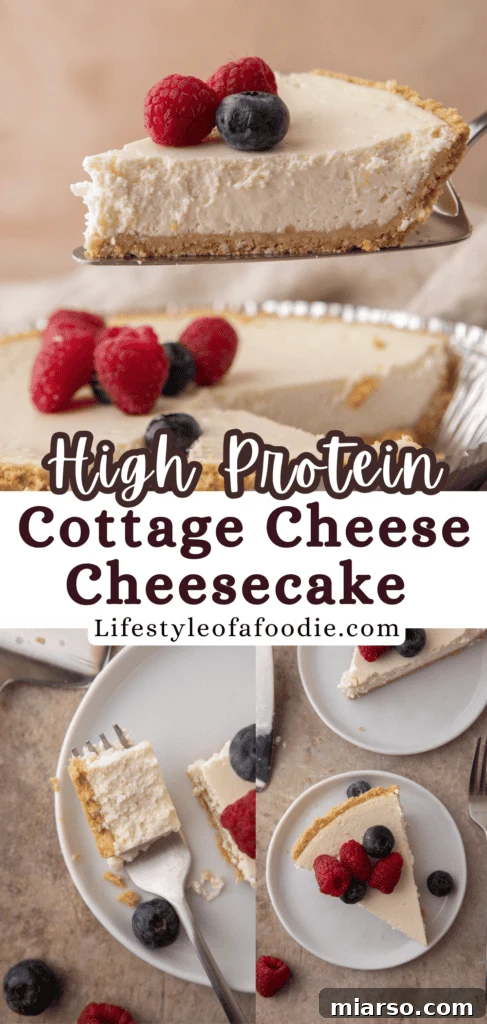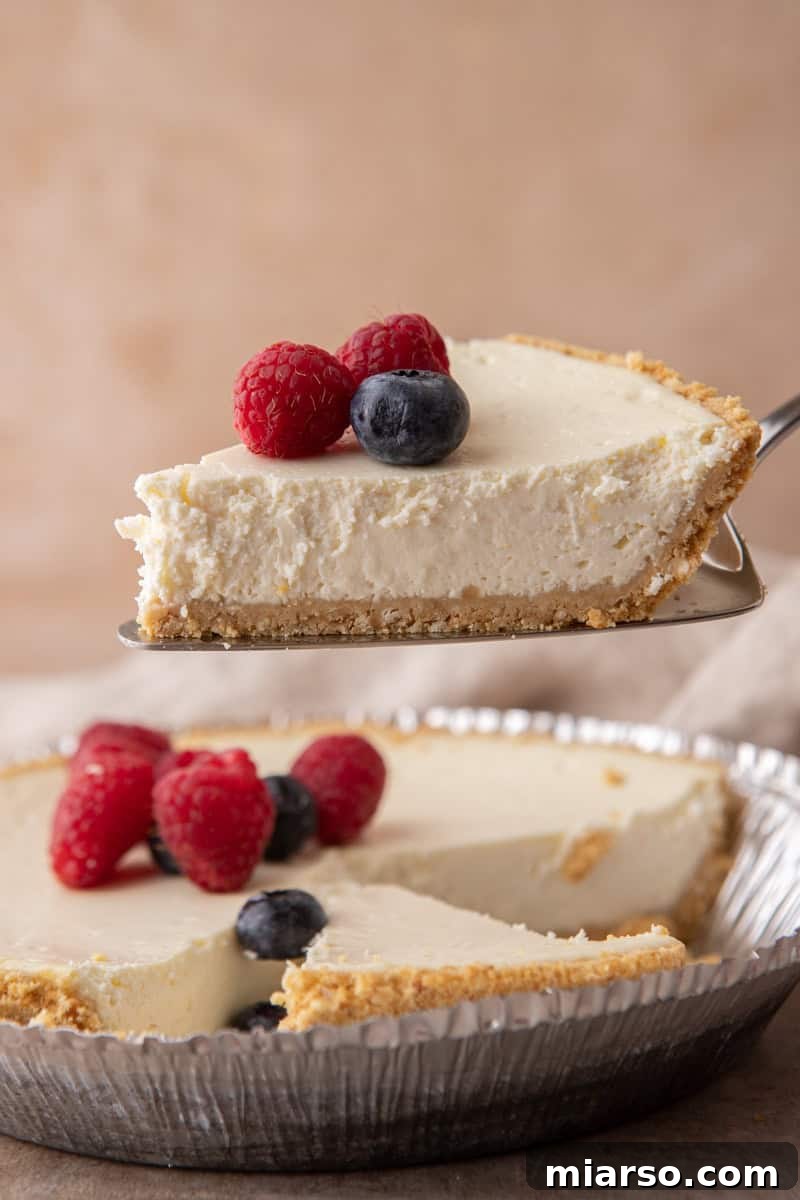
Craving a delightful dessert that aligns perfectly with your health and fitness aspirations? This **High Protein Cottage Cheese Cheesecake recipe** is truly a revelation. It masterfully combines the creamy indulgence of a classic cheesecake with the nutritional benefits of high-protein ingredients, offering a guilt-free sweet treat. Crafted using just a handful of wholesome, accessible ingredients, it’s bursting with flavor and protein, making it an ideal choice for anyone looking to enjoy dessert without derailing their progress. Best of all, achieving this rich, satisfying texture requires absolutely no protein powder!
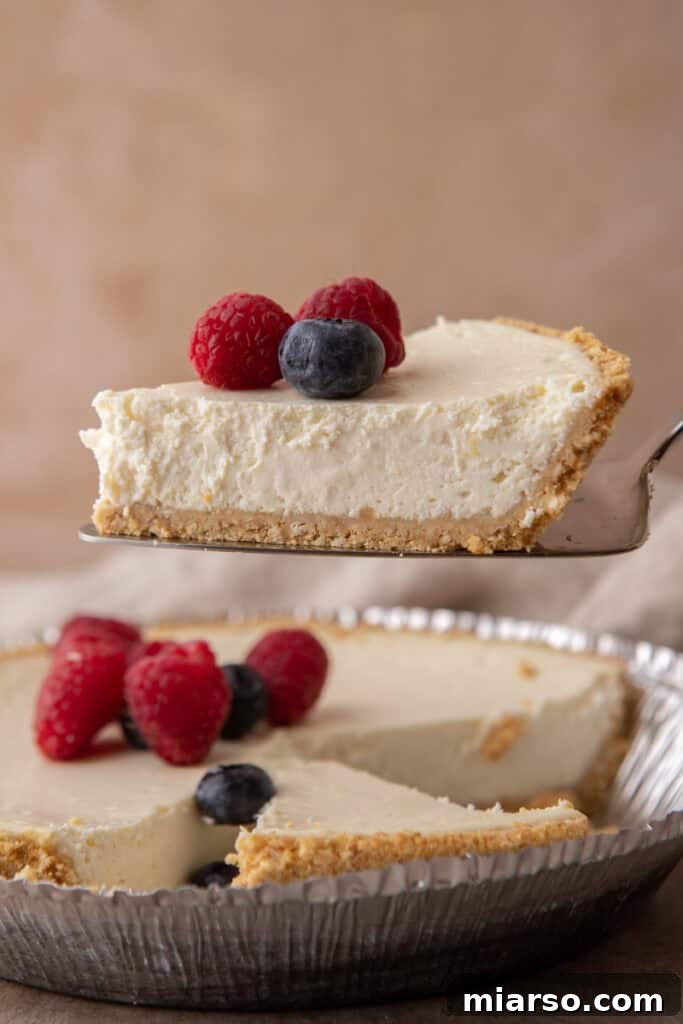
For countless dessert enthusiasts and fitness buffs alike, the dilemma often lies between satisfying a sweet tooth and adhering to dietary goals. This innovative cottage cheese cheesecake offers the perfect resolution. Its remarkably creamy consistency and sweet, tangy profile are so compelling that it can easily stand toe-to-toe with any traditional cheesecake made with cream cheese, often surpassing expectations. What makes this recipe even more appealing is its incredible simplicity. You won’t need an arsenal of gourmet kitchen gadgets or advanced culinary expertise to whip up this masterpiece. It’s the quintessential treat that has been missing from your healthy eating plan, proving that nutritious can also mean delicious.
Whether you’re in search of a satisfying, protein-packed snack to curb midday cravings, a light yet decadent post-dinner treat, or a healthier dessert option to share at your next social gathering, this cottage cheese cheesecake is an impeccable choice. Its robust nutritional profile makes it particularly suitable for athletes, gym-goers, or anyone actively managing their calorie intake while still desiring the pleasure of a sweet indulgence. Moreover, its excellent keeping qualities in the refrigerator make it a fantastic candidate for meal prepping. Prepare a batch at the beginning of the week, and you’ll have a wholesome, ready-to-enjoy dessert whenever the mood strikes. Serve it perfectly chilled, perhaps garnished with an assortment of fresh berries, a delicate drizzle of sugar-free honey, or a sprinkle of lemon zest to elevate its natural flavors. Embrace this healthier dessert and enjoy every delectable bite without a hint of guilt.
Since you appreciate creative and delicious cottage cheese recipes, we highly recommend exploring other innovative ways to incorporate this versatile ingredient into your diet. Discover the delightful **Cottage Cheese Edible Cookie Dough** for a safe-to-eat batter experience, or cool down with the refreshing **High Protein Frozen Cottage Cheese Bark Recipe**. If you’re looking for a savory option, the viral TikTok sensation, **High Protein Cottage Cheese Queso Dip**, is a must-try. These recipes showcase the incredible adaptability of cottage cheese in creating both sweet and savory, healthy delights.
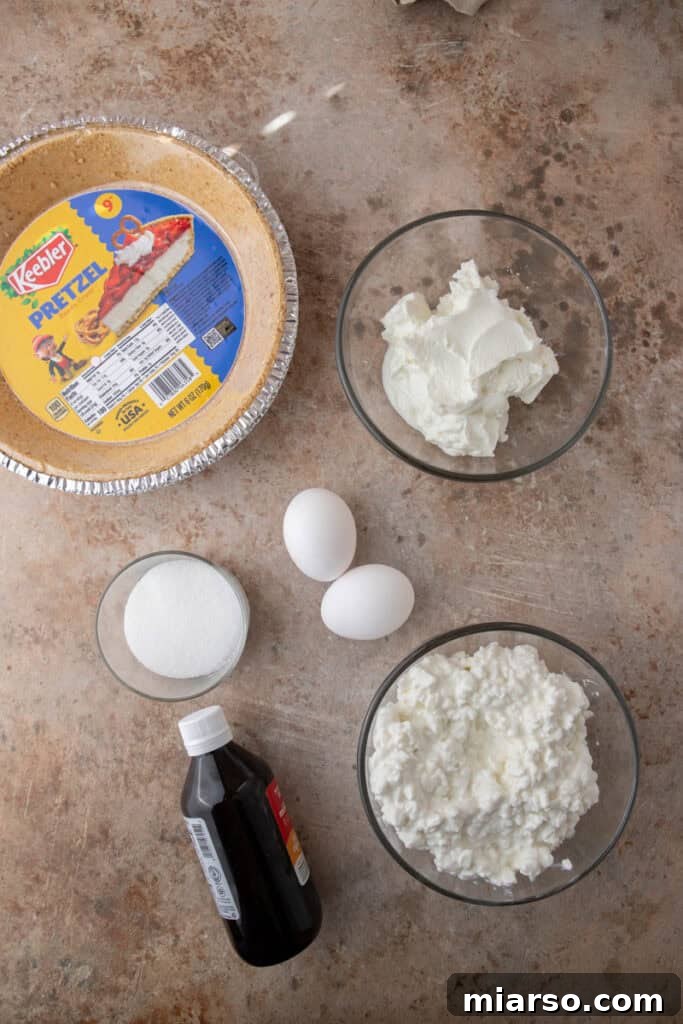
Essential Ingredients for Your High Protein Cottage Cheese Cheesecake
Crafting this healthy, high-protein cheesecake requires a selection of simple yet impactful ingredients, each playing a crucial role in achieving its signature creamy texture and balanced flavor. Below, you’ll find a detailed breakdown of what you’ll need, along with insights into their specific contributions and potential substitutions. For precise measurements, please refer to the comprehensive recipe card located at the bottom of this page.
- Graham Cracker Pie Crust: This forms the foundational element of our cheesecake, providing a delightful balance of sweetness and crunch. You have the flexibility to create a homemade crust using finely crushed graham cracker crumbs, your preferred sugar-free sweetener, and melted butter for a personalized touch. Alternatively, a convenient 9-inch **store-bought graham cracker crust** offers a quick and reliable option, ensuring consistent results.
- 1% Fat Cottage Cheese: The star ingredient of this recipe, low-fat cottage cheese is indispensable for its substantial protein content and unique textural contribution. Its curds, when properly blended, transform into a remarkably smooth and rich filling, providing the bulk of the cheesecake’s structure and nutritional value without the excess fat of traditional cream cheese.
- Nonfat Greek Yogurt: To further enhance the cheesecake’s luxurious creaminess while boosting its protein profile, nonfat Greek yogurt is incorporated. It also introduces a subtle, pleasant tanginess that mimics the classic cheesecake flavor, making the dessert feel incredibly authentic and satisfying.
- Large Eggs: Eggs serve as vital binding agents in this recipe, critical for setting the cheesecake and achieving its desired structure. They contribute to the silky-smooth texture and ensure the filling bakes evenly, preventing it from crumbling or becoming too liquidy. Ensure your eggs are at room temperature for optimal blending and a more uniform batter.
- Monk Fruit Sweetener: For a deliciously sweet taste without the added calories or glycemic impact, monk fruit sweetener is our chosen sugar substitute. Its natural origin and clean taste make it an excellent choice. However, you are welcome to use any other low-calorie granulated sweetener you prefer, such as erythritol or stevia, adjusting the quantity to match your desired sweetness level.
- Vanilla Extract: A staple in most dessert recipes, vanilla extract infuses the cheesecake with its characteristic warm, inviting aroma and a subtle depth of sweetness. For those special occasions or when seeking an intensified vanilla experience, consider adding a touch of **vanilla bean paste** for visible specks and a more profound flavor.
- Salt: A small pinch of salt is crucial for balancing the sweetness of the other ingredients and meticulously enhancing the overall flavor profile. It prevents the cheesecake from tasting overly saccharine and brings out the subtle nuances of the vanilla and lemon.
- Lemon Zest: The inclusion of fresh lemon zest is a game-changer, imparting bright, zesty hints of citrus that beautifully complement the richness of the cottage cheese filling. This vibrant addition is key to making this healthier cheesecake taste remarkably similar to the beloved, traditional versions you cherish.
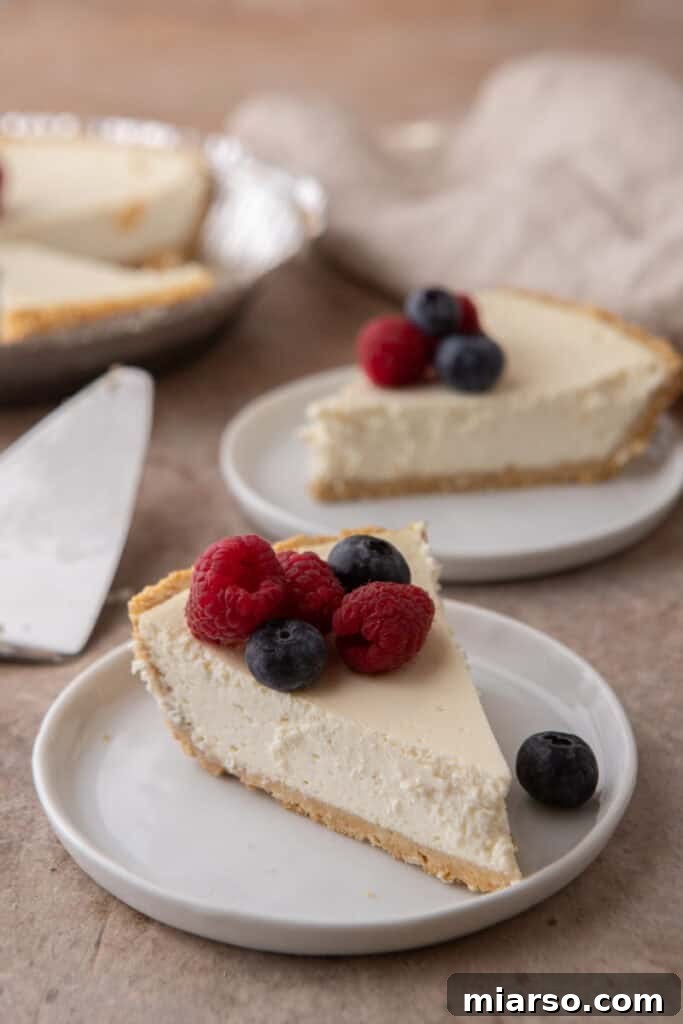
Step-by-Step Guide: How to Make This High Protein Cottage Cheese Cheesecake
Creating this delightful protein-packed cheesecake is a straightforward process that yields incredibly rewarding results. Follow these detailed steps to ensure a perfectly baked and creamy dessert. Remember to scroll down to the recipe card at the very end of this post for precise oven temperatures and the full printable instructions!
- Prepare Your Oven: Begin by preheating your oven to 350°F (175°C). Allowing the oven to reach the correct temperature beforehand is crucial for even baking and helps prevent cracks in your cheesecake.
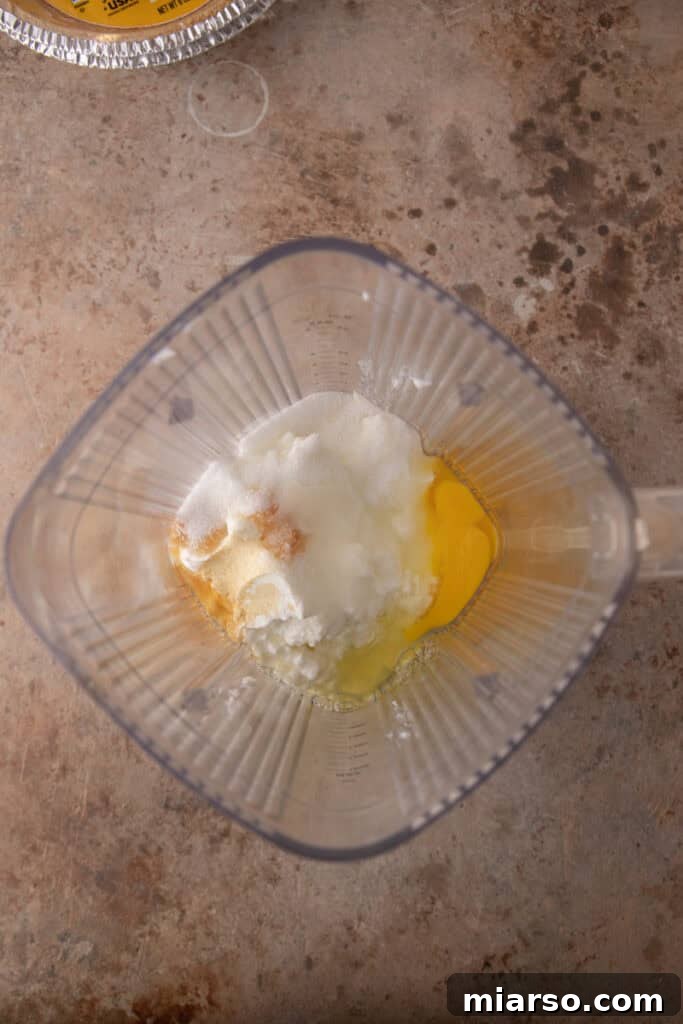
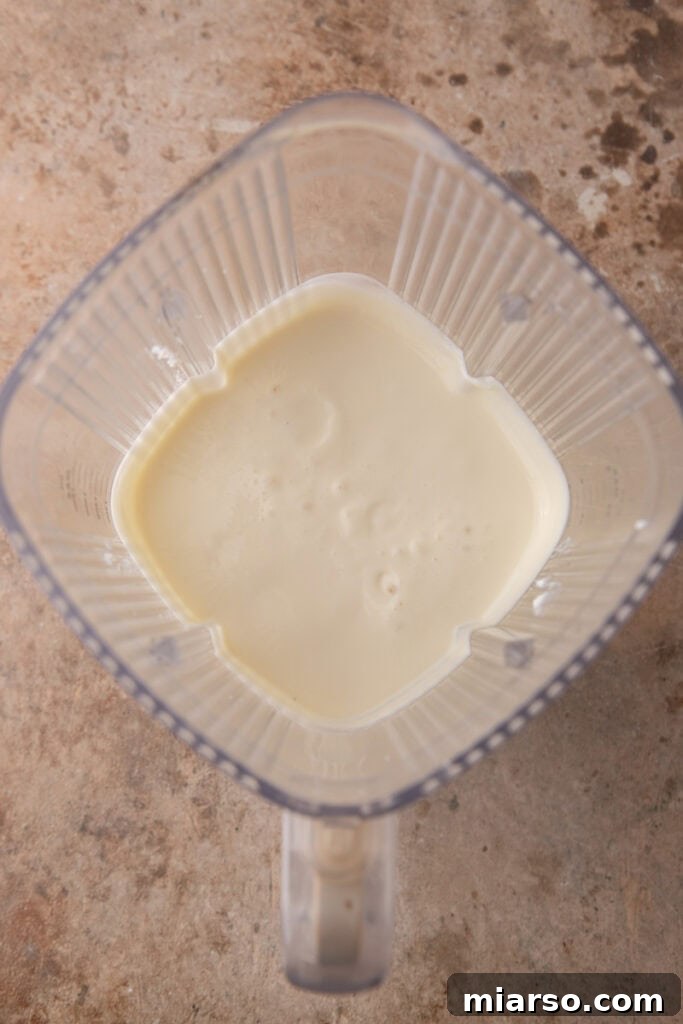
- Blend the Filling to Perfection: In a high-speed **blender** or food processor, combine the room-temperature 1% fat cottage cheese, nonfat Greek yogurt, large eggs, monk fruit sweetener, vanilla extract, and salt. Process these ingredients until the mixture is utterly smooth and completely free of any cottage cheese curds. This step is vital for achieving the signature creamy texture of cheesecake. Once smooth, gently fold in the lemon zest, stirring it evenly throughout the batter.
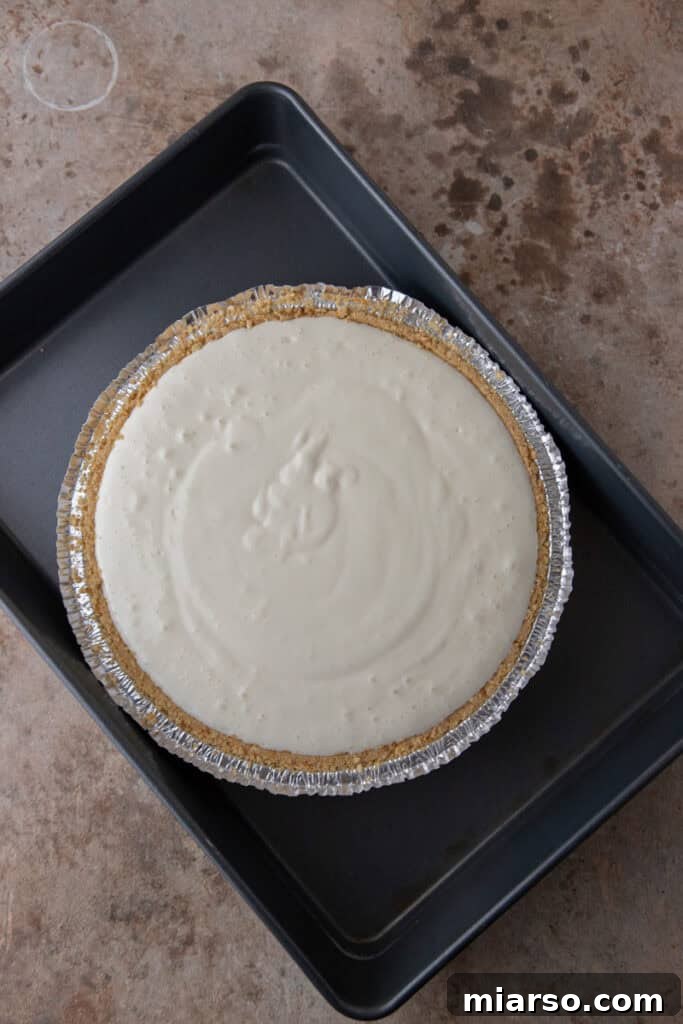
- Fill the Crust: Carefully pour the beautifully smooth cheesecake filling into your prepared graham cracker pie crust. Use a spatula to spread the mixture evenly, ensuring it reaches all edges of the crust for a uniform bake.
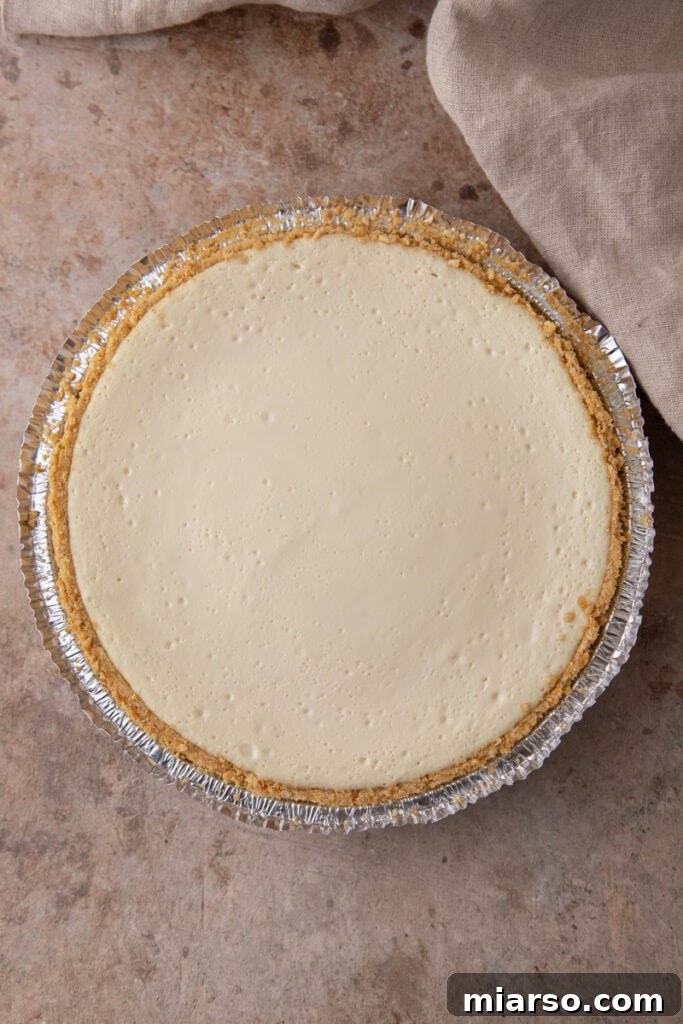
- Bake in a Water Bath: To achieve a moist, crack-free cheesecake, place your pie in a hot water bath in the oven. Bake for approximately 45-50 minutes, or until the edges appear set and the center retains a slight, gentle jiggle when the pan is lightly moved. This jiggle indicates that the cheesecake is cooked through but not overbaked.
- Gradual Cooling in the Oven: Once the baking time is complete, turn off the oven but leave the cheesecake inside with the oven door slightly ajar for an additional 10 minutes (or even up to an hour for best results). This gradual cooling process is critical for preventing sudden temperature changes that can lead to unsightly cracks on the surface of your cheesecake.
- Cool Completely at Room Temperature: Remove the cheesecake from the oven and the water bath, then allow it to cool completely on your kitchen counter at room temperature. Resist the urge to rush this step, as proper cooling at this stage contributes significantly to the final texture.
- Chill Thoroughly: Once the cheesecake has fully cooled to room temperature, cover it tightly with plastic wrap. Transfer it to the refrigerator and allow it to chill for at least 2 hours, or ideally, overnight. This chilling period is essential for the cheesecake to firm up, develop its full flavor, and achieve its perfectly set consistency.
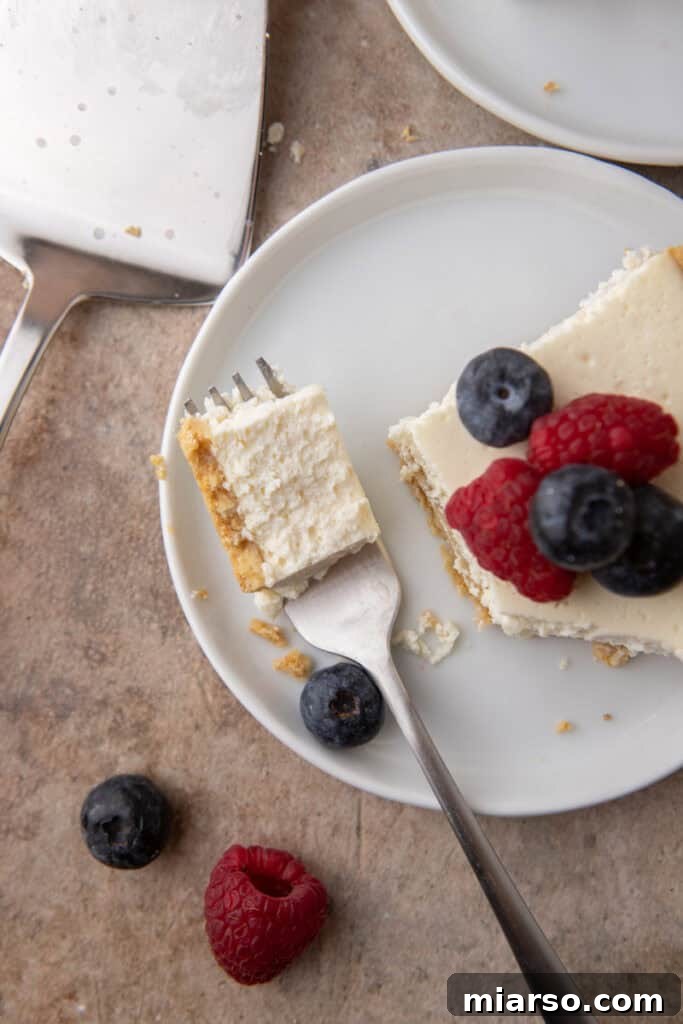
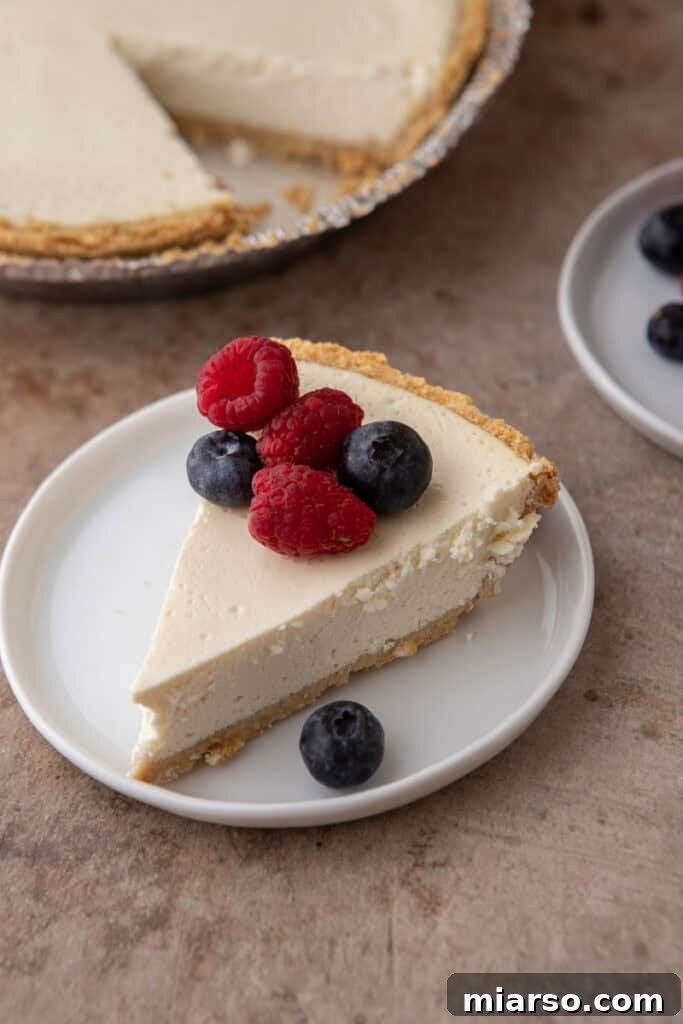
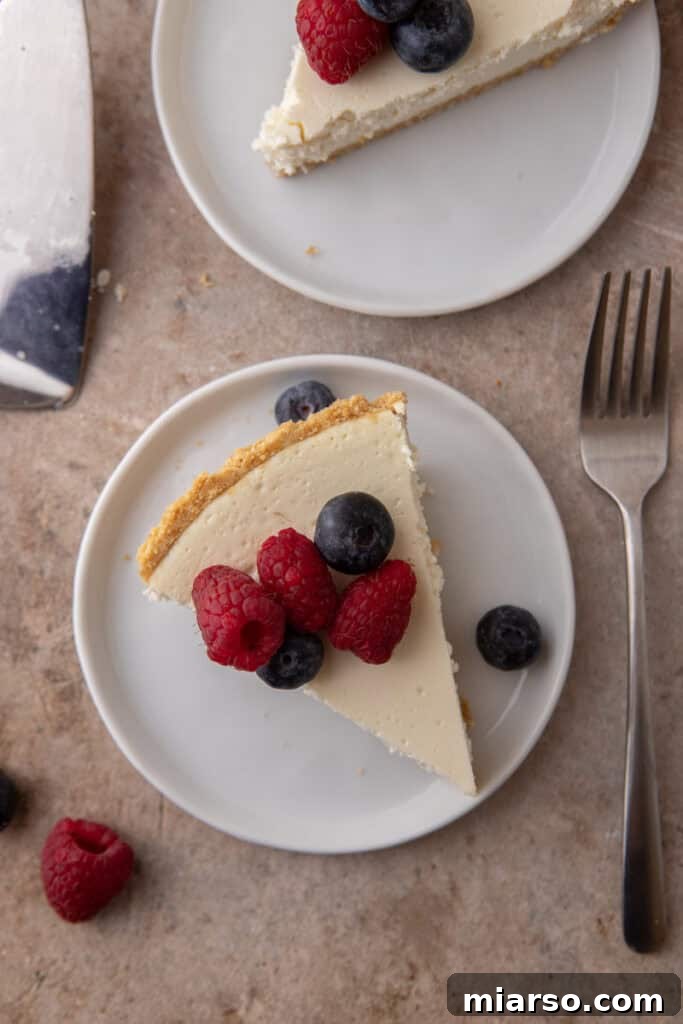
- Slice and Savor: Once thoroughly chilled and set, slice your creamy, delicious high-protein cottage cheese cheesecake. Enhance its appeal by topping each slice with fresh fruit, a dollop of sugar-free whipped cream, or a drizzle of caramel sauce, and then enjoy your healthier indulgence!
Expert Tips and Tricks for Achieving the Perfect Cottage Cheese Protein Cheesecake
While this recipe is designed to be straightforward, a few key techniques can elevate your cottage cheese cheesecake from delicious to absolutely perfect. Incorporating these expert tips will help you achieve the smoothest texture, prevent common baking issues like cracking, and ensure a truly unforgettable dessert experience.
- Ensure Room-Temperature Ingredients: This seemingly minor detail makes a significant difference. Allowing cold ingredients like cottage cheese, Greek yogurt, and eggs to come to room temperature before blending helps them emulsify more effectively. A room-temperature batter is smoother, more uniform, and less likely to develop cracks on the surface during the baking process, resulting in a beautifully finished cheesecake.
- Blend Thoroughly for Ultimate Creaminess: The secret to a luxuriously smooth cottage cheese cheesecake lies in the blending process. Dedicate ample time to pureeing the cottage cheese until it is completely smooth, with no discernible curds remaining, before incorporating other ingredients. A high-speed blender or a powerful food processor is your best ally here, transforming the cottage cheese into a velvety, cream cheese-like consistency that is essential for that coveted silky cheesecake texture.
- Embrace “Low and Slow” Baking: Patience is a virtue when baking cheesecake. Resist the temptation to increase the oven temperature to speed up the process. Baking your cheesecake at the recommended lower temperature, combined with a water bath, prevents it from overcooking too quickly, which is a primary cause of cracks. A gentle, consistent heat ensures the cheesecake sets gradually and evenly from the edges to the center.
- Chill It Properly for Best Results: The cooling and chilling phases are just as crucial as the baking itself. After removing it from the oven, allow the cheesecake to cool completely at room temperature before refrigerating. Then, chill it for a minimum of 2 hours, or ideally, overnight. This extended refrigeration period is paramount for the cheesecake to fully set, firm up, and allow its flavors to meld and deepen. A properly chilled cheesecake boasts the best texture and taste, slices cleanly, and offers the most satisfying experience.
Why This High Protein Cottage Cheese Cheesecake Recipe Deserves a Spot in Your Kitchen!
This isn’t just another cheesecake recipe; it’s a smart, delicious, and satisfying solution for anyone seeking a healthier approach to dessert without sacrificing flavor or texture. Here are compelling reasons why this high-protein cottage cheese cheesecake will become your new go-to treat:
- Minimal, Accessible Ingredients: Say goodbye to long grocery lists filled with obscure items. This healthy cottage cheese cake requires only a handful of simple, everyday ingredients that are readily available at any standard grocery store. This makes it incredibly convenient to prepare, even on a whim.
- A Powerhouse of Protein: Boasting an impressive protein content, this cheesecake is far more than just a sweet treat. It’s an excellent option for athletes fueling their bodies, gym-goers recovering from workouts, or anyone committed to keeping their calorie intake low while ensuring they meet their protein macros. It helps satiate hunger and supports muscle maintenance, making it a truly functional dessert.
- Uncompromised Taste and Texture: One of the greatest challenges in healthy baking is replicating the indulgence of traditional desserts. This high-protein cheesecake excels in this regard, offering a taste and texture that remarkably mirrors beloved regular cheesecakes. You’ll experience the same creamy richness and delicate tang, making it a truly satisfying alternative that doesn’t feel like a compromise.
- Perfect for Cottage Cheese Enthusiasts: If you’re already a fan of cottage cheese and its versatility in various dishes, then you are going to absolutely adore this recipe. It creatively transforms cottage cheese into an unexpected yet utterly delicious dessert, expanding your repertoire of healthy, high-protein options that leverage this humble ingredient.
Frequently Asked Questions – FAQ
To help you perfect your High Protein Cottage Cheese Cheesecake and enjoy it to the fullest, here are answers to some common questions:
How do I properly store my high protein cottage cheese cheesecake?
To maintain its freshness and deliciousness, place any leftover cheesecake slices or the entire cake in an airtight container. Store it in the refrigerator, where it will remain fresh and delightful for up to 3 to 4 days. If you wish to extend its shelf life, freezing is an excellent option. Wrap the whole cheesecake or individual slices securely with plastic wrap, followed by a layer of aluminum foil, before placing them in an airtight freezer-safe container. When properly wrapped, your cheesecake can last beautifully in the freezer for up to two months. Thaw frozen slices in the refrigerator overnight before serving.
What other flavors can I add to my cheesecake?
While this cheesecake is delicious as is, it’s also a fantastic canvas for flavor customization:
- For an even more intense vanilla experience, incorporate additional vanilla flavorings. This could include a teaspoon of rich **vanilla bean paste** or the scraped seeds from a fresh vanilla bean, which will lend a more complex and aromatic depth to the cheesecake.
- Swirl in about 1/3 cup of your favorite **fruit jam or fruit puree** (such as raspberry, strawberry, or blueberry) through the cheesecake batter just before baking. Use a knife or skewer to create elegant swirls for a beautiful marbled effect and burst of fruity flavor.
- To amplify the citrus notes, combine the lemon zest with a dash of **lemon extract** or a tablespoon of fresh **lemon juice**. This will give your cheesecake a brighter, more pronounced lemon flavor, akin to a classic lemon meringue pie.
- Consider adding a tablespoon of **cocoa powder** to a portion of the batter for a marbled chocolate cheesecake, or mix in a teaspoon of **almond extract** for a subtle nutty undertone.
What can I top my protein cheesecake with for extra indulgence?
This cheesecake is incredibly satisfying on its own, but adding toppings can elevate it to a gourmet dessert:
- A generous handful of **fresh berries** (strawberries, blueberries, raspberries, or mixed berries) adds natural sweetness, a slight tartness, and a beautiful pop of color.
- Drizzle with a sugar-free or regular **caramel sauce** for a rich, decadent touch that complements the creamy base.
- A spoonful of tangy and sweet **lemon curd** provides an extra layer of citrusy brightness, enhancing the lemon zest already in the recipe.
- Light and airy **whipped cream** or a dairy-free whipped topping adds a classic finishing touch and a delightful textural contrast.
- A sprinkling of **toasted nuts** (like pecans or almonds) can add a pleasant crunch and nutty flavor.
- For a truly indulgent experience, a thin layer of **chocolate ganache** or shaved dark chocolate can be a fantastic addition.
What if I don’t have a blender or food processor to make the filling smooth?
A blender or food processor is undeniably ideal for achieving the ultra-smooth, creamy texture that defines this cheesecake. These tools efficiently break down the cottage cheese curds. However, if you don’t have access to one, an immersion blender can also work effectively, though it might require a bit more patience to ensure all curds are fully processed. As a last resort, you can press the cottage cheese through a very fine mesh sieve or strainer multiple times before mixing it with the other ingredients. While this technique won’t yield the absolute smoothest results, and we generally recommend a blender for optimal creaminess, it can still produce a palatable texture in a pinch.
Can I substitute another sweetener for monk fruit?
Absolutely! Monk fruit is chosen for its natural sweetness and zero-calorie profile, but you have several options for substitution. You can use other granulated low-calorie sweeteners such as **stevia** or **erythritol**, keeping in mind that their sweetness intensity might differ slightly, so you may need to adjust the quantity to achieve your preferred level of sweetness. If you’re not strictly concerned about keeping the cheesecake low-calorie, regular granulated sugar or brown sugar can also be used as a direct substitute, though this will alter the nutritional profile of the dessert.
Is it normal for the cheesecake to crack, and how can I prevent it?
It is quite common for cheesecakes, even traditional ones, to develop slight cracks during cooling due to temperature fluctuations and structural tension, but a small crack doesn’t affect the taste! We’ve incorporated several techniques into this recipe to minimize cracking. To prevent cracks, ensure you avoid overmixing the batter, as excessive air can cause it to rise too quickly and then fall. Baking the cheesecake in a **water bath** provides a moist, even heat that helps it set gently. Most importantly, allow the cheesecake to cool gradually inside the oven with the door ajar after baking. A sudden change in temperature when pulling it out of a hot oven can shock the cheesecake and lead to significant cracking. Patience during the cooling phases is your best defense against cracks.
High Protein Cottage Cheese Cheesecake Recipe
★
★
★
★
High Protein Cottage Cheese Cheesecake Recipe
Print Recipe
Ingredients
US CustomaryMetric
1x2x3x
Instructions
-
Preheat your oven to 350°F (175°C).
-
In a blender or food processor, combine the cottage cheese, Greek yogurt, eggs, monkfruit sweetener, vanilla extract, and salt. Blend until the mixture is completely smooth and free of any curds. Then, gently stir in the lemon zest to distribute it evenly.Ingredients: 2 cups 1% fat cottage cheese, 1 cup nonfat Greek yogurt, 2 large eggs, 1/3 cup monkfruit sweetener, 2 tsp vanilla extract, 1/4 tsp salt, 1 tsp lemon zest.
-
Pour the smooth cheesecake mixture into the 9-inch graham cracker pie crust, spreading it evenly.Ingredient: 1 9-inch graham cracker pie crust.
-
Place the pie in a hot water bath in the preheated oven and bake for 45-50 minutes, or until the edges are set and the center has a slight jiggle.
-
Turn off the oven and leave the cheesecake inside with the door slightly propped open for about an hour to cool gradually.
-
Remove the cheesecake from the oven and allow it to cool completely at room temperature on a wire rack.
-
Once cooled, cover the cheesecake with plastic wrap and refrigerate for at least 2 hours, or until fully chilled and set.
-
Slice, add your favorite toppings, and enjoy your creamy and delicious high protein cheesecake!
Nutrition
Nutrition information is automatically calculated, so should only be used as an approximation.
Loved this High Protein Cottage Cheese Cheesecake? Pin it for later and share the goodness!