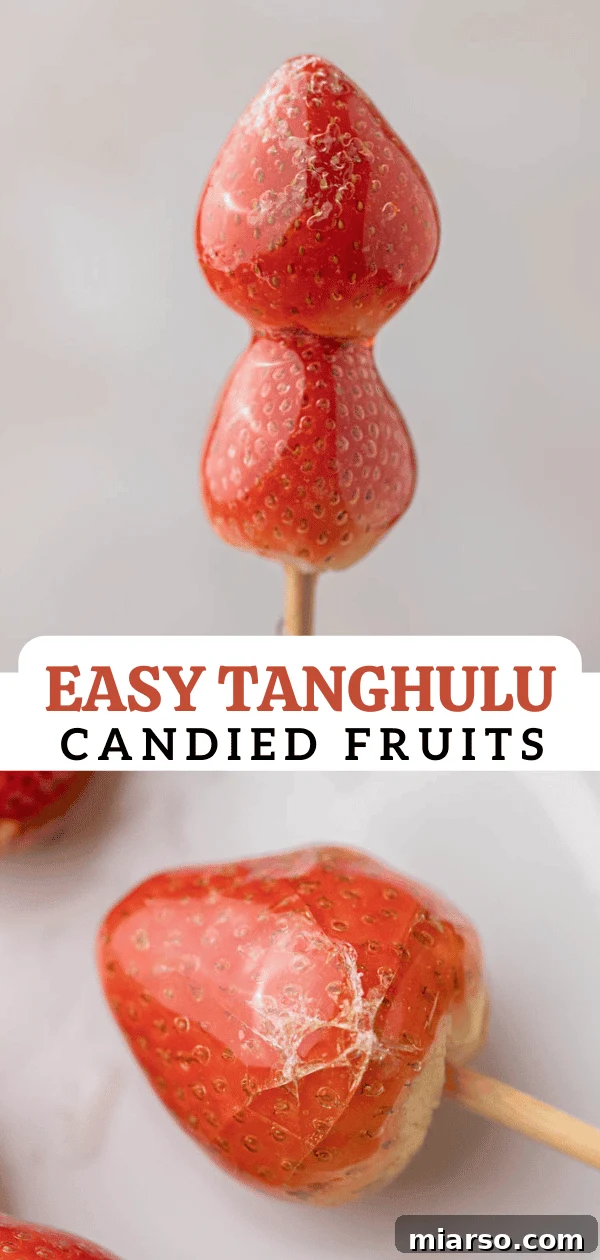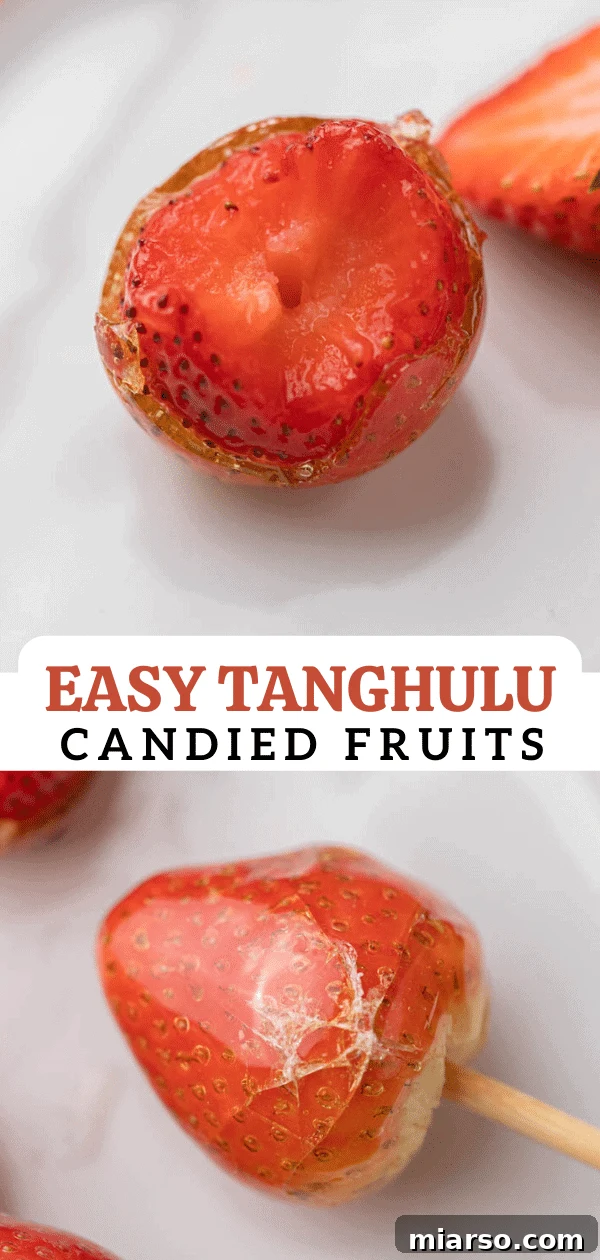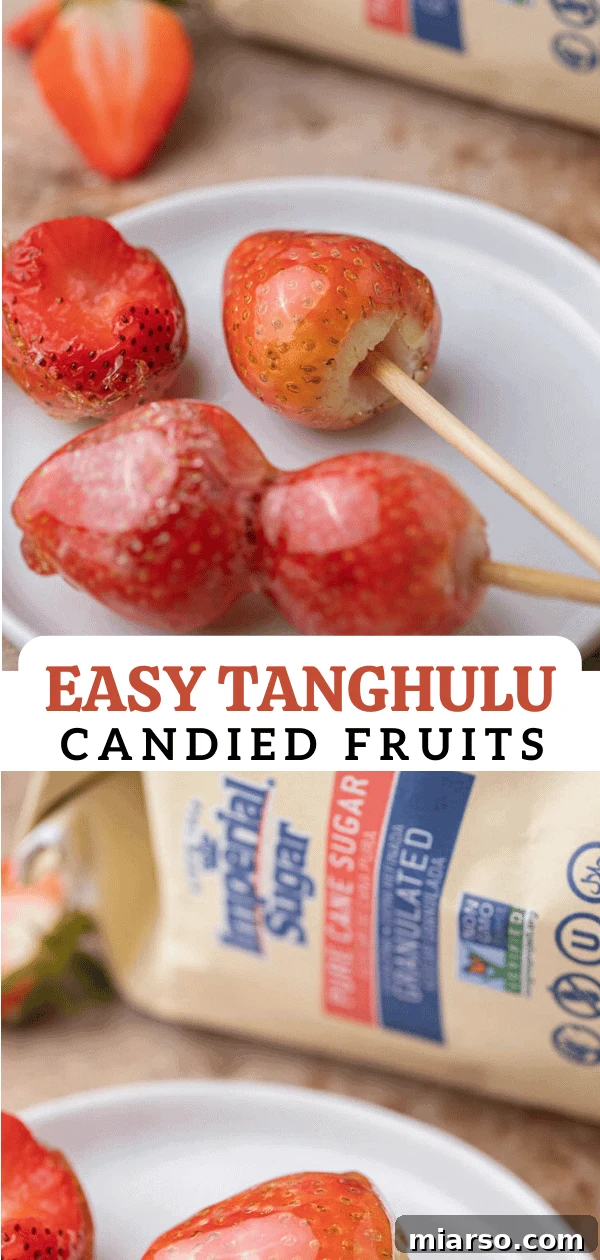
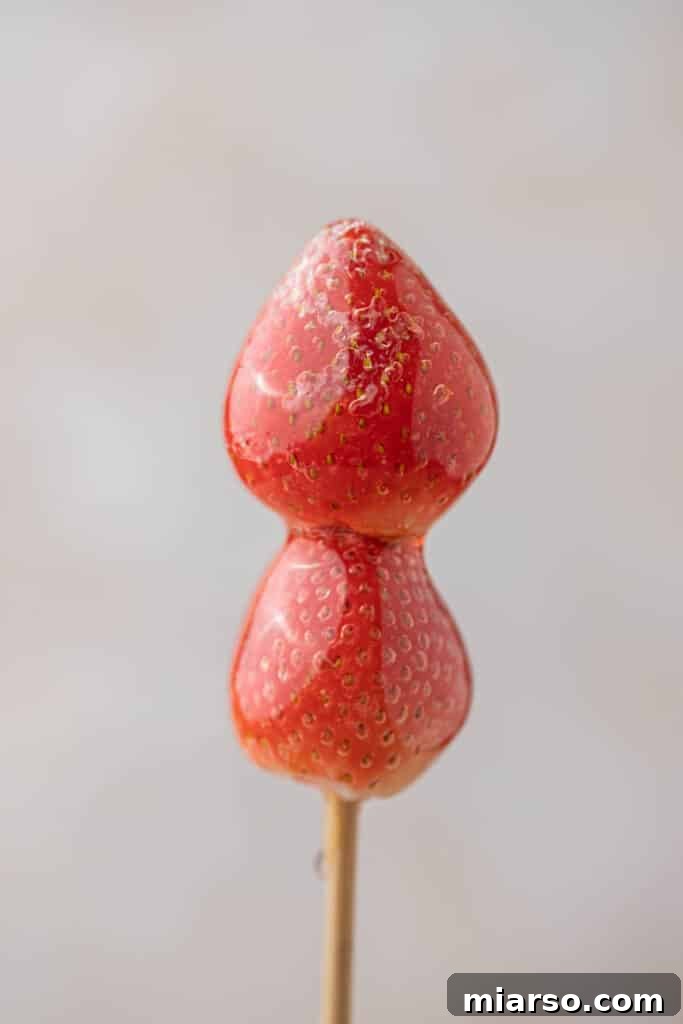
Welcome to the ultimate guide for crafting your very own homemade Tanghulu, the mesmerizing candied fruit skewers that have captured hearts (and taste buds) worldwide! This Tanghulu recipe offers one of the easiest and most enchanting ways to transform fresh, juicy fruit into a delightful confection with a perfectly sweet, irresistibly crunchy shell. Imagine succulent fruit encased in a delicate, glassy sugar syrup, creating a hard candy coating that cracks with every bite. This classic Chinese street snack is not only incredibly fun to make but also visually stunning and utterly delicious, making it a perfect treat for any occasion.
If you’re as passionate about delectable treats as we are, you might also love exploring other fruity delights like this homemade strawberry milk recipe, the incredibly rich brown butter strawberry blondie recipe, or these charming strawberry shortcake cookies. Each offers a unique way to enjoy the vibrant flavors of fresh fruit!
Let’s Chit Chat!
The allure of Tanghulu has been impossible to ignore lately, with countless mesmerizing videos flooding social media feeds. The vibrant colors and satisfying crunch were simply calling my name, and I knew I had to embark on a mission to discover the best possible method for making this viral treat right here at home. My goal? To ensure that you, too, can achieve restaurant-quality Tanghulu on your very first attempt, impressing everyone with your culinary prowess!
One of the beauties of Tanghulu is its incredible versatility. You can utilize a wide array of fruits you likely already have on hand, transforming everyday produce into something truly extraordinary. However, to guarantee your success, it’s crucial to understand which fruits are best suited for Tanghulu and to follow specific tips and tricks. Keep reading as we delve into these secrets, ensuring your candied fruit skewers are nothing short of perfect.
With this comprehensive guide and recipe, you’ll gain all the knowledge and confidence needed to create a spectacular candy-coated fruit sensation in your own kitchen. Prepare to delight your senses and those of your loved ones with this simple yet stunning dessert!
What is Tanghulu? The Crunchy World of Candied Fruit
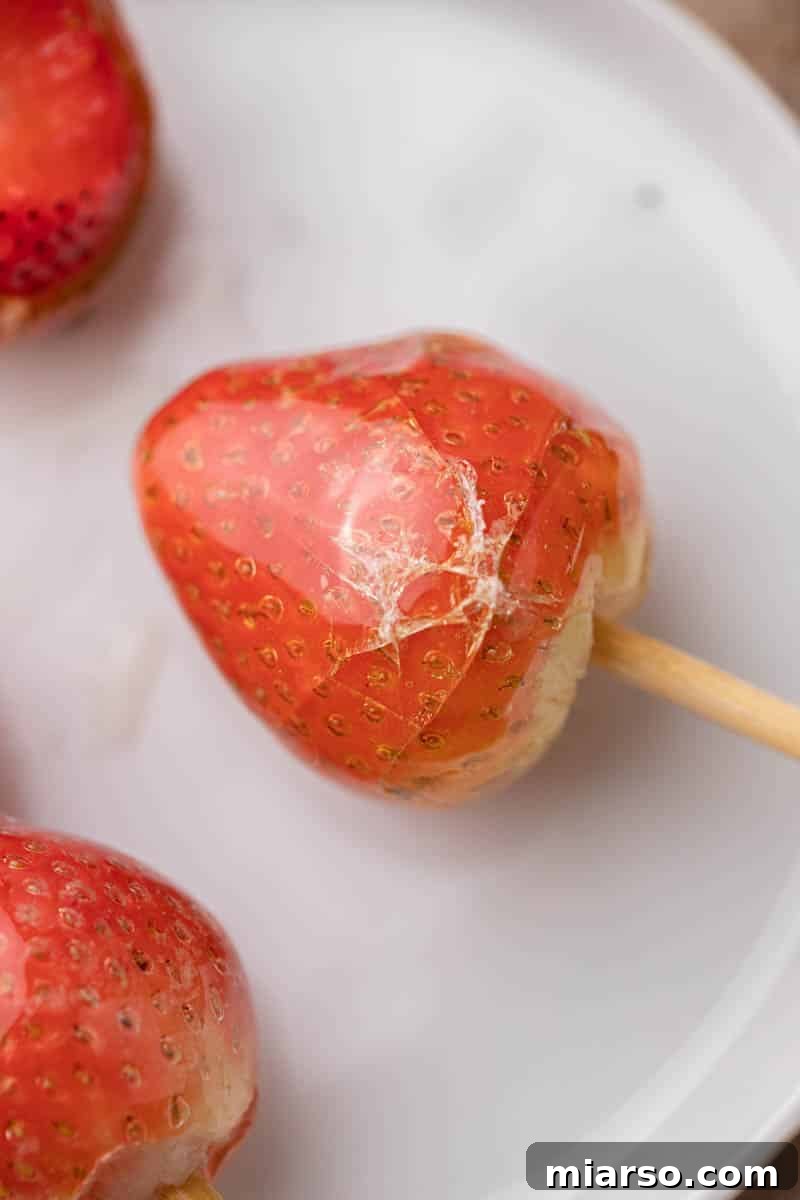
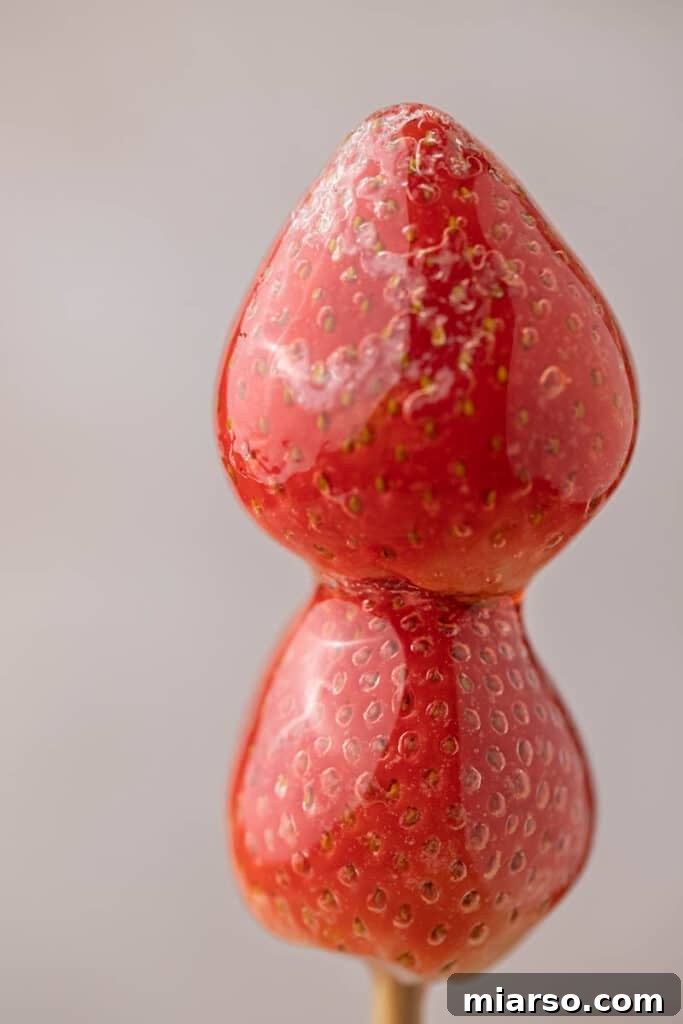
Tanghulu, also known as Bingtang Hulu, is a beloved traditional Chinese street food originating from the northern regions of China. At its heart, Tanghulu is a simple yet brilliant concept: fresh fruits are carefully skewered onto bamboo sticks, then swiftly dipped into a bubbling-hot sugar syrup. Immediately after, these glistening skewers are plunged into an ice-cold water bath, which instantly solidifies the molten sugar, creating a transparent, crispy, and incredibly glossy candy coating. The result is a delightful contrast between the crunchy, sweet exterior and the soft, juicy fruit within, offering a truly unique textural and flavor experience.
This iconic snack has been cherished for centuries, particularly during the colder winter months. Its vibrant appearance and satisfying crunch make it a popular sight at markets, festivals, and bustling street corners, enchanting both children and adults alike. While traditionally made with a specific berry, modern interpretations embrace a variety of fruits, making it a versatile treat that continues to evolve and captivate new audiences around the globe.
History & Origin: A Sweet Legacy Spanning Centuries
The story of Tanghulu (冰糖葫芦), meaning “rock sugar calabash” due to its original shape and coating, is deeply embedded in Chinese culture, with roots tracing back over a thousand years to the Song Dynasty (960-1279 AD). Historically, this delightful snack was primarily made using Chinese hawthorn berries (山楂, shānzhā), a tart, reddish-brown fruit native to East Asia. These berries were skewered and then meticulously coated in molten sugar, creating a clear, shimmering, and crackling shell that protected the tangy fruit inside.
Legend has it that Tanghulu was first created during the Southern Song Dynasty. A concubine of Emperor Guangzong suffered from a mysterious illness that left her with no appetite. Numerous court doctors attempted to cure her, but all failed. Finally, a palace physician prescribed a unique remedy: hawthorn berries simmered in brown sugar, to be consumed twenty times a day before meals. Miraculously, the concubine’s health improved, and her appetite returned. This simple, sweet remedy quickly spread from the imperial palace to the common people, evolving into the beloved street snack we know today. Over time, as ingredients became more accessible and culinary creativity flourished, the snack evolved. Modern versions now feature a diverse array of fruits, including succulent strawberries, sweet grapes, vibrant kiwi slices, and juicy orange wedges, adapting to contemporary tastes while preserving its ancient charm.
What does Tanghulu taste like? A Symphony of Sweet and Tangy Textures
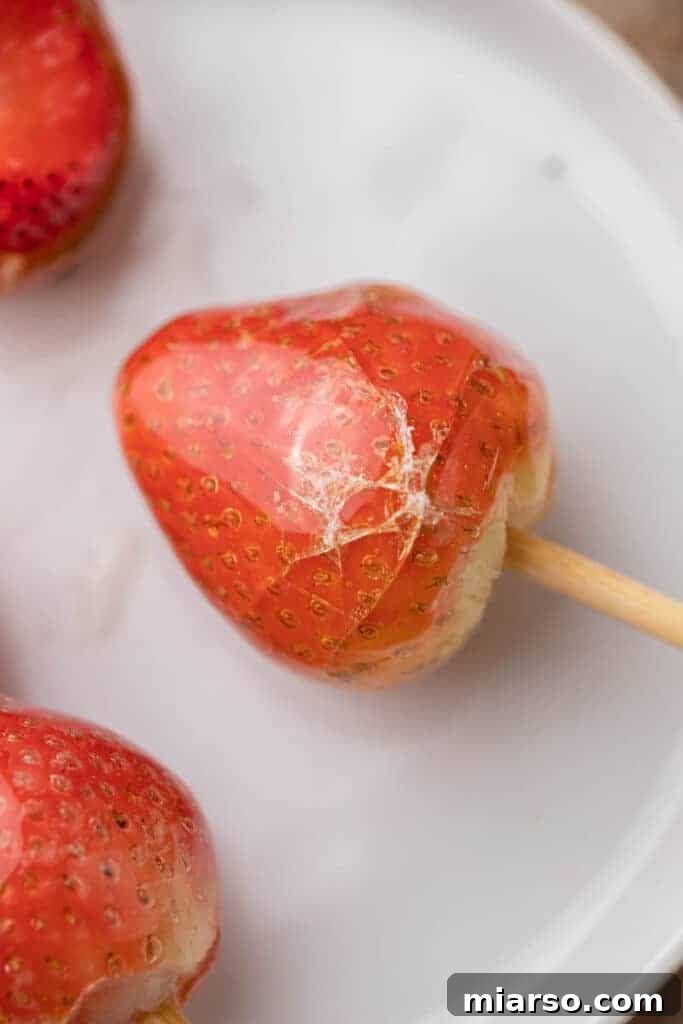
Tanghulu offers a truly distinctive taste and texture experience that sets it apart from other candied treats. Fundamentally, it tastes sweet, thanks to the sugar syrup coating. However, the exact flavor profile is beautifully nuanced by your choice of fruit. Depending on whether you opt for naturally tart fruits like hawthorn or strawberries, or sweeter options like grapes, you’ll encounter delightful hints of tartness that perfectly balance the sugary sweetness. This interplay prevents the snack from being overly cloying, creating a harmonious flavor blend.
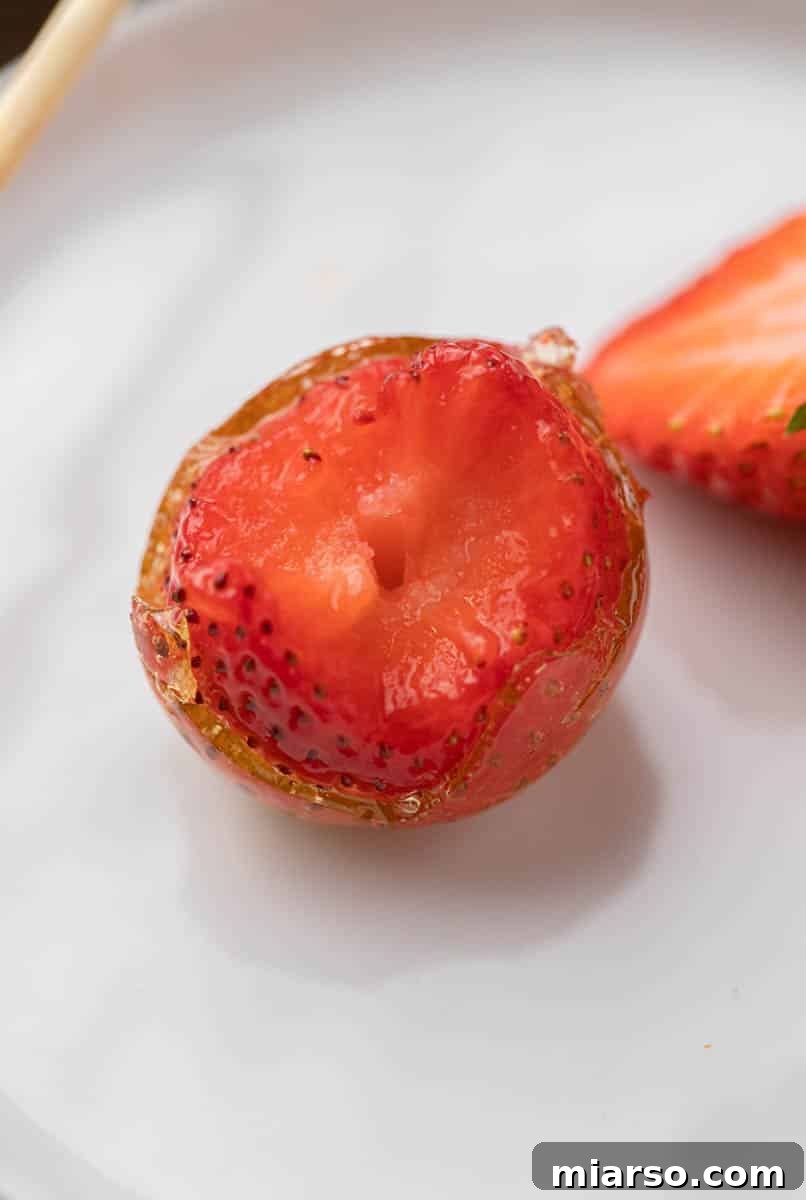
But the true magic of Tanghulu lies in its texture. The initial bite is an exhilarating experience: a thin, glassy sugar shell that crackles with a satisfying snap, much like hard candy. This exhilarating crunch quickly gives way to the soft, juicy, and often slightly tart fruit inside, creating a dynamic contrast that is both surprising and incredibly addictive. The combination of the brittle exterior and the tender interior makes Tanghulu a truly engaging and memorable treat for all your senses.
Why You Absolutely Need to Master This Homemade Tanghulu Recipe
There are countless reasons why this Tanghulu recipe deserves a spot in your culinary repertoire. It’s more than just a dessert; it’s an experience waiting to be created in your kitchen. Here’s why this recipe is a must-try:
- Effortlessly Simple & Immensely Fun: Don’t let its elegant appearance fool you. This recipe is surprisingly straightforward, making it perfect for beginners and seasoned home cooks alike. The process is engaging and enjoyable, turning cooking into a delightful activity for the whole family.
- Incredibly Versatile for Any Season: Tanghulu adapts beautifully to whatever fresh, seasonal fruits are available. From vibrant summer berries to crisp autumn apples, you can experiment with a wide variety of fruits, ensuring a fresh and exciting experience every time. It’s a fantastic way to enjoy nature’s bounty.
- No Corn Syrup Required: While corn syrup is often used in candy making to prevent crystallization, this recipe proves you can achieve a perfect, glassy shell using just granulated sugar and water. We’ll show you the techniques to ensure success without needing extra ingredients, though corn syrup remains an optional aid for those who prefer it.
- A Visually Stunning & Delicious Treat: Tanghulu is a feast for the eyes as much as it is for the palate. The gleaming, transparent candy coating elevates simple fruits into edible jewels. It looks incredibly impressive, making it ideal for special occasions, yet its taste truly surpasses its beautiful presentation.
- Perfect for Any Occasion: Whether you’re hosting a sophisticated dinner party, looking for a unique snack time option, or simply want to impress your friends and family with a show-stopping dessert, Tanghulu fits the bill. Its unique charm and delectable taste guarantee smiles all around.
For those who appreciate the delicate balance of flavors found in Asian-inspired recipes, be sure to also check out this refreshing Korean banana milk, or this zesty Yuzu curd recipe!They pair wonderfully with the sweet notes of Tanghulu.
How to Make Tanghulu: A Step-by-Step Guide to Perfect Candied Fruit
Creating Tanghulu at home is an exciting and rewarding process. While it requires precision and a bit of speed, by following these detailed steps, you’ll achieve a flawless candy coating every time. For full ingredient measurements and a printable version, scroll down to the recipe card below!
Essential Equipment for Tanghulu Success:
- Medium Heavy-Bottomed Pot: Crucial for even heat distribution, preventing sugar from burning.
- Candy Thermometer: Your best friend for accurate temperature control, essential for the “hard-crack” stage.
- Wooden Skewers: Long bamboo skewers are ideal for dipping, keeping your hands away from hot syrup.
- Parchment Paper or Silicone Mat: For cooling the finished Tanghulu without sticking.
- Large Bowl with Ice Water: An ice bath is critical for rapidly hardening the sugar shell.
- Pastry Brush (optional but recommended): For brushing down sugar crystals on the pot’s sides.
Step-by-Step Instructions:
- Prepare the Fruits & Skewers:
Begin by meticulously washing your chosen fruits. This step is vital. After washing, it’s equally important to dry them completely. Any residual moisture on the fruit can cause the sugar syrup to become cloudy or sticky, preventing that beautiful, crisp shell. Use paper towels to pat them thoroughly dry. Next, thread the fruit pieces onto wooden bamboo skewers. Aim for 2-5 fruits per stick, depending on their size, ensuring they are spaced well enough to be fully submerged in the syrup without touching each other or the pot’s sides.
- Heat the Sugar Mixture to Perfection:
In a clean, medium heavy-bottomed pot, combine your granulated sugar and water. Place the pot over medium heat. Insert a reliable candy thermometer, ensuring its tip does not touch the bottom of the pot. Slowly bring the mixture to a boil, without stirring. Stirring can introduce air bubbles and cause the sugar to crystallize prematurely. Your target temperature is 300°F (149°C), which is the “hard-crack” stage. At this temperature, the sugar will be incredibly hot and brittle when cooled.
- Without a Thermometer: If you don’t have a candy thermometer, you can perform the “ice water test.” Once the syrup appears thick and golden, carefully dip a spoon or the tip of a clean skewer into the hot syrup, then immediately plunge it into a bowl of ice water. If the sugar instantly hardens into a brittle, glass-like thread that snaps cleanly, it’s ready. If it’s chewy, continue boiling.
Pro Tip: Preparation is key! Ensure your fruits are skewered, your ice bath is ready, and your parchment paper is laid out before you even start heating the sugar. Once the syrup reaches the hard-crack stage, you’ll have very little time to work before it begins to set or crystallize.
- Dip the Skewers Quickly and Evenly:
Once the sugar syrup reaches 300°F, immediately remove the pot from the heat or turn the burner to its lowest setting to maintain temperature. Working quickly and carefully, take one fruit skewer at a time. Submerge the fruit fully into the hot syrup, rotating the skewer to ensure every surface is evenly coated. Lift the skewer and allow any excess sugar coating to drip off back into the pot. Speed is essential here, as the syrup will cool and thicken rapidly.
- Shock in the Ice Water Bath:
Immediately after coating, dunk the entire coated skewer into the prepared ice water bath. Hold it submerged for just 2-4 seconds. This rapid cooling is what causes the sugar shell to harden almost instantly into that desired crisp, glassy texture. Don’t leave it in too long, or the sugar may dissolve.
- Dry and Serve:
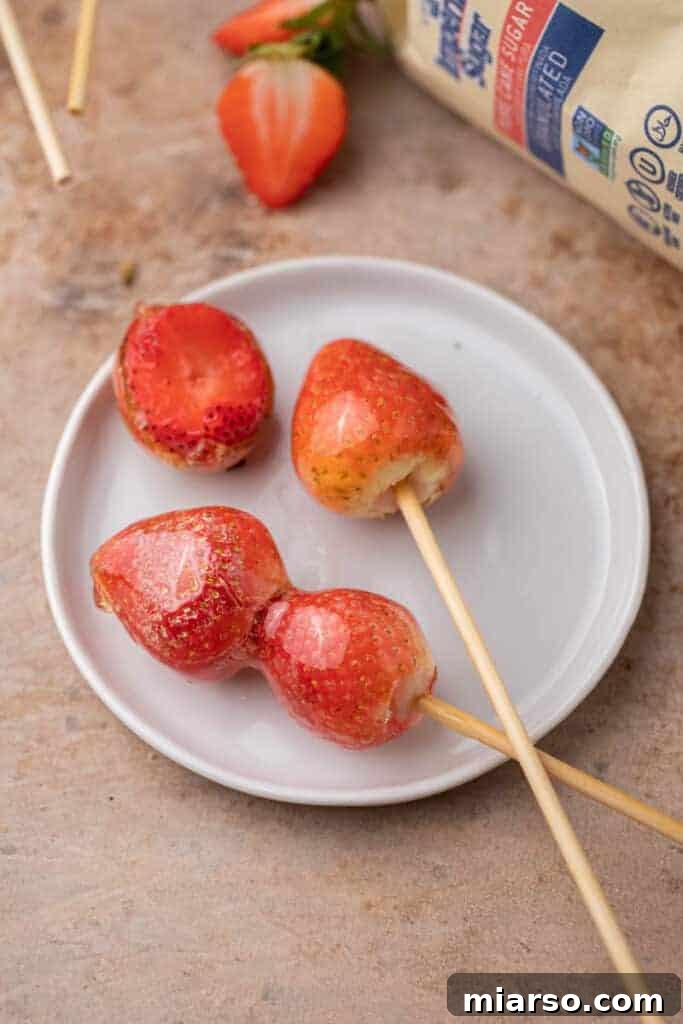
Remove the skewer from the ice water and place it on a piece of parchment paper or a silicone baking mat to finish cooling and drying. The sugar shell will continue to crackle and harden fully as it cools. Serve your homemade Tanghulu immediately to enjoy the ultimate crunch and freshest fruit flavor!
How to Clean the Hardened Sugar from Your Pan?
Cleaning a pot with hardened sugar can seem daunting, but it’s surprisingly simple. The best method is to soak your saucepan in warm water for at least an hour, or even overnight. The sugar will gradually dissolve. Alternatively, you can fill the pot with water and bring it to a boil over low heat. The boiling water will slowly melt the hardened sugar, turning it back into syrup. Once dissolved, simply dump out the water and wash the pan as you would a regular dish. Avoid trying to scrape off hardened sugar, as this can damage your pot.
Safety First When Working with Hot Sugar!
Working with hot sugar syrup requires extreme caution, as it can cause serious burns. Please take these essential precautions to ensure a safe and enjoyable cooking experience:
- Be Mindful of Burns: Hot sugar can reach temperatures over 300°F (149°C), far hotter than boiling water. A splash can cause severe burns. Keep children and pets away from the cooking area.
- Control Crystallization, Don’t Stir: If sugar crystals form on the sides of your pan during boiling, resist the urge to stir them back into the syrup. Instead, use a wet pastry brush to gently brush down the sides of the pot with water. This dissolves the crystals and prevents the entire batch from crystallizing.
- Use Long Skewers and Utensils: Always use long bamboo skewers for dipping your fruit to keep your hands and fingers a safe distance from the intensely hot syrup. Similarly, use a long-handled spoon or ladle for any adjustments if absolutely necessary.
- Prepare Your Workspace Thoroughly: Before you even begin heating the sugar, ensure your ice bath is ready, parchment paper is laid out, and all fruits are prepped and skewered. Once the sugar reaches temperature, you must work quickly and efficiently, so a well-organized workspace is paramount.
- Wear Protective Gear: Consider wearing long sleeves or oven mitts that cover your forearms to protect against accidental splashes.
Troubleshooting and FAQ: Your Tanghulu Questions Answered
Why is my Tanghulu shell sticky?
A sticky shell is a common issue and almost always points to one of two culprits: either the sugar syrup didn’t reach the critical “hard-crack” stage of 300°F (149°C), or there was residual moisture on your fruit. The syrup needs to be extremely hot to achieve that brittle, glassy texture. Ensure your candy thermometer is accurate and that you dry your fruit thoroughly with paper towels before skewering and dipping. Even a tiny drop of water on the fruit can prevent the sugar from hardening correctly.
How long does Tanghulu last?
Tanghulu is a treat that is best enjoyed immediately after preparation. Its signature crunch and crispness are highly perishable. Over time, the moisture from the fruit will begin to “sweat” and interact with the sugar, causing the candy shell to soften and become sticky. Typically, Tanghulu maintains its optimal texture for about 30-40 minutes at room temperature. For the best experience, plan to serve and consume it soon after it’s made.
How long does Tanghulu take to harden?
If your sugar mixture reaches the correct “hard-crack” temperature of 300°F (149°C), it should harden almost immediately upon being dipped into the cold ice water. The rapid temperature change is what causes the sugar to solidify into a brittle, glassy shell within just 2-4 seconds. If it’s not hardening quickly, revisit the troubleshooting tip above regarding syrup temperature.
Can I refrigerate my Tanghulu fruit?
We strongly advise against refrigerating your Tanghulu. Refrigeration introduces moisture and humidity, which are the arch-nemeses of a crisp sugar coating. When exposed to cold, the sugar will absorb moisture from the air and the fruit, inevitably becoming sticky and losing its delightful crunch. To preserve that perfect crackle in every bite, it is best to keep your fruit skewers at room temperature for a short period of time before enjoying them.
Can I make Tanghulu without a thermometer?
Yes, absolutely! While a candy thermometer offers the most consistent and foolproof results, especially on days with fluctuating humidity, you can certainly make Tanghulu using the “ice water test” method. As described in the instructions, you dip a small amount of syrup into ice water. If it hardens with a clean snap, it’s ready. This method requires a bit of practice to get a feel for the right consistency, but it’s a perfectly viable alternative.
What are the best fruits for this easy homemade Tanghulu recipe?
The key to selecting the best fruits for Tanghulu lies in their moisture content and firmness. You want fruits that are relatively firm and not overly juicy, as excessive moisture can hinder the sugar coating from setting properly or cause it to soften quickly. Here are some excellent choices:
- Strawberries: A perennial favorite! Their slight tartness beautifully complements the sweet candy shell.
- Grapes: Both green and red grapes work wonderfully. They are firm and offer a juicy burst.
- Blueberries: Small and compact, perfect for a delicate bite.
- Kiwi: Slice them into thick rounds. Their tangy flavor and firm texture are ideal.
- Orange Wedges: Make sure to remove as much of the white pith as possible and dry them well. Their citrusy zing is fantastic.
- Pineapple Chunks: Small, firm pieces of pineapple provide a great sweet-tart contrast.
- Cherries: Pit them first for easier eating.
- Small Apples: Cut into small, manageable wedges.
Fruits to Avoid: Steer clear of very soft or overly juicy fruits like raspberries, blackberries (too many small seeds), very ripe peaches, or watermelon, as their high water content makes it difficult for the sugar to adhere and stay crisp. I particularly love using fruits with a touch of tartness because they create an exciting counterpoint to the sweetness of the sugar coating, making each bite incredibly balanced and enjoyable.

★
★
★
★
Easy Tanghulu Recipe at Home
15
15
10 servings
Print Recipe
Ingredients
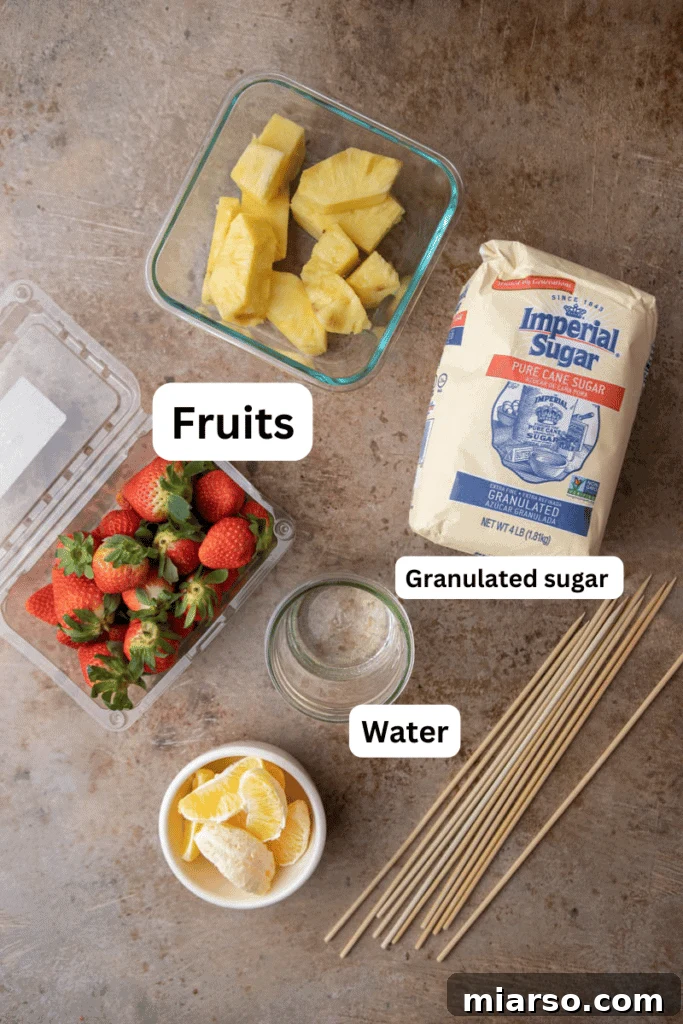
- 1 cup Imperial sugar granulated sugar
- 1/2 cup water
- 1/2 lbs fruits of choice Strawberries, pineapple, kiwis, oranges, grapes
- Ice water
Instructions
-
Wash and thoroughly dry your fruit before starting. This is crucial for a crisp shell.
-
Thread the fruits onto wooden skewers. Aim for 1-3 fruits per skewer, ensuring enough space to dip them fully in the sugar mixture.
-
In a medium, heavy-bottomed pot, combine the sugar and water. Heat over medium heat, without stirring, until the mixture is boiling and reaches 275-329°F (135-165°C) on a candy thermometer. If you don’t have a thermometer, you can check readiness by dipping a spoon or wooden skewer into the syrup and immediately plunging it into ice water. If it hardens with a clean snap, it’s ready.
-
When the sugar syrup is ready, immediately turn the temperature down to the lowest setting or remove from heat. Working quickly and carefully, dip each fruit skewer into the sugar syrup, rotating to coat evenly.
-
Allow any excess sugar to drip off the fruit before immediately dipping it into the ice water for 2-4 seconds to allow the sugar mixture to harden into a crisp shell. Serve immediately.
Notes
Nutrition
Carbohydrates: 22g |
Protein: 0.2g |
Fat: 0.1g |
Saturated Fat: 0.003g |
Polyunsaturated Fat: 0.03g |
Monounsaturated Fat: 0.01g |
Sodium: 1mg |
Potassium: 35mg |
Fiber: 0.5g |
Sugar: 21g |
Vitamin A: 3IU |
Vitamin C: 13mg |
Calcium: 4mg |
Iron: 0.1mg
Nutrition information is automatically calculated, so should only be used as an approximation.
If you enjoyed this easy Tanghulu recipe, make sure to pin it for later!
We hope this comprehensive guide inspires you to try your hand at making this delightful Chinese candied fruit snack. The combination of sweet, crunchy sugar and fresh, juicy fruit is truly irresistible, offering a unique sensory experience that’s perfect for sharing or simply indulging yourself. Enjoy the process of creating these edible jewels and savor every crackling bite!