
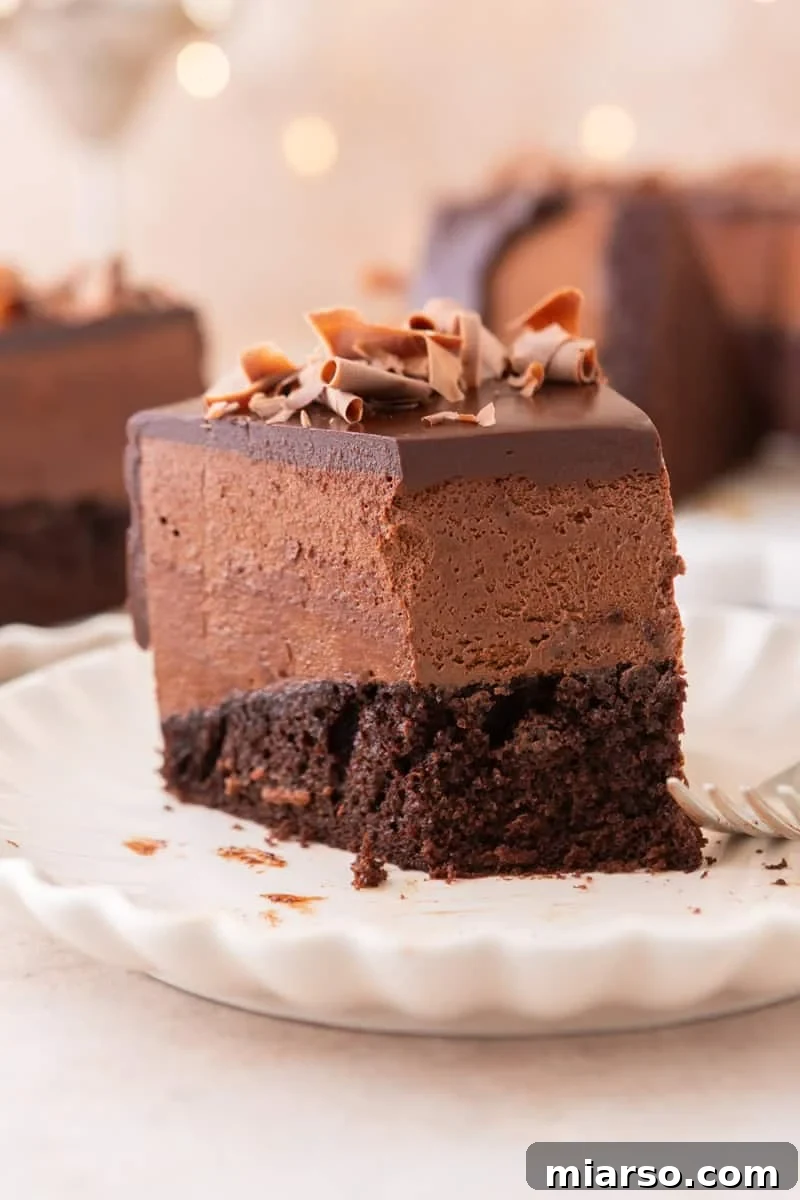
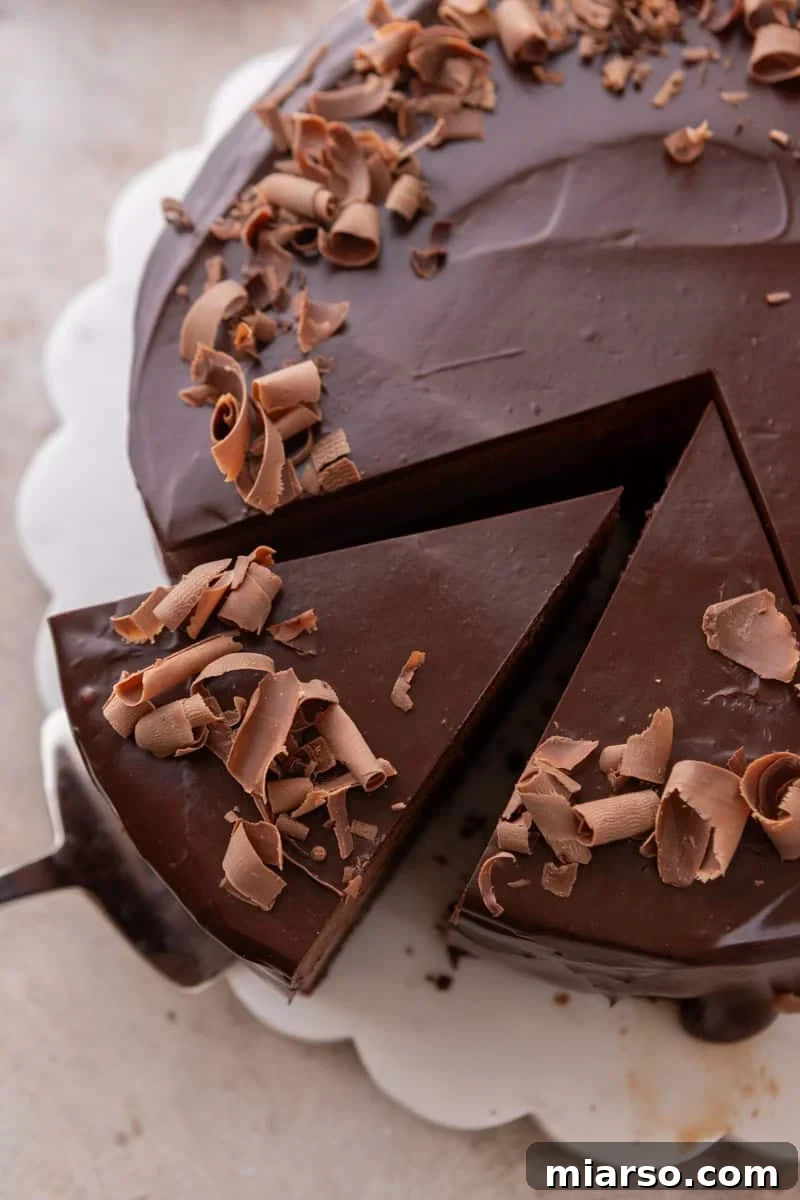
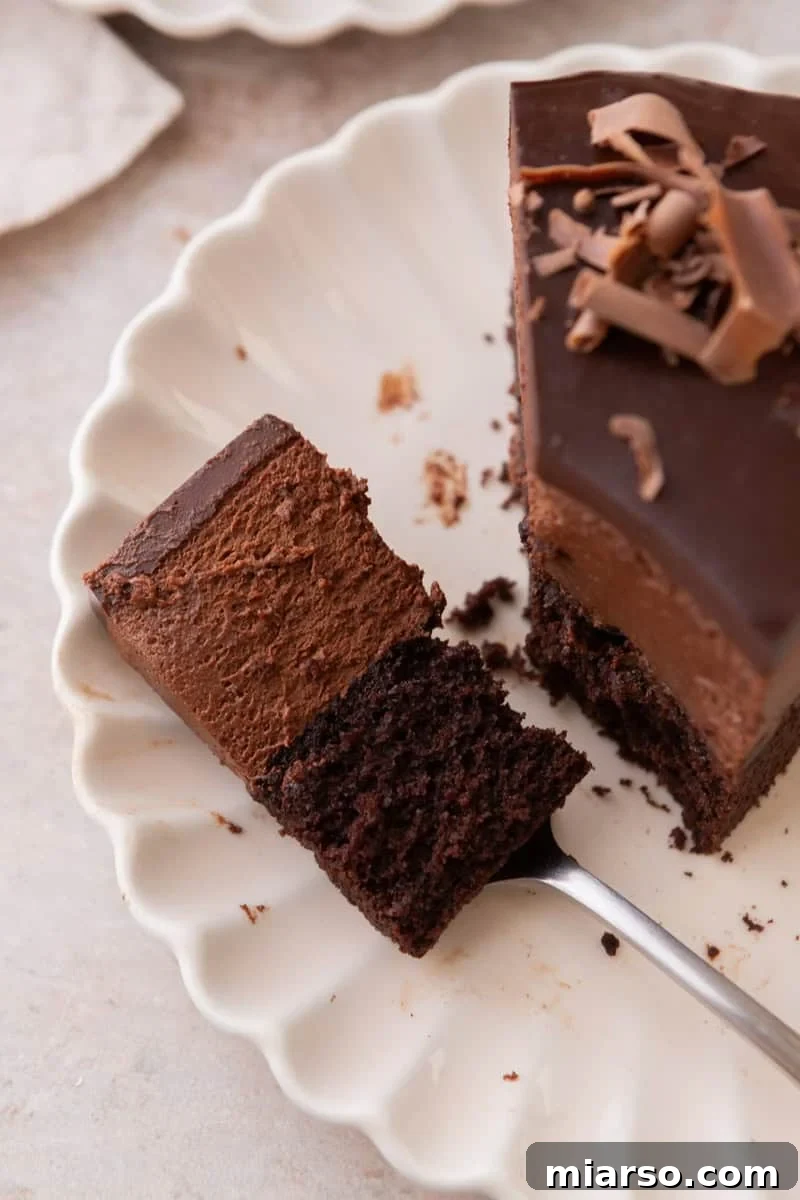
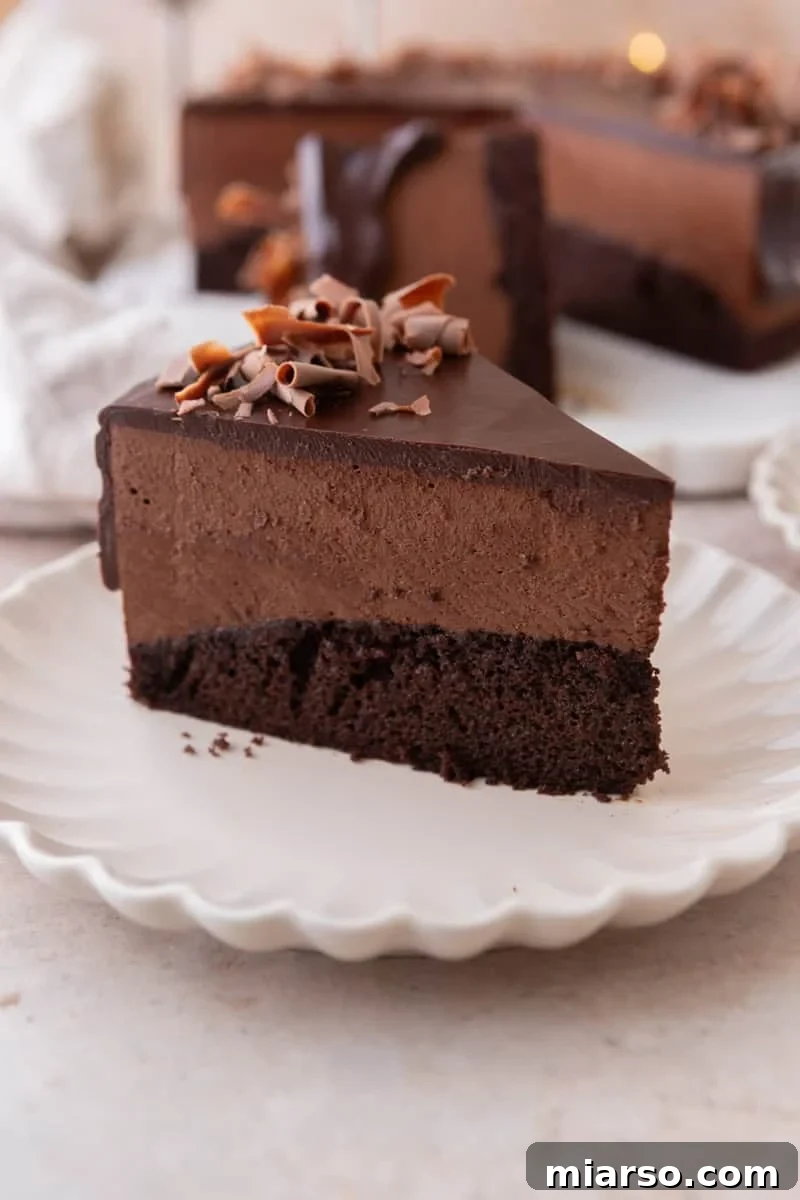
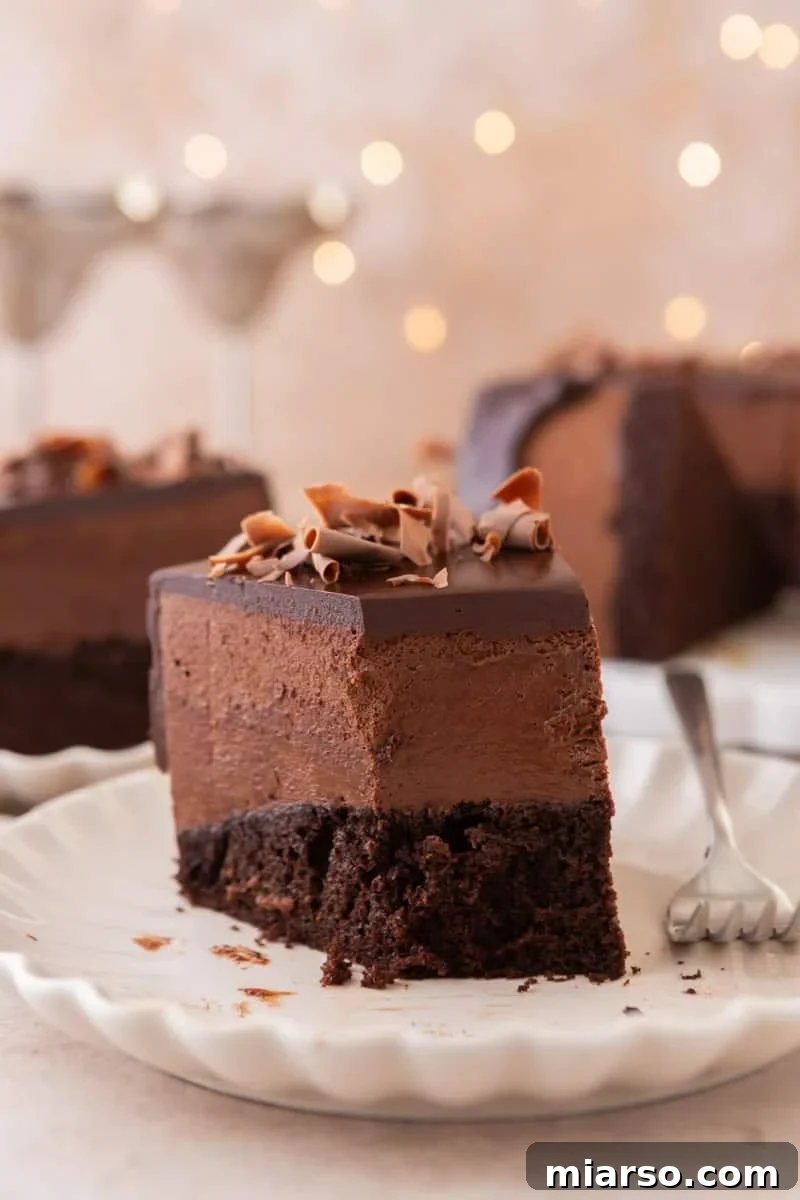
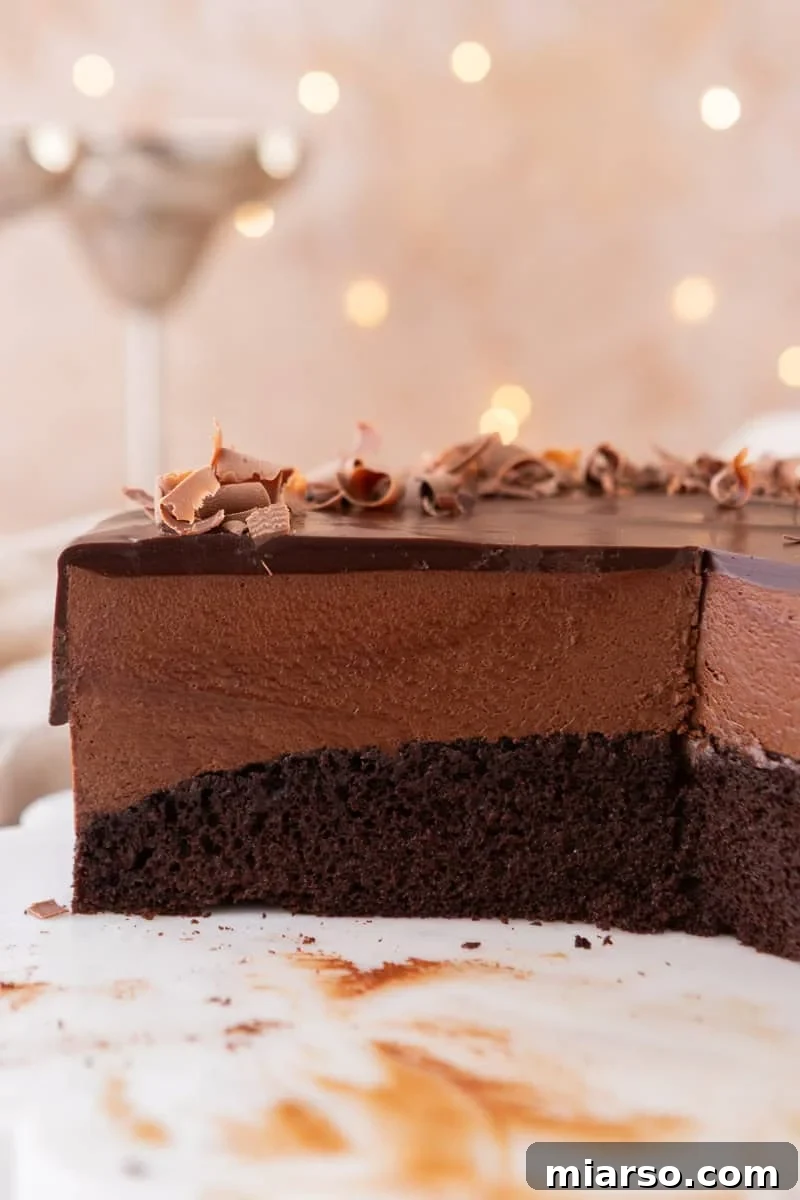
Chocolate mousse cake is a dessert that stops people mid-bite and prompts the question: did you buy this from a bakery? It combines three distinct chocolate layers: a tender, moist chocolate sponge at the base, a thick, silky dark-and-milk chocolate mousse in the middle, and a glossy ganache poured over the top. The cake is indulgent without feeling heavy, richly chocolatey without overpowering sweetness, and it looks spectacular when sliced, revealing clean, even layers.
This version is inspired by French pastry techniques I learned during a pastry internship, but the method is relaxed and approachable for home bakers. There’s no tempering of chocolate, no pâte à bombe, and no overly fussy steps. The mousse is egg-free and is stabilized with powdered gelatin so it sets firm enough to slice neatly. An acetate cake collar is the finishing touch that creates the sharp, velvet-smooth sides you often see in professional patisseries.
If you’ve wanted to make a cake that tastes and looks like something from a French bakery counter, this recipe delivers. The texture, balance of chocolate intensity, and the way the layers hold together all combine to make a dessert that impresses without requiring advanced pastry skills.
Let’s Chit Chat
I tested this recipe multiple times to find the right balance. The first bake produced a dry, domed layer because I had too much leavening and my oven ran hot. Reducing the baking powder and lowering the oven temperature fixed that. Flipping the cake right after it comes out of the oven helps flatten any dome while the crumb is still warm and pliable—an easy trick that makes trimming unnecessary in many cases.
The mousse also evolved. An all-dark-chocolate mousse is intense and delicious, but two parts dark to one part milk chocolate gives the final cake a broader appeal while still delivering depth. The stabilized, egg-free mousse yields a creamy mouthfeel but enough structure to maintain sharp slices.
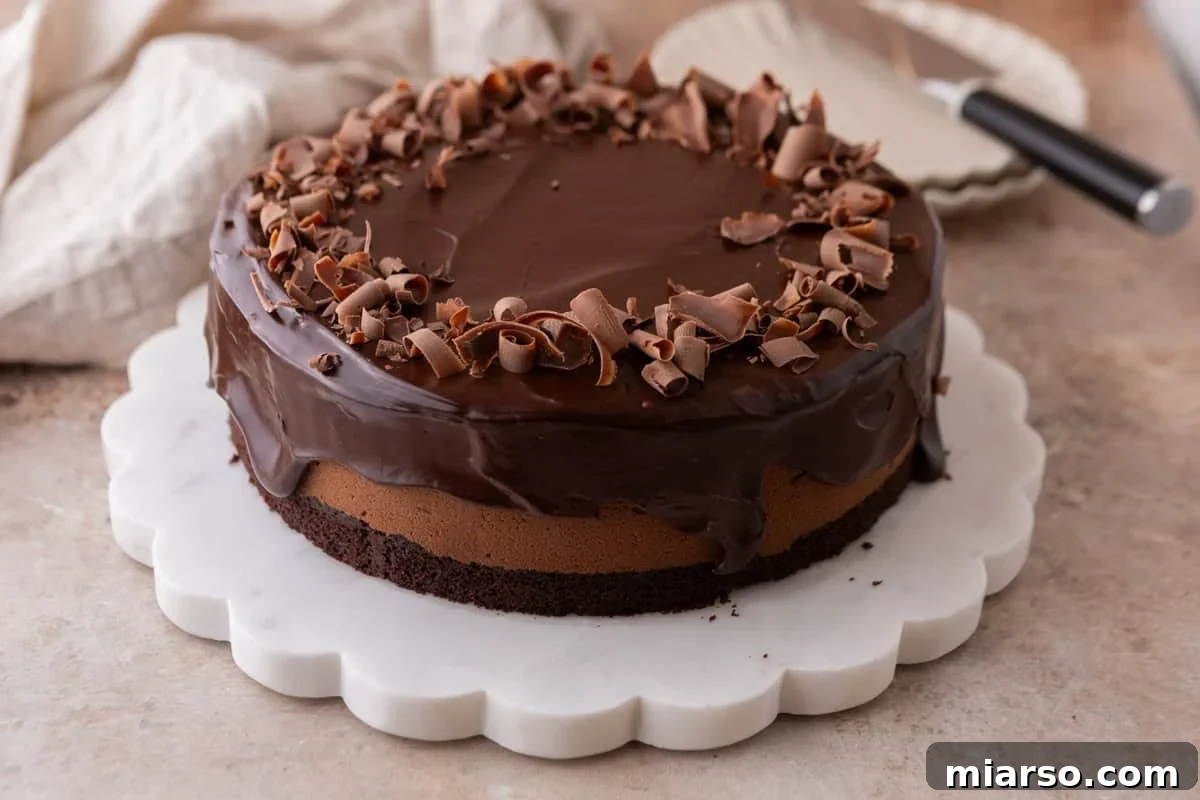
Unmolding the finished cake and peeling away the acetate is always the satisfying moment. The sides should be smooth and the layers distinct. I like to finish with chocolate curls—made with a vegetable peeler on a room-temperature bar—and scatter them over the ganache for texture and visual contrast.
What Makes This Chocolate Mousse Cake Different
Many mousse cakes online use boxed cake bases or dense flourless layers, and some mousses rely on raw eggs or no stabilizer. This recipe uses a from-scratch oil-based sponge that stays moist in the refrigerator, thanks to oil’s ability to retain moisture better than butter. After baking, the sponge receives a coffee-cocoa soak that boosts chocolate flavor and adds tenderness without tasting like coffee.
The mousse is egg-free and set with powdered gelatin so it is sliceable and stable. The ganache is purposely made a bit thick and semi-glossy so it sets firm enough to support decorative curls but still melts on the tongue, creating an elegant contrast of textures.
Ingredient Breakdown
For the Chocolate Sponge Cake
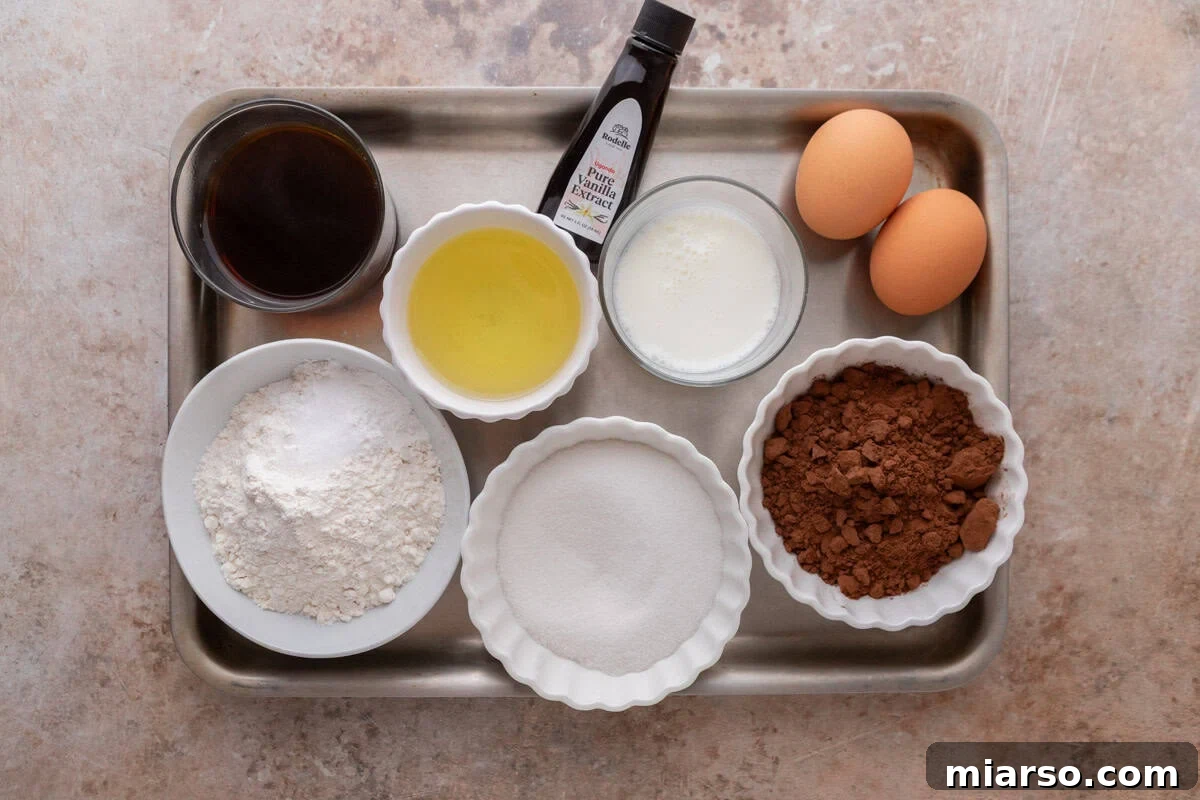
- All-purpose flour and Dutch-process cocoa powder: Dutch-process cocoa gives a deeper color and a smoother, less acidic chocolate taste than natural cocoa.
- Vegetable oil: Keeps the sponge moist for days, which is helpful because mousse cakes live in the fridge.
- Hot coffee: Amplifies chocolate flavor without adding sweetness. If you prefer not to use coffee, hot water will work but with a slightly less intense chocolate note.
- Buttermilk: Adds tenderness to the crumb and reacts with baking soda for a soft texture.
For the Coffee-Cocoa Soak
A small syrup of brewed coffee, Dutch-process cocoa, and sugar. This soak adds moisture and deepens flavor—the kind of small patisserie step that makes a big difference in the final texture.
For the Chocolate Mousse
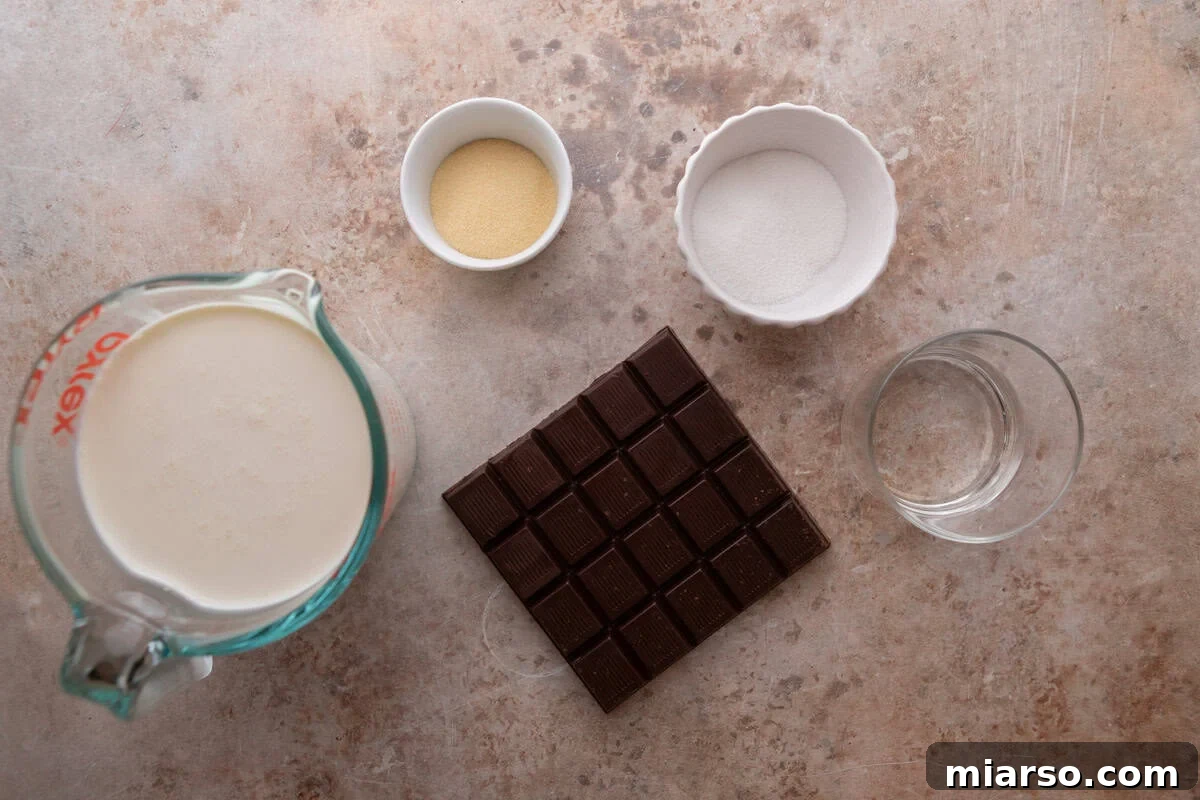
- Dark and milk chocolate (2:1 ratio): Dark chocolate supplies depth while milk chocolate softens bitterness for a well-rounded mousse. Use good-quality bar chocolate for the smoothest melt.
- Powdered gelatin: Stabilizes the mousse so it holds a clean slice. The quantity is chosen to produce a silky, not rubbery, texture.
- Powdered sugar in the whipped cream: Dissolves readily in cold cream, avoiding any grittiness that granulated sugar can cause.
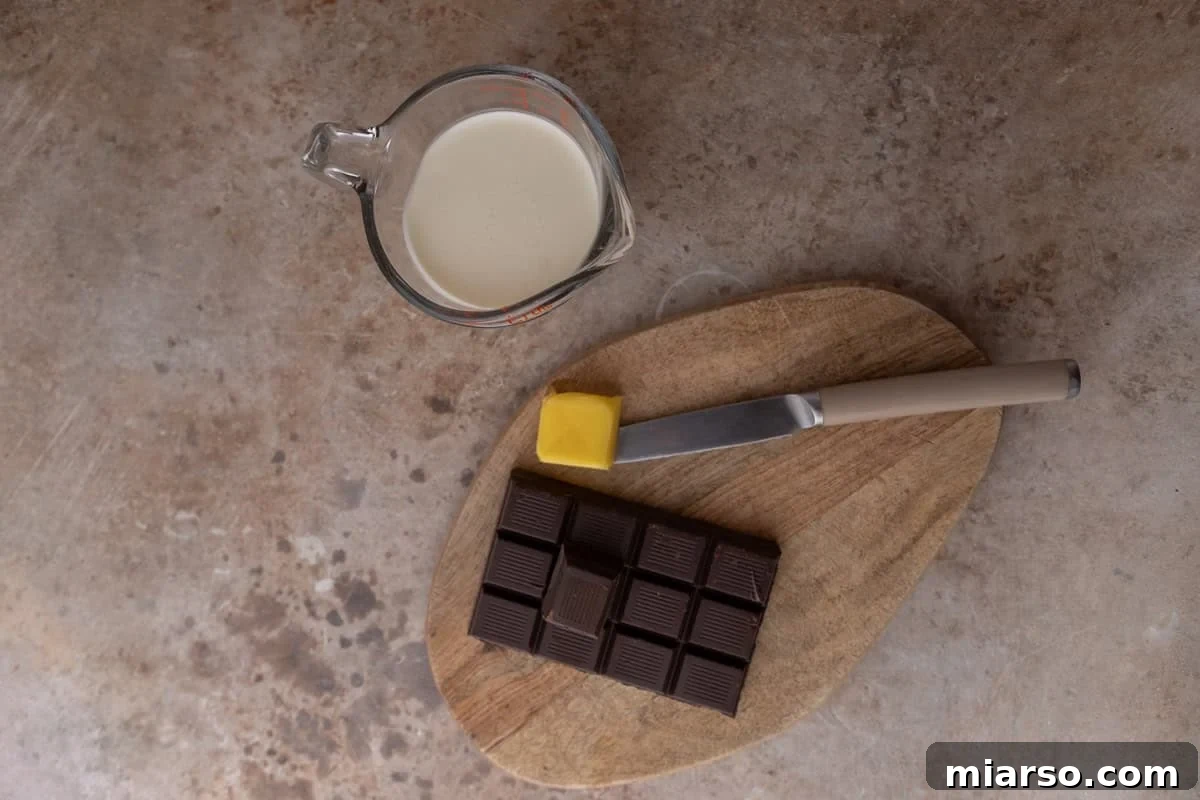
For the Ganache
Just three ingredients: dark chocolate, heavy cream, and a little butter for shine. The ganache is slightly chocolate-forward so it sets with a thick, semi-gloss finish that complements the sweet mousse beneath.
How to Make Chocolate Mousse Cake
Step 1: Bake the Chocolate Sponge
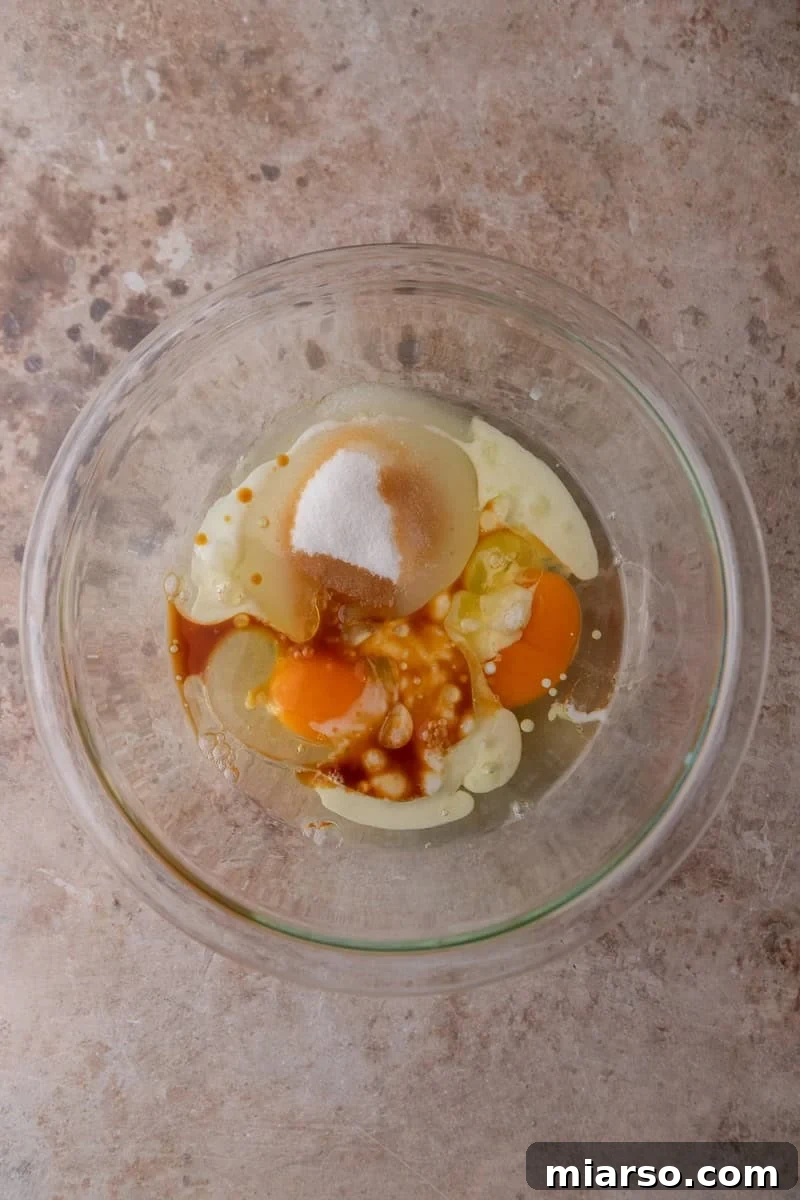
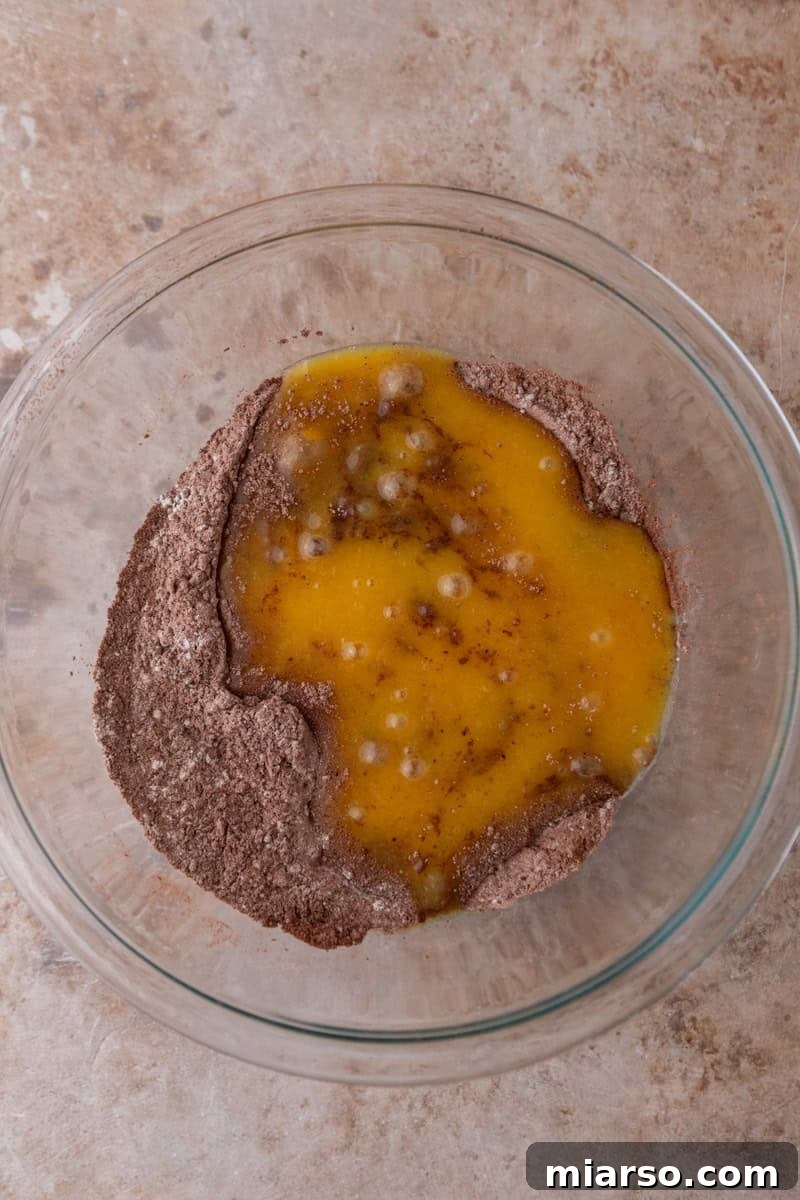
Combine dry ingredients in one bowl and wet ingredients in another, then stir the wet into the dry and finish with hot coffee. The batter will be thin—this is normal. Bake in a greased 9-inch springform pan at 325°F for 15 to 18 minutes, checking at 15 since the thin layer can overbake quickly. Cool in the pan for about five minutes, then flip upside down onto a rack to flatten any dome. Trim only if needed.
Step 2: Soak the Cake
Return the cooled sponge to the pan, prick the surface with a fork, and brush the coffee-cocoa soak across the top so it absorbs into the crumb and keeps the layer moist.
Step 3: Add the Acetate Collar
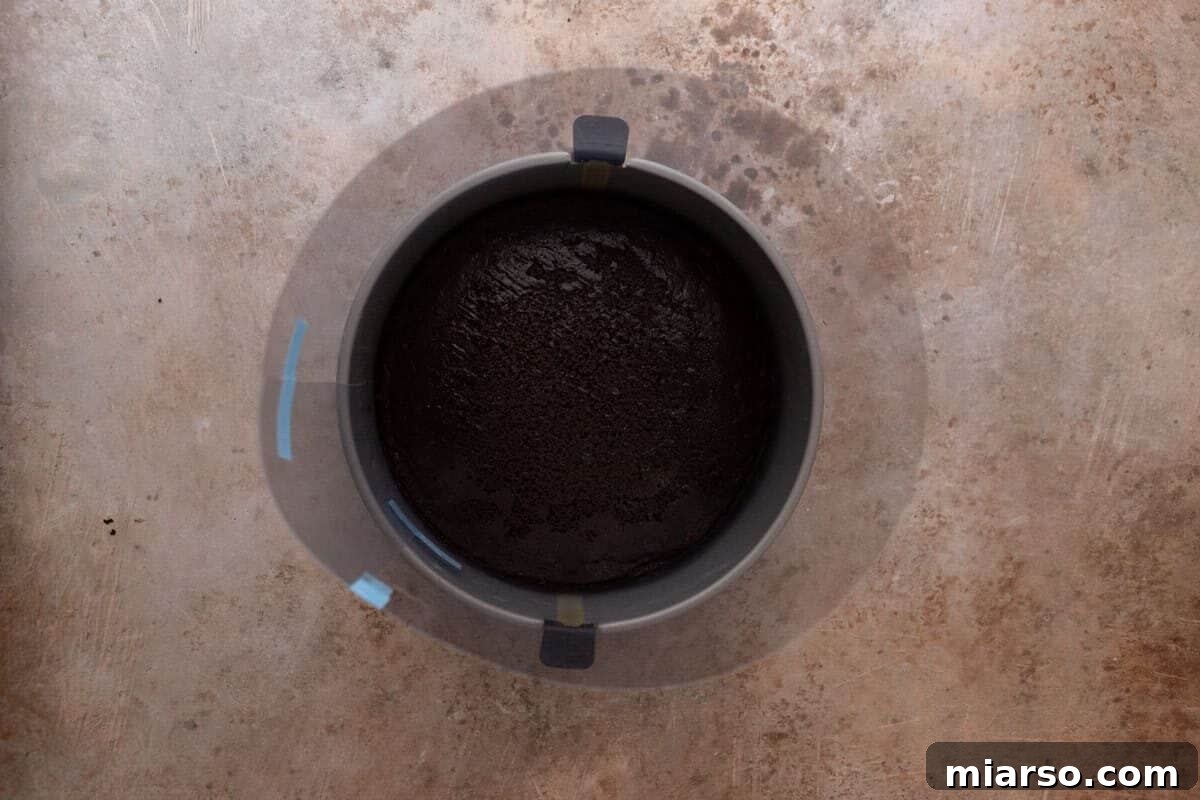
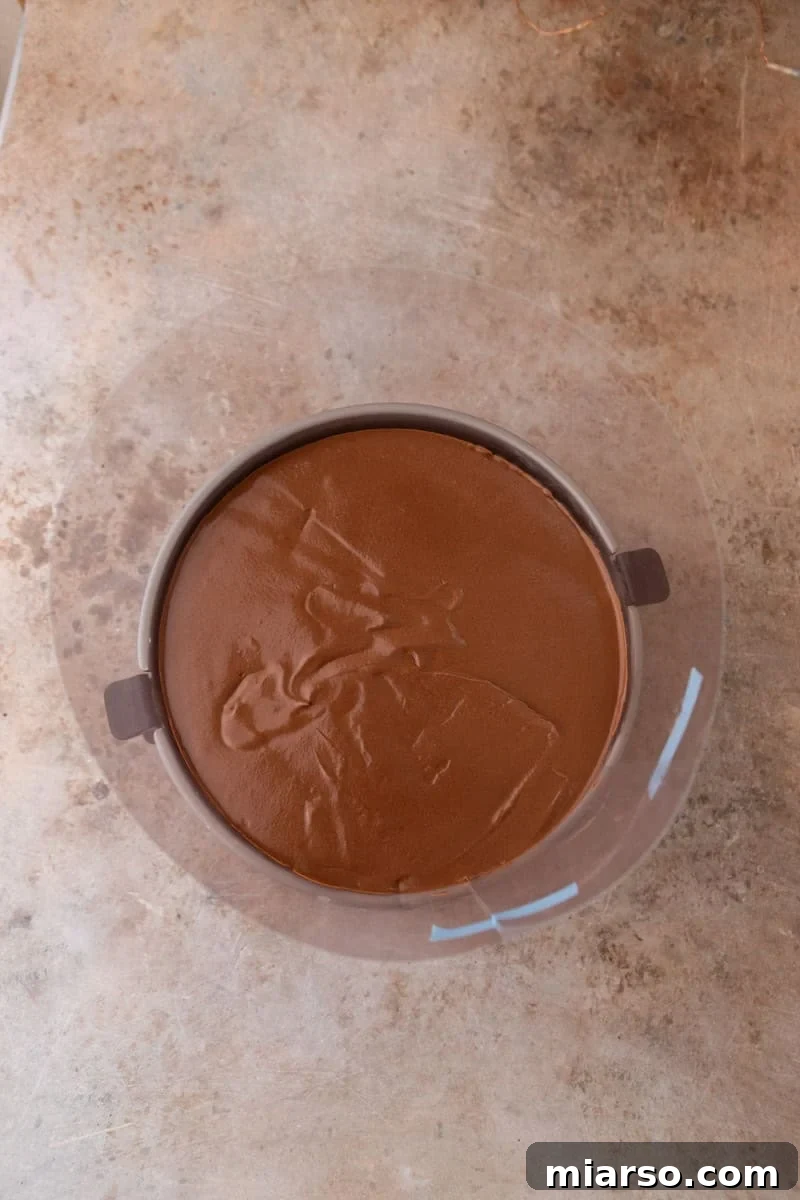
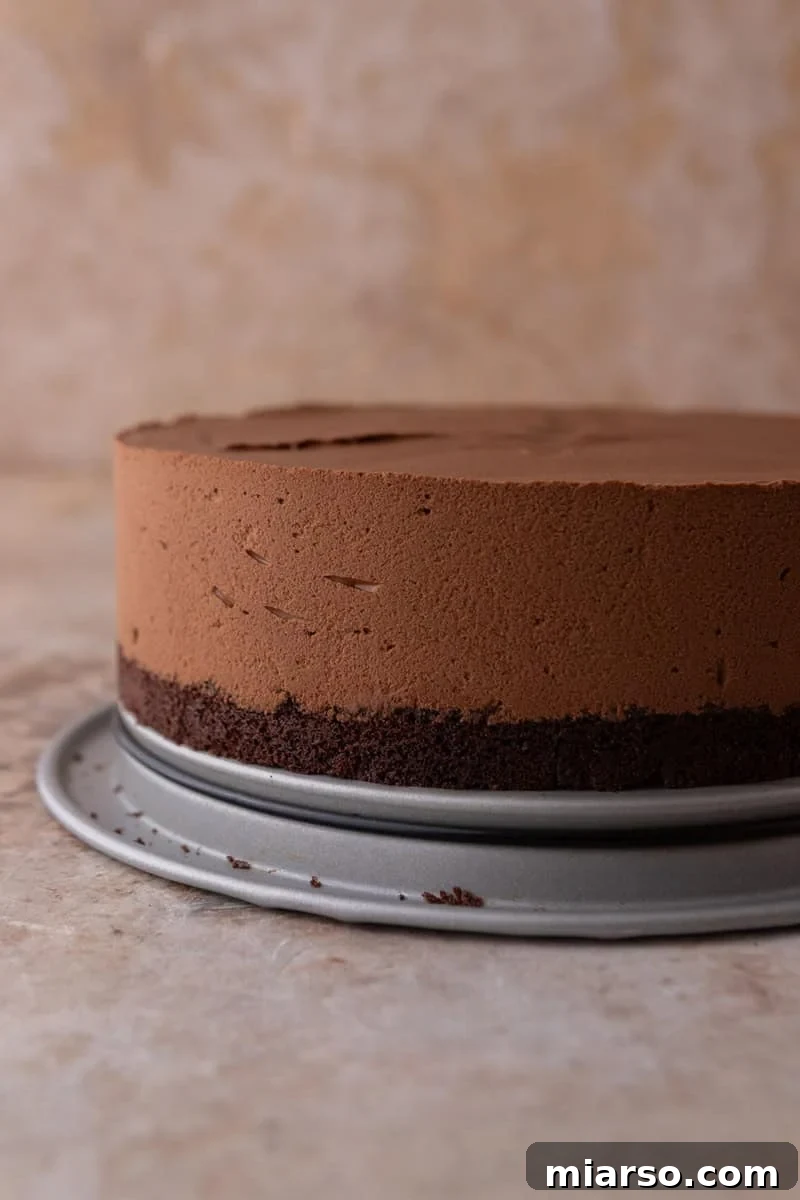
Line the inside wall of the springform pan with an acetate strip a little taller than the rim. This produces very smooth sides when the cake is unmolded. If acetate isn’t available, parchment strips can be used though the finish will be less precise.
Step 4: Make and Pour the Mousse
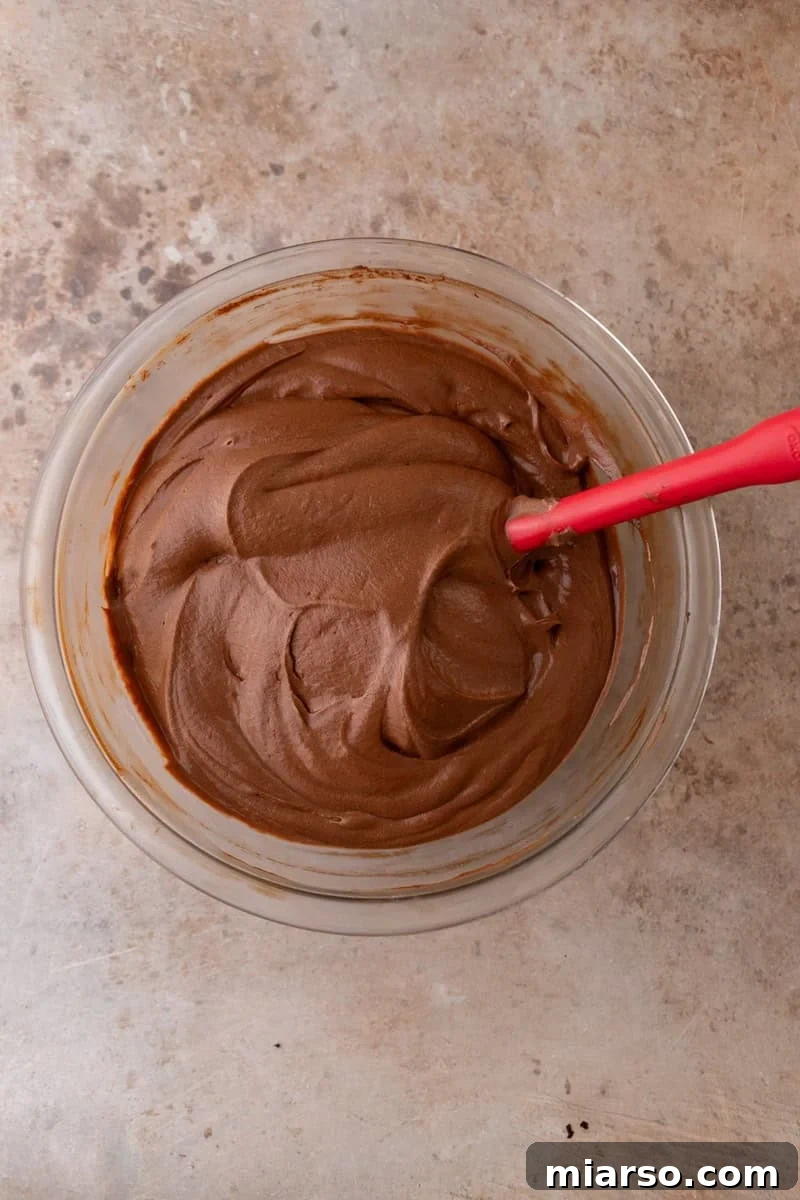
Bloom gelatin in cold water, heat part of the cream and dissolve the gelatin in it, then pour that hot cream over chopped chocolate and stir until smooth. Let the chocolate mixture cool to about 85–90°F. Whip the remaining cream with powdered sugar and vanilla to medium-stiff peaks, then fold it gently into the chocolate mixture in three additions. Pour over the sponge, smooth the top, and refrigerate at least four hours, preferably overnight.
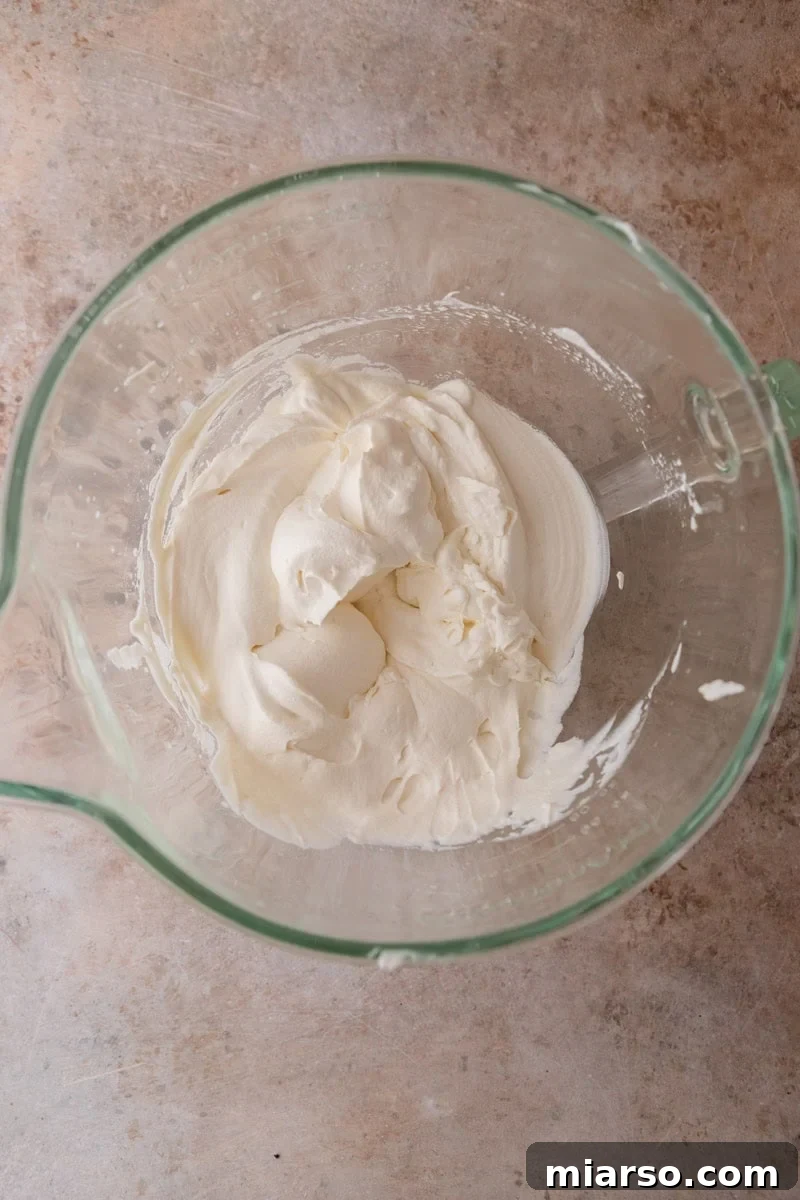
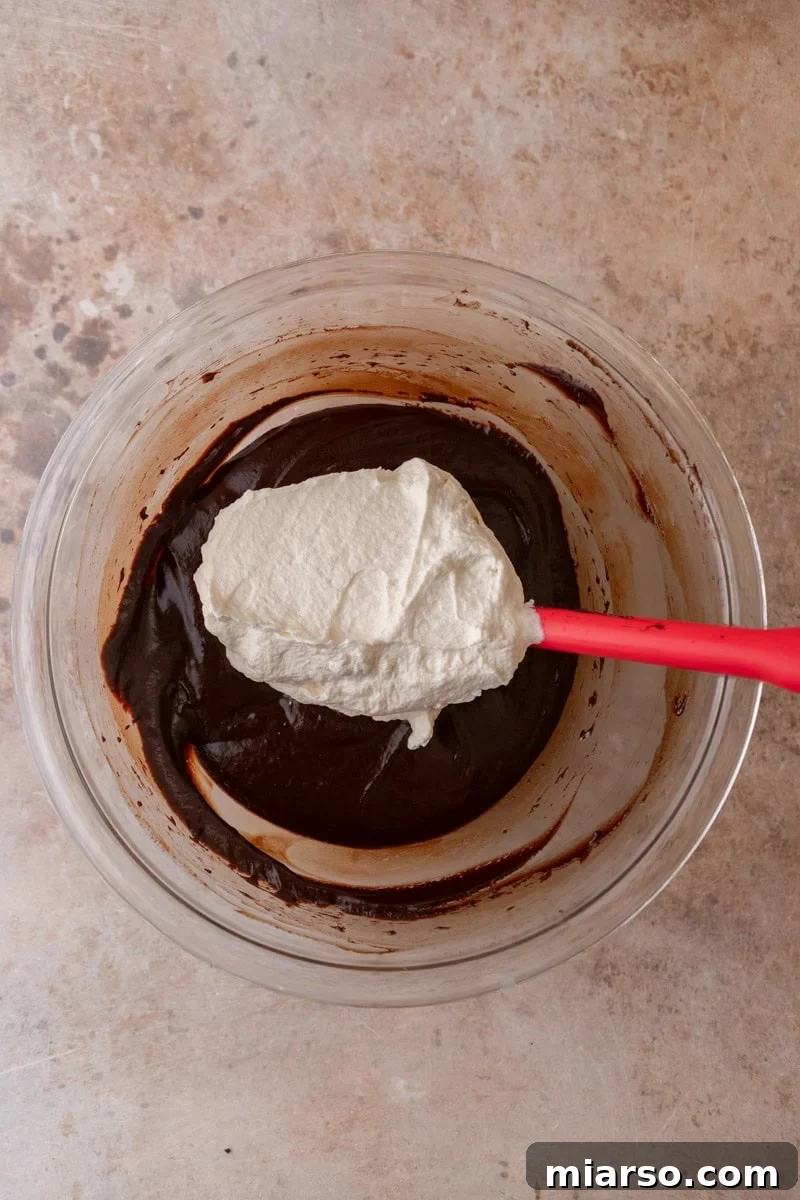
Temperature matters: if the chocolate mixture is too hot it will deflate the whipped cream; if it’s too cool it can seize. Aim for that 85–90°F window before folding in the cream.
Step 5: Pour the Ganache
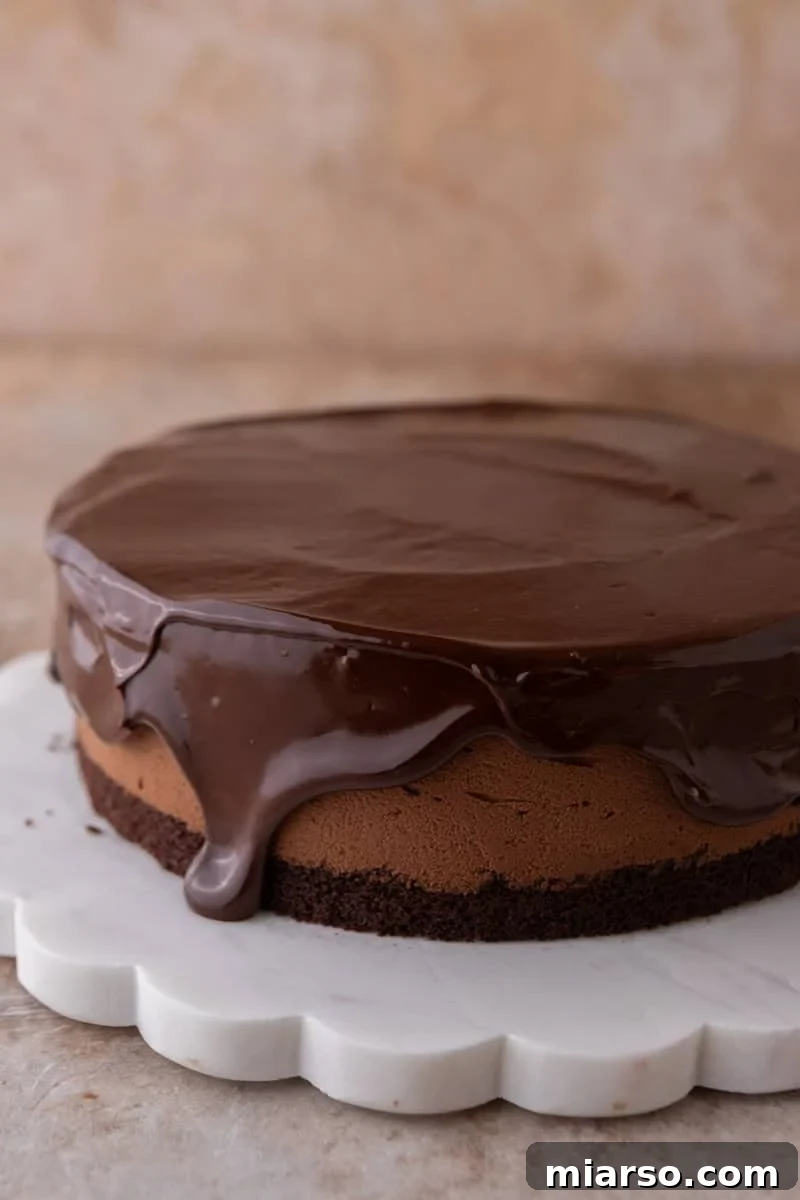
Once the mousse is fully set, prepare the ganache by heating cream, pouring it over chopped chocolate, stirring until smooth, and stirring in butter for shine. Cool the ganache until slightly thickened but still pourable, then pour it over the set mousse and tilt the cake to spread it evenly. Chill for at least another hour.
Step 6: Decorate and Unmold
Form chocolate curls by running a vegetable peeler along a room-temperature chocolate bar. Arrange the curls on top of the ganache, chill briefly to set, then remove the springform ring and gently peel away the acetate for clean sides. Let the cake rest at room temperature for 10–15 minutes before slicing to improve texture, and use a hot, dry knife wiped between cuts for the cleanest slices.
Tips for the Best Chocolate Mousse Cake
- Don’t overbake: The thin sponge can dry out quickly. Pull it when a toothpick shows moist crumbs.
- Flip while warm: Turn the cake upside down five minutes after baking to flatten the dome with minimal trimming.
- Use powdered sugar in the whipped cream: It dissolves instantly and prevents grit.
- Watch temperatures: Aim for 85–90°F for the chocolate base before folding in whipped cream.
- Rest before slicing: Let the cake sit 10–15 minutes at room temperature to make cleaner cuts.
- Slice cleanly: Use a hot knife wiped dry between cuts for neat slices.
How to Store Chocolate Mousse Cake
Refrigerator: Cover loosely or store in an airtight container for 3–4 days.
Freezer: Wrap tightly in plastic and foil and freeze up to 1 month. Thaw overnight in the fridge. The texture and flavor hold up well; the ganache may lose a bit of surface gloss but will still taste great.
Frequently Asked Questions
Yes. Without gelatin the mousse will be softer and more spoonable rather than sliceable. If you omit gelatin, consider adding an extra two tablespoons of powdered sugar to the whipped cream to help stability, but expect softer slices.
Any good-quality bar chocolate in the 50–70% cocoa range works well. Avoid standard chocolate chips; bar chocolate melts more smoothly and gives a better texture in both mousse and ganache.
Yes. The layers will be slightly taller; bake the sponge for an extra 2–3 minutes and make sure any collar extends higher above the rim to contain the mousse.
An acetate collar is a thin, food-safe plastic strip used to line cake molds and achieve smooth sides and easy unmolding. If you don’t have one, parchment strips can be used as a substitute, though the finish will be less immaculate.
Yes. For a more intense chocolate experience, replace the milk chocolate with dark and use 12 ounces total of dark chocolate.
It’s optional but recommended. The soak adds moisture and enhances chocolate flavor without imparting a coffee taste. Skip it if you prefer, but expect the sponge to be slightly drier after a day or two.
Chocolate Mousse Cake
Equipment
- 9-inch springform pan
- Acetate cake collar or parchment strips
Ingredients
Chocolate Sponge Cake
- ¾ cup all-purpose flour
- ½ cup Dutch-process cocoa powder
- ¼ tsp baking powder
- ¼ tsp baking soda
- ¼ tsp fine salt
- ⅔ cup granulated sugar
- ⅓ cup vegetable oil
- 2 large eggs, room temperature
- ½ cup hot brewed coffee (or hot water)
- ¼ cup buttermilk, room temperature
- 1 tsp vanilla extract
Coffee-Cocoa Soak
- ¼ cup brewed coffee, warm
- 1 tbsp Dutch-process cocoa powder
- 1 tbsp granulated sugar
Chocolate Mousse
- 8 oz dark chocolate, finely chopped
- 4 oz milk chocolate, finely chopped
- 3 cups cold heavy cream, divided
- 1 tbsp powdered beef gelatin
- 4 tbsp cold water
- ⅓ cup powdered sugar
- 1½ tsp vanilla extract
Chocolate Ganache
- 4½ oz dark chocolate, finely chopped
- ½ cup + 2 tbsp heavy cream
- 2 tsp unsalted butter, room temperature
Decoration
- 1 chocolate bar at room temperature (for curls)
Instructions
Make the Chocolate Sponge Cake
- Preheat oven to 325°F. Grease a 9-inch springform pan and line the bottom with parchment paper.
- Whisk together flour, cocoa, baking powder, baking soda, and salt.
- In another bowl, whisk sugar, oil, eggs, buttermilk, and vanilla until smooth.
- Combine wet into dry, then stir in hot coffee. Batter will be thin. Pour into pan and bake 15–18 minutes until a toothpick shows moist crumbs.
- Cool in pan 5 minutes, then flip the cake upside down onto a rack to flatten the dome. Cool completely and trim if desired.
Soak the Cake
- Whisk warm coffee, cocoa, and sugar until dissolved.
- Place cooled cake back in pan, poke with a fork, and brush the soak evenly over the surface. Let absorb for a few minutes.
- Line the inside of the pan with acetate, extending about ½ inch above the rim; tape the overlap if needed.
Make the Chocolate Mousse
- Sprinkle gelatin over cold water and let bloom 5 minutes.
- Put both chocolates in a heatproof bowl.
- Heat ¾ cup of the cream until it simmers, remove from heat, add bloomed gelatin and stir until dissolved.
- Pour hot cream over chocolate, let sit 1–2 minutes, then stir until smooth. Cool to 85–90°F.
- Whip remaining 2¼ cups cream with powdered sugar and vanilla to medium-stiff peaks. Fold one-third of the whipped cream vigorously into chocolate to lighten, then gently fold in the rest in two additions.
- Pour mousse over the cake, smooth, tap to release air bubbles, cover (plastic wrap should not touch surface), and chill at least 4 hours or overnight.
Make the Ganache
- Place chopped chocolate in a bowl. Heat cream until it simmers, pour over chocolate, let sit 2 minutes, then stir until smooth. Stir in butter.
- Cool to 85–90°F, remove the springform ring and gently peel away the acetate, then pour ganache over the set mousse and tilt to spread. Chill at least 1 hour.
Decorate and Unmold
- Use a plain vegetable peeler to create curls from a room-temperature chocolate bar. Arrange on top of the ganache.
- Refrigerate 20–30 minutes. Let the cake sit 10–15 minutes at room temperature before slicing. Use a hot, dry knife wiped between cuts for clean slices.
Notes
All dark chocolate option: Use 12 oz dark chocolate and omit milk chocolate for a more intense flavor.
Acetate substitute: Parchment strips work if acetate is unavailable, though the finish will be slightly less smooth.
Gelatin adjustment: For a softer mousse, reduce gelatin to 2½ tsp; for firmer slices, increase to 1¼ tbsp.
Make ahead: The sponge and mousse can be made up to two days in advance; add ganache and curls the day you serve.
Storage: Refrigerate 3–4 days; freeze up to 1 month wrapped tightly.
Nutrition
Calories: 609 | Carbohydrates: 41 g | Protein: 8 g | Fat: 47 g
Nutrition information is approximate.