
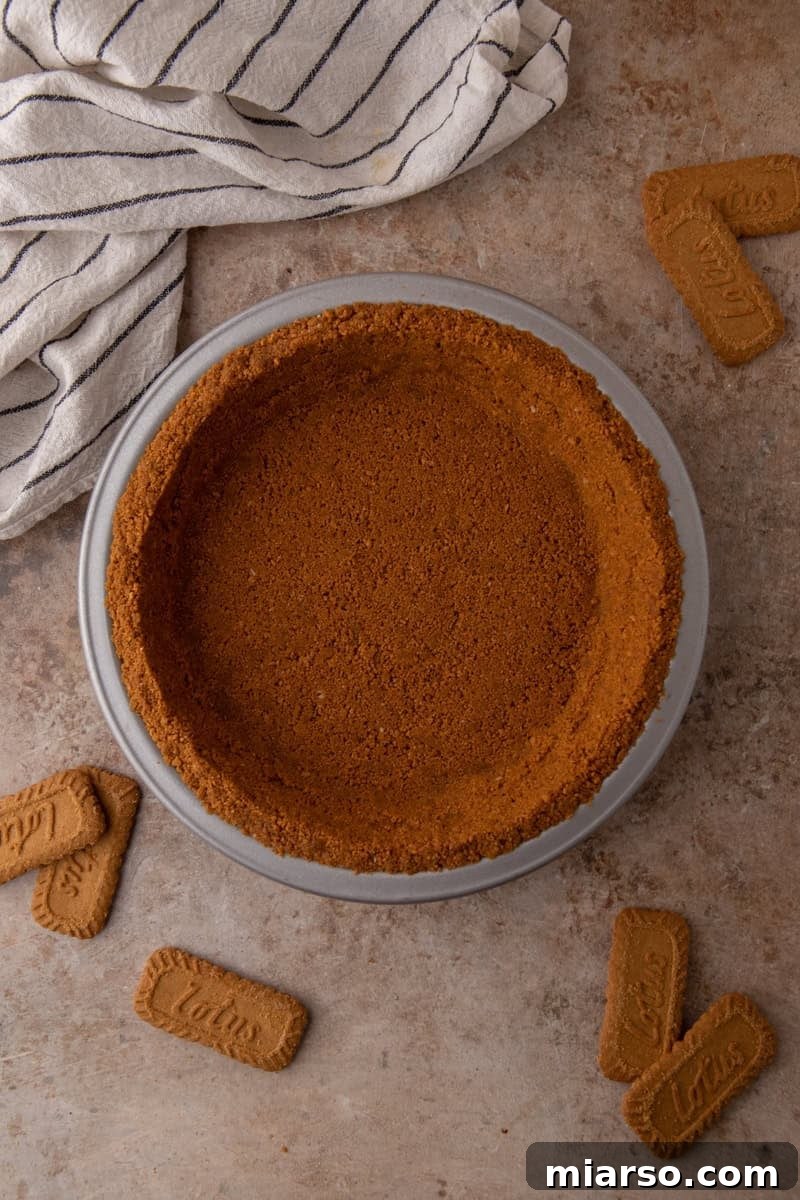
The Ultimate Biscoff Pie Crust: Easy Baked & No-Bake Options
Are you ready to elevate your dessert game to an entirely new level? This Biscoff Pie Crust recipe is an absolute revelation, transforming ordinary pies into extraordinary culinary experiences. Crafted with just a handful of simple ingredients and demanding minimal effort, this versatile crust is your secret weapon for enhancing the flavor and texture of any pie or dessert. Imagine that irresistible, spiced caramel aroma and crunchy texture, reminiscent of the wildly popular cookie butter spread, now forming the perfect foundation for your favorite fillings. Whether you prefer a quick no-bake option or a sturdy baked base, this recipe delivers unparalleled taste and convenience.
For too long, pie crusts have been an afterthought, often overshadowed by the luscious fillings they contain. Many home bakers find themselves reaching for pre-made, frozen crusts at the grocery store, and for good reason—traditional buttery pie crusts, while delicious, can be time-consuming and require a delicate touch. But what if you could create a phenomenal, flavor-packed crust that’s both incredibly simple and utterly delicious?
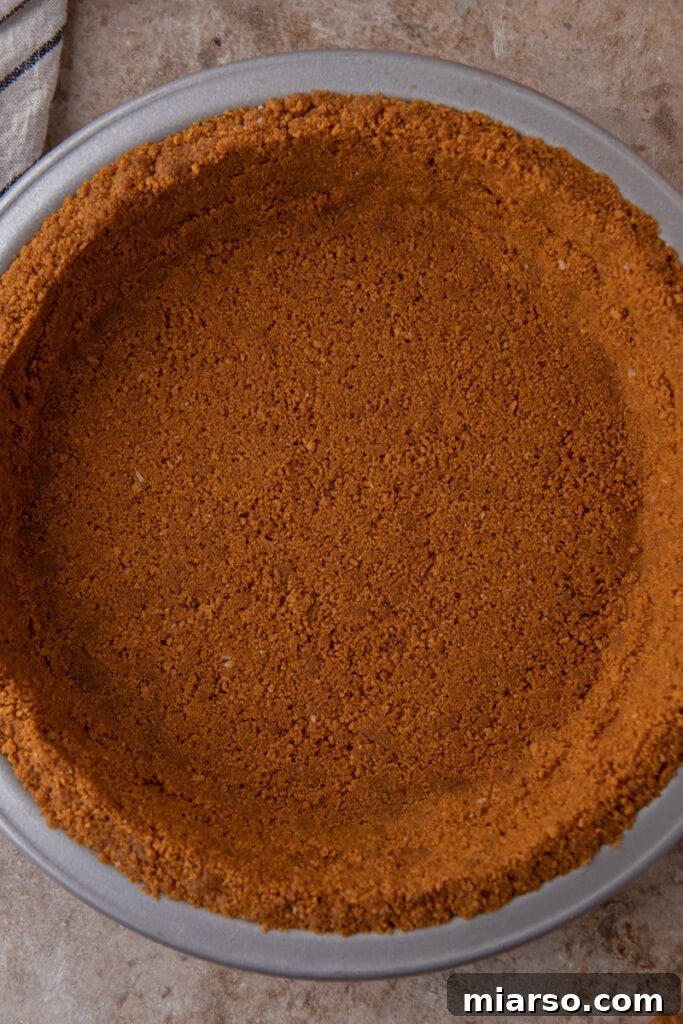
This Biscoff cookie crust recipe is precisely that game-changer. It’s so straightforward, you’ll wonder why you haven’t been making it for years. The ease of preparation is just the beginning; this recipe offers the ultimate flexibility with both baked and no-bake options. This means you can perfectly tailor your crust to complement any filling, from rich cheesecakes to creamy custards and refreshing fruit pies. Get ready to impress everyone with a homemade crust that tastes incredibly gourmet, without the fuss.
If you’re a fan of easy yet impressive desserts, especially those featuring delightful crusts, you’ll love exploring some of our other popular recipes. Be sure to check out our No-Bake Chocolate Pie with Oreo Crust for another effortless crowd-pleaser, or our perfectly sized 6-inch Biscoff Cheesecake Recipe if you can’t get enough of that unique Biscoff flavor. And for a classic, zesty treat, our Lemon Pie with Graham Cracker Crust Recipe is always a hit.
Why Choose a Biscoff Pie Crust? The Secret to Irresistible Desserts
There are countless reasons why this Biscoff pie crust will become your new go-to for all your baking endeavors. Its distinct flavor and effortless preparation truly set it apart from traditional crusts. Here’s why you absolutely need to make this recipe:
- Unforgettable Flavor Profile: Biscoff cookies, also known as Speculoos, boast a unique spiced caramel flavor that is both comforting and sophisticated. This distinct taste infuses your entire pie, adding a depth and warmth that plain graham cracker or traditional flour crusts simply cannot match. It’s a flavor that evokes holiday spices and cozy moments, making any dessert feel special.
- Effortless Preparation: Forget about chilling butter, rolling dough, or dealing with temperamental pastry. This cookie crust comes together in minutes with minimal fuss. All you need is a food processor (or a rolling pin and a bag) and a mixing bowl. This simplicity makes it an ideal choice for busy weeknights, impromptu gatherings, or when you just want a fantastic dessert without the usual baking stress.
- Incredible Versatility: Whether your filling is delicate and creamy, rich and dense, or bright and fruity, this Biscoff crust provides a perfect base. Its robust flavor stands up beautifully to a wide range of ingredients, while its adaptable nature means it works for both baked and no-bake applications. From cheesecakes to pumpkin pies, key lime tarts to chocolate silk pies, this crust can do it all.
- Guaranteed Crowd-Pleaser: The beloved taste of Biscoff cookies, often associated with coffee breaks and delightful snacks, translates into a pie crust that everyone adores. It’s a guaranteed hit at potlucks, family dinners, and special occasions. Prepare for compliments and requests for the recipe!
- Customizable Texture: The beauty of having both baked and no-bake options means you can control the final texture of your crust. A chilled no-bake crust offers a firmer, slightly chewier bite, perfect for lighter fillings. The baked version provides a wonderfully crisp and slightly toasty texture that adds another layer of complexity, especially for baked fillings.
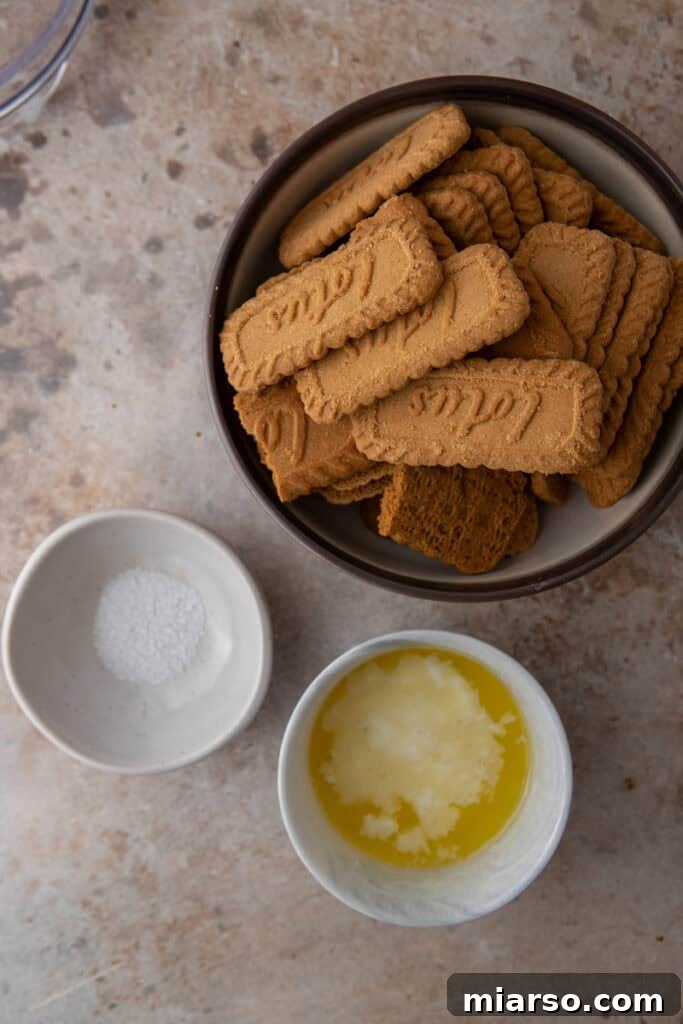
Essential Ingredients for Your Biscoff Pie Crust
Creating this irresistible Biscoff cookie crust requires only a few key ingredients, each playing a crucial role in achieving that perfect balance of flavor and texture. You’ll find these items easily at any local grocery store. Below are the ingredients you’ll need, along with insights into their purpose. For precise measurements, please refer to the detailed recipe card at the bottom of this page.
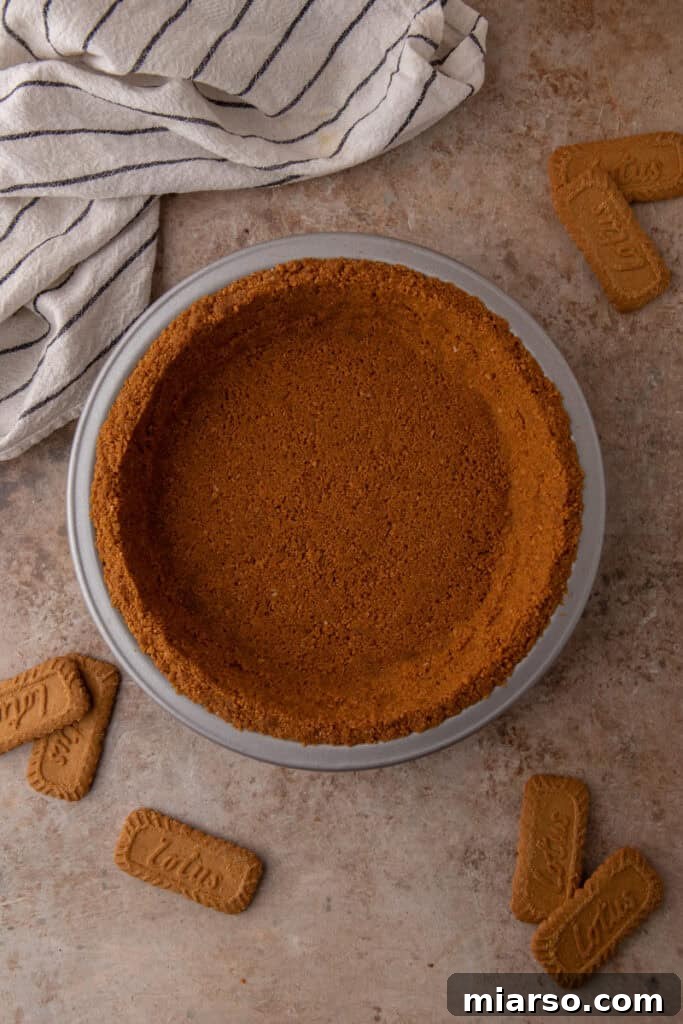
- Speculoos (Biscoff) Cookies: These are the star of our show, forming the core base and delivering the primary, iconic spiced caramel flavor of the crust. Lotus Biscoff cookies are widely available and perfect for this recipe. If you can’t find Biscoff specifically, any brand of speculoos cookies will work, or even Trader Joe’s “Speculoos Cookies.” The goal is to get them into fine crumbs, which will create a cohesive and sturdy crust.
- Unsalted Butter: Butter acts as the binding agent, holding the crushed Biscoff crumbs together to create a cohesive crust that maintains its shape beautifully. Using unsalted butter is important because it gives us precise control over the overall saltiness of the crust. Different brands of butter can vary in their salt content, and by adding salt separately, we ensure a perfectly balanced flavor every time. Make sure it’s melted for easy incorporation.
- Pinch of Salt: While Biscoff cookies are already flavorful, a small amount of salt is essential for enhancing and balancing their inherent sweetness. When I initially developed this recipe, I considered making salt optional. However, after extensive testing, I discovered that its inclusion truly elevates the overall taste, bringing out the nuances of the cookies’ spices and preventing the crust from being overly sweet. I highly recommend including it for the best results!
Beyond pie crusts, the enchanting flavor of Biscoff cookies and cookie butter can inspire many other delightful treats. If you’re craving more cookie butter creations, you absolutely must try my Crumbl Biscoff White Chocolate Chip Cookies and my indulgent Chilled Crumbl Cookie Butter Ice Cream Cookie. They’re perfect for satisfying any sweet tooth!
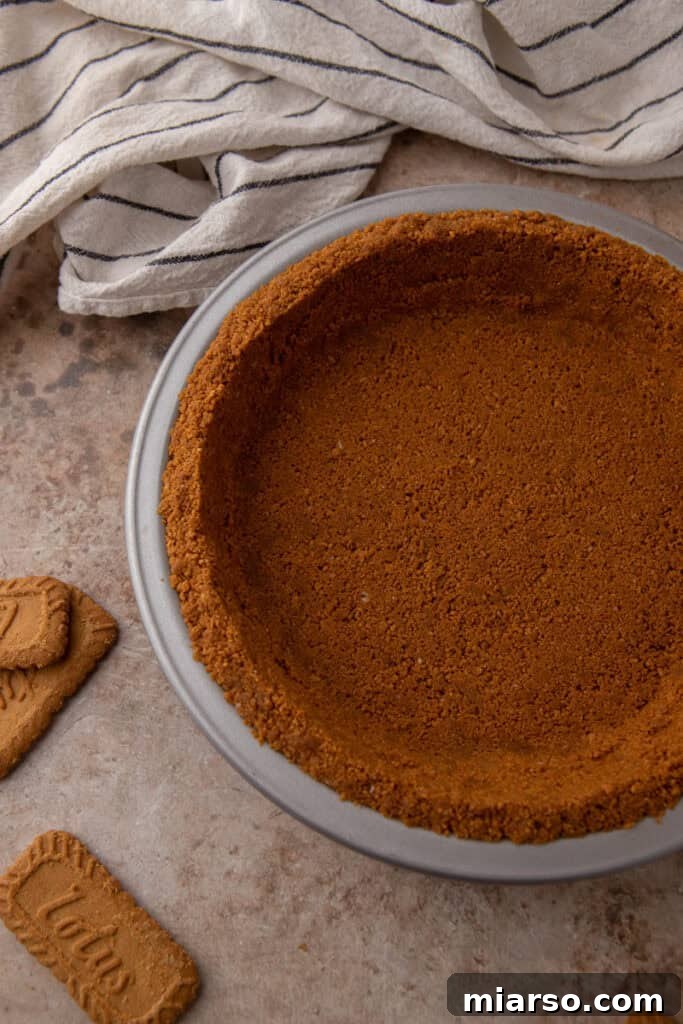
Step-by-Step Guide: How to Make This Biscoff Pie Crust
Making this Biscoff cookie crust is incredibly simple and quick, perfect for beginners and seasoned bakers alike. Follow these straightforward steps to create a perfect foundation for your next dessert. Remember to scroll down to the full recipe card at the end of this post for detailed, step-by-step instructions and precise measurements!
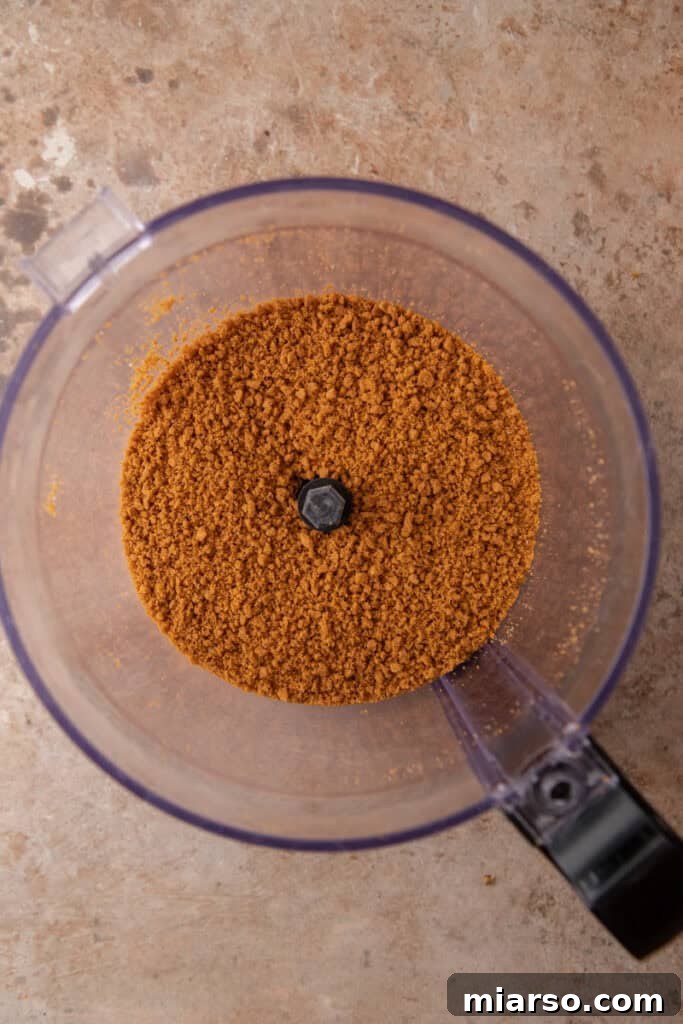
- Prepare the Cookie Crumbs: Begin by transforming your Biscoff biscuits or speculoos cookies into fine, uniform crumbs. The easiest way to achieve this is by using a food processor. Simply pulse the cookies until they resemble fine sand. If you don’t have a food processor, no problem! Place the cookies in a sturdy, sealed Ziploc bag, remove as much air as possible, and then use a rolling pin or a heavy object to smash them on your kitchen countertop until they are finely ground. Ensure there are no large chunks, as this will affect the crust’s consistency.
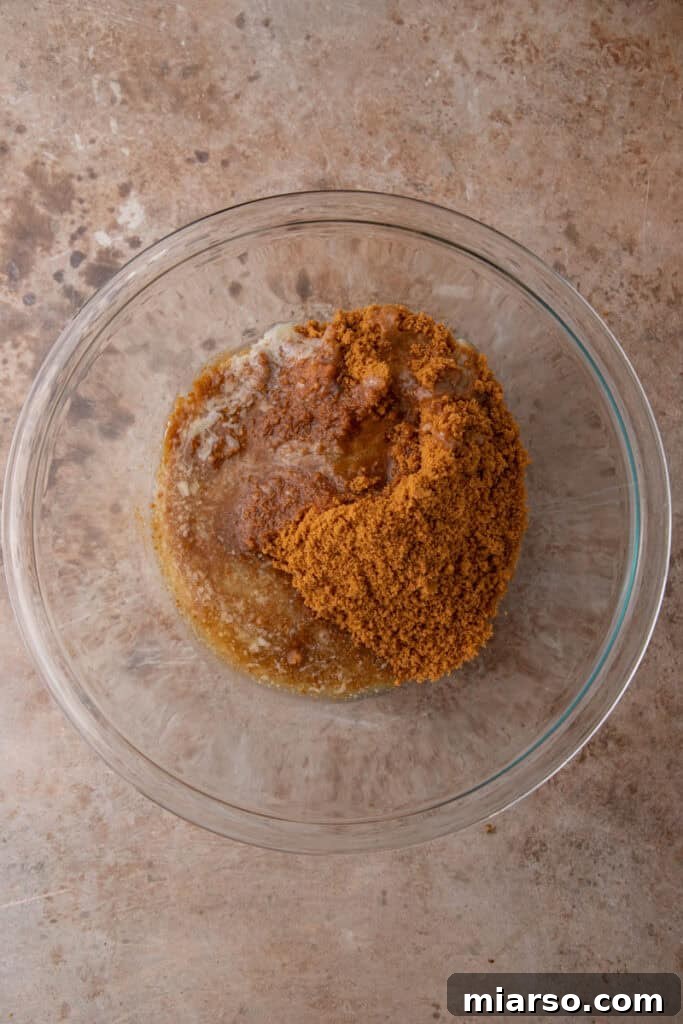
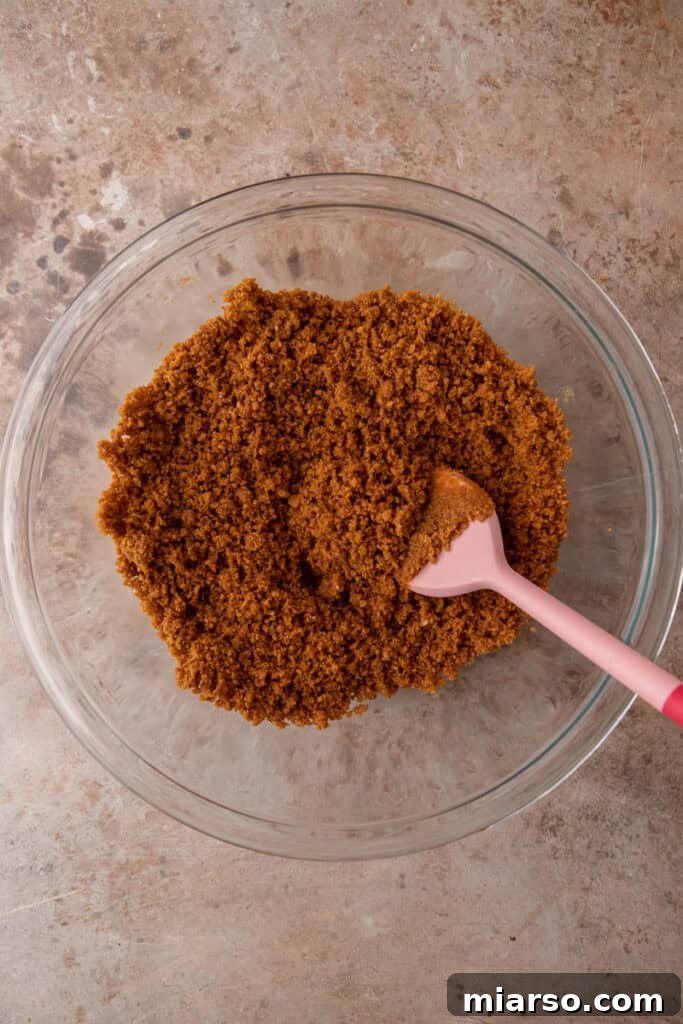
- Combine Ingredients: In a medium-sized mixing bowl, combine the finely crushed Biscoff cookie crumbs, the melted unsalted butter, and the pinch of salt. Stir these ingredients together thoroughly using a spoon or spatula. Continue mixing until everything is evenly coated, and the mixture takes on the texture of damp, wet sand. It should hold its shape when pressed between your fingers.
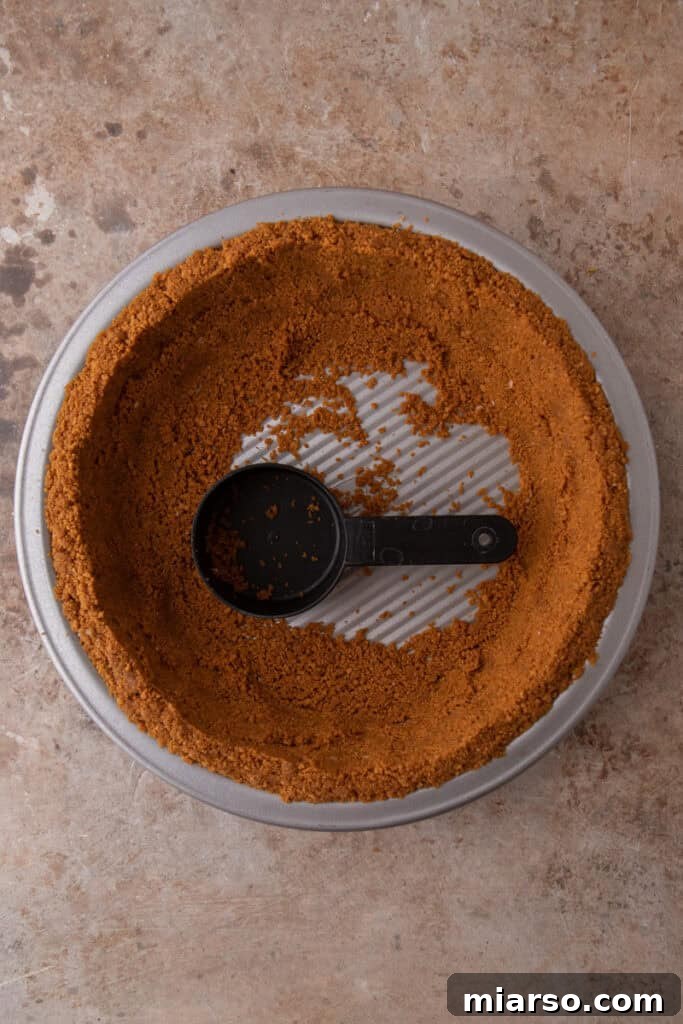
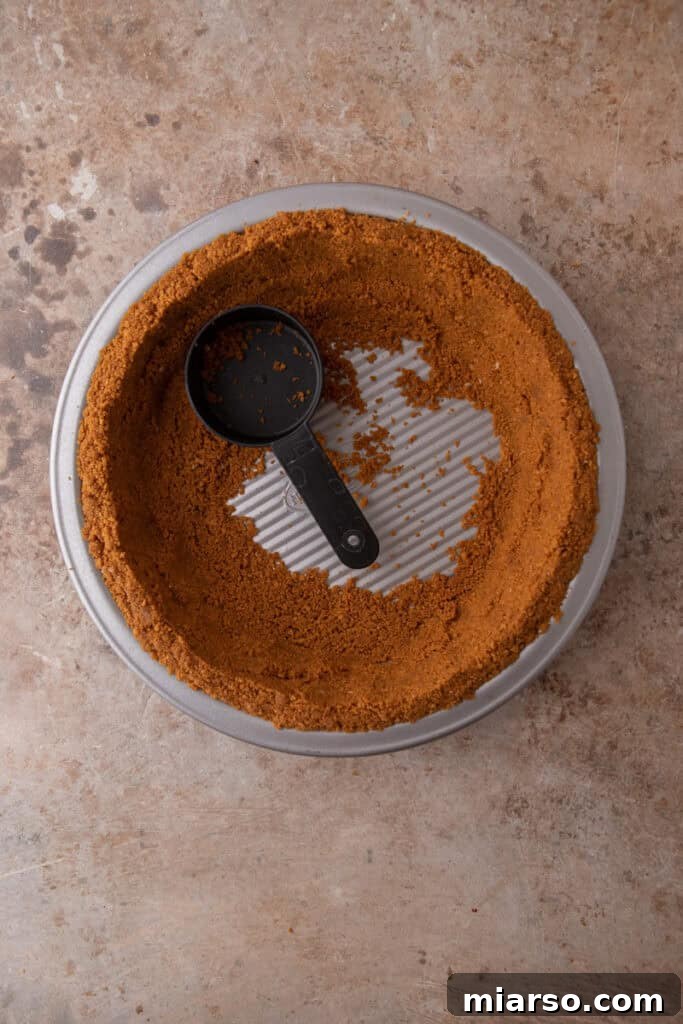
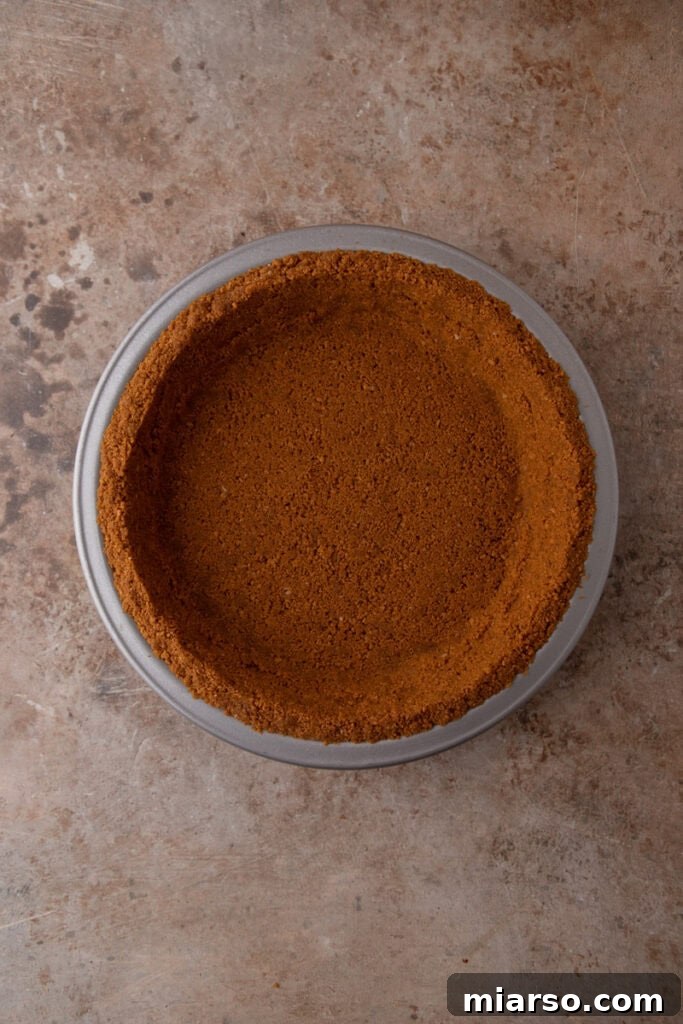
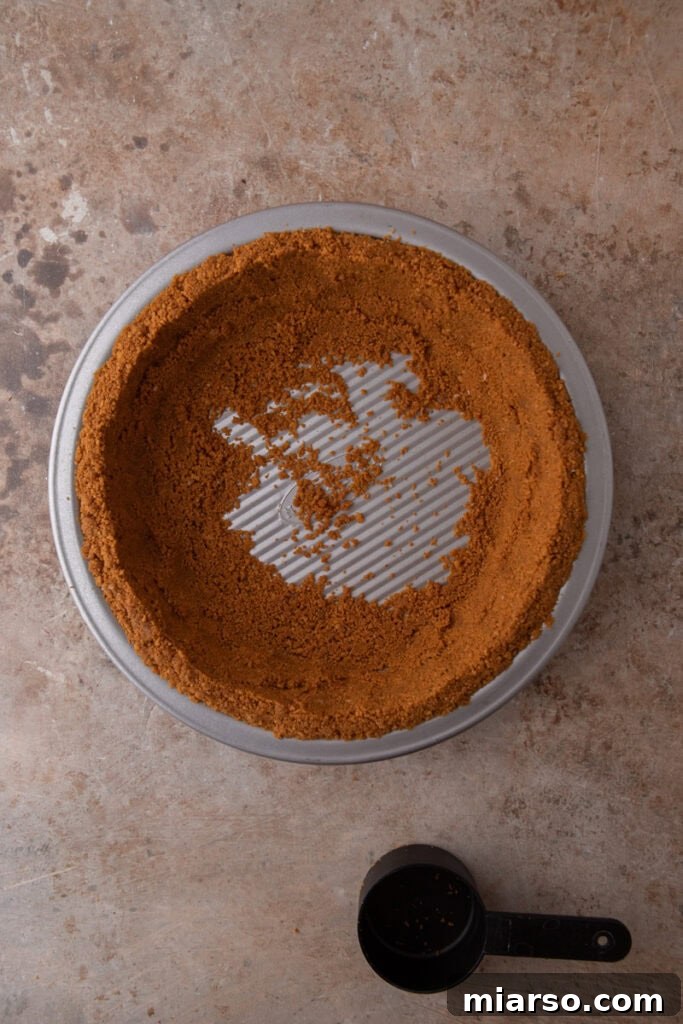
- Form the Crust: Pour about two-thirds of the Biscoff mixture into a standard 9-inch pie plate. Begin by pressing this portion firmly up the sides of the pie plate. You can use the back of a spoon, the bottom of a flat-bottomed measuring cup, or even your clean fingers to achieve a compact and even layer along the edges. Once the sides are formed, add the remaining mixture to the base of the pie plate and press it down firmly and evenly. A well-packed crust is crucial for structural integrity and preventing crumbling when sliced.
- Set the Crust (Choose Your Method): Now it’s time to set your beautiful Biscoff crust, choosing between a no-bake or baked option depending on your pie filling and desired texture:
- For a No-Bake Biscoff Pie Crust: This method is perfect for fillings that don’t require baking, such as cheesecakes, cream pies, or mousse-based desserts. Simply place the 9-inch pie plate containing the pressed crust into the refrigerator. Chill for at least 30 minutes to an hour, or until the crust is firm and fully set. The butter will solidify, binding the crumbs together.
- For a Baked Biscoff Pie Crust (for a Sturdier Texture): If your pie filling requires baking, or if you simply prefer a crispier, sturdier crust with enhanced toasted flavor, opt for the baked version. Preheat your oven to 350°F (175°C). Bake the pressed crust for 8–10 minutes, or until lightly golden and fragrant. After baking, it is absolutely crucial to allow the crust to cool completely to room temperature before adding your filling. This prevents the filling from becoming soggy or cooking prematurely.
Expert Tips & Tricks for a Flawless Biscoff Crust
Achieving the perfect Biscoff pie crust is incredibly easy, but a few professional tips can ensure your crust is always a resounding success. Follow these pointers for a flawless, flavorful, and perfectly structured pie base:
- Warm Butter for Better Coating: When incorporating the melted butter into the cookie crumbs, ensure the butter is still warm (not scorching hot). Warm butter will distribute more evenly and coat the fine crumbs thoroughly. This even coating is crucial for a cohesive crust that holds together well, preventing it from being dry and crumbly.
- Finely Ground Cookies are Key: The texture of your crushed Lotus Biscoff cookies significantly impacts the final crust. Aim for super-fine crumbs, resembling fine sand. If there are large chunks of cookies, the crust won’t bind properly, leading to a crumbly, unstable base that falls apart when you try to slice your pie. A food processor is ideal for this, but persistent crushing with a rolling pin works too.
- Press, Press, Press Firmly: This is arguably the most important step for a sturdy crust. When you’re pressing the mixture into your 9-inch pie pan, don’t be shy! Use the back of a spoon, the bottom of a measuring cup, or even your hands to pack the crumbs down as firmly and evenly as possible. Pay special attention to the edges and corners to ensure consistent thickness. A well-packed crust will hold its shape beautifully and won’t crumble when you slice into your delicious pie.
- Don’t Rush the Setting Process: Whether you’re chilling or baking your crust, ensure it has ample time to set. For no-bake crusts, refrigerating for the full 30-60 minutes allows the butter to solidify completely, creating a firm base. For baked crusts, allowing it to cool completely to room temperature before adding your filling prevents the crust from becoming soggy from residual heat and ensures a crisp texture.
- Consider Your Pie Plate: While a standard 9-inch pie plate is recommended, this recipe is adaptable. You can use a tart pan with a removable bottom for an elegant presentation, or even individual ramekins for mini pies. Adjust pressing technique accordingly.
- Add a Touch of Spice (Optional): For an extra layer of warmth, consider adding a tiny pinch of ground cinnamon, nutmeg, or ginger to your cookie crumbs before mixing with butter. Biscoff cookies already have a spiced flavor, but a little extra can enhance certain fillings, like pumpkin or apple pie.
Serving Suggestions: Perfect Pairings for Your Biscoff Crust
The beauty of this Biscoff pie crust lies in its versatility. Its warm, spiced caramel notes complement an astonishing array of pie fillings, making it a fantastic choice for almost any dessert. Here are some of our favorite ways to use this incredible crust:
- No-Bake Cheesecakes: The creamy, tangy nature of cheesecake is beautifully balanced by the spiced sweetness of Biscoff. This crust is especially perfect for no-bake cheesecake recipes, offering a delightful textural contrast.
- Key Lime Pie: The bright, zesty flavor of key lime pie finds a wonderful partner in the Biscoff crust. The spices add a surprising depth that elevates the classic citrus notes.
- Peanut Butter Pie: For a truly decadent treat, pair this crust with a rich, creamy peanut butter filling. The Biscoff flavor enhances the nutty profile of the peanut butter, creating an irresistible combination.
- Chocolate Cream or Mousse Pies: The deep, luxurious taste of chocolate is absolutely divine with the caramel undertones of the Biscoff crust. It adds an extra layer of gourmet flavor to any chocolate-based dessert.
- Pumpkin or Sweet Potato Pie: Especially during the fall and winter months, this crust is a phenomenal alternative to traditional pastry for spiced custard pies. The Biscoff spices harmonize perfectly with pumpkin and sweet potato, creating a truly festive dessert.
- Banana Cream Pie: The subtle sweetness and creamy texture of banana cream pie are wonderfully complemented by the crunchy, spiced Biscoff base, adding a unique twist to a beloved classic.
- Ice Cream Pies: For a refreshing and easy dessert, fill a chilled Biscoff crust with your favorite ice cream, freeze until firm, and serve. A drizzle of chocolate or caramel sauce makes it even better.
Frequently Asked Questions (FAQ) About Biscoff Pie Crust
When should I use a Baked Biscoff Pie Crust?
The baked Biscoff pie crust is ideal when you want to enhance the overall flavor and structure of your favorite pie recipe, especially for fillings that themselves require baking. The warm spices and toasted notes of the Biscoff cookies become more pronounced after a quick bake, adding a richer depth of flavor compared to a simple shortbread or graham cracker crust. This makes it an exceptional choice for key lime pie, peanut butter pie, classic pumpkin pie, or any delicate custard pie (like coconut cream or lemon meringue) that benefits from a sturdier, pre-baked base. The baking process creates a crisp barrier that can help prevent the crust from becoming soggy when filled with a moist mixture.
When should I use the No-Bake Biscoff Pie Crust?
The no-bake Biscoff pie crust option is your go-to for any dessert filling that does not require oven time. It’s perfect for creations with sturdier, dense fillings that set up in the refrigerator, such as no-bake cheesecakes, chocolate mousse pies, or rich cream pies. The key here is to avoid using this option with any no-bake filling that has excessive moisture or a very loose consistency, as the crust might absorb too much liquid and become soft. For best results, ensure your no-bake filling is thick enough to hold its shape once chilled.
How do I store my leftover Biscoff crust?
To properly store your Biscoff cookie pie crust, whether it’s baked or unbaked, keep it in its tart or pie pan. Cover it tightly with plastic wrap. For optimal freshness, gently press the plastic wrap directly onto the surface of the crust, starting from the middle and working your way out to the sides, then over the edges of the dish. This prevents air exposure, which can dry out the crust. Stored this way, it will remain fresh in the refrigerator for up to one to two weeks, making it an excellent make-ahead component for your desserts.
Can I freeze Biscoff pie crust?
Absolutely, you can freeze this Biscoff pie crust! Freezing is a fantastic option if you want to prepare the crust far in advance. Follow all the steps for making and pressing the crust into the pie plate (either baked or unbaked, depending on your final preference). Once formed, wrap the entire pie plate securely with several layers of plastic wrap, followed by a layer of aluminum foil to prevent freezer burn. You can then store it in the freezer for up to one to two months. When ready to use, simply thaw the crust in the refrigerator overnight before adding your desired filling.
How do I prevent the Biscoff crust from getting soggy?
Preventing a soggy crust is crucial for the best pie experience. If your pie fillings are particularly wet or contain a lot of moisture (like some fruit fillings or very creamy custards), there are a couple of excellent methods to create a moisture barrier. Right after baking the crust and allowing it to cool slightly, you can brush the inside of the crust with a thin, even layer of melted white chocolate, dark chocolate, or even an egg white. The chocolate will harden and create an impermeable layer that protects the crust from the moisture in the filling. An egg white, when baked onto the crust for a few extra minutes until set, also forms a protective shield. Ensure whichever method you choose is fully set and cooled before adding your wet filling.
Can I use Biscoff spread instead of cookies?
This particular recipe is designed for Biscoff cookies, as the crumbs provide the necessary texture and structure for the crust. While Biscoff spread is delicious, it cannot be directly substituted for the cookies in this recipe, as it would result in a very different, likely softer and less structured, crust. However, Biscoff spread makes a fantastic addition *to* a pie filling that uses this crust, or as a drizzle over a finished pie!
What size pie plate is best for this recipe?
This recipe is perfectly scaled for a standard 9-inch pie plate. This size typically accommodates most pie recipes and yields a generous crust that is neither too thick nor too thin. If you use a different size (e.g., a larger 10-inch plate or smaller individual tartlets), you may need to adjust the ingredient quantities slightly to achieve the desired crust thickness and coverage.
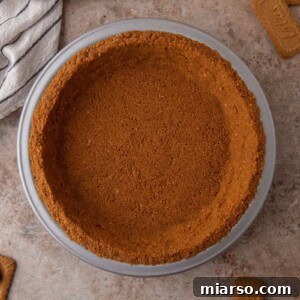
Biscoff Pie Crust Recipe (Bake & No Bake)
Print Recipe
Ingredients
- 32 Speculoos (Biscoff) cookies
- 6 tbsp unsalted butter melted
- ¼ tsp salt optional, balances sweetness
Instructions
-
Use a food processor to pulse Speculoos cookies into fine crumbs. If doing it by hand, place them in a sealed bag and crush them with a rolling pin.32 Speculoos (Biscoff) cookies
-
In a bowl, combine the cookie crumbs, melted butter, and salt. Stir until the mixture is evenly moistened and resembles wet sand.6 tbsp unsalted butter, ¼ tsp salt
-
Pour the 2/3 mixture into a 9-inch pie plate, then press it firmly up the sides using the back of a spoon or the bottom of a measuring cup, then add the rest of the mixture and press it into the base in an even layer.
For a no-bake crust: Refrigerate for 30 minutes to 1 hour to firm up.
For a baked crust: Preheat oven to 350°F and bake for 8-10 minutes. Let cool before adding filling.
Nutrition
Nutrition information is automatically calculated, so should only be used as an approximation.